Representative Horatio Clifford Claypool
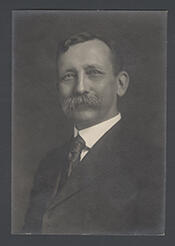
Here you will find contact information for Representative Horatio Clifford Claypool, including email address, phone number, and mailing address.
| Name | Horatio Clifford Claypool |
| Position | Representative |
| State | Ohio |
| District | 11 |
| Party | Democratic |
| Status | Former Representative |
| Term Start | April 4, 1911 |
| Term End | March 3, 1919 |
| Terms Served | 3 |
| Born | February 9, 1859 |
| Gender | Male |
| Bioguide ID | C000490 |
About Representative Horatio Clifford Claypool
Horatio Clifford Claypool (February 9, 1859 – January 19, 1921) was a three-term U.S. Representative from Ohio and a member of the Democratic Party who served in Congress from 1911 to 1919. He was born in McArthur, Vinton County, Ohio, where he attended the common schools. He later pursued higher education at National Normal University in Lebanon, Ohio, graduating in 1880. Claypool was part of a family that would have an enduring connection to public service; he was the father of future Congressman Harold Kile Claypool and a cousin of John Barney Peterson.
After completing his education, Claypool studied law and was admitted to the bar in 1882. He commenced the practice of law in Chillicothe, Ross County, Ohio, which would remain his professional and political base for much of his life. As a young attorney, he built a legal career that led naturally into public office, gaining experience in local legal affairs and establishing himself within the Democratic Party in southern Ohio.
Claypool’s early public service was rooted in county-level legal positions. He served as prosecuting attorney of Ross County from 1899 to 1903, where he was responsible for conducting criminal prosecutions on behalf of the state. Following this role, he was elected probate judge of Ross County, serving from 1905 to 1910. In that capacity he oversaw matters such as wills, estates, and guardianships, further enhancing his reputation as a capable jurist and public official.
Building on his legal and judicial experience, Claypool was elected as a Democrat to the United States House of Representatives. He first won election to the Sixty-second Congress and was reelected to the Sixty-third Congress, serving from March 4, 1911, to March 3, 1915. During these two consecutive terms, he represented his Ohio constituency in the House of Representatives and contributed to the legislative process during a significant period in American history, which included the progressive era reforms and the lead-up to World War I. He sought reelection in 1914 to the Sixty-fourth Congress but was unsuccessful.
Claypool returned to Congress two years later when he was elected to the Sixty-fifth Congress, serving from March 4, 1917, to March 3, 1919. His third term in the House coincided with the United States’ entry into World War I and the associated domestic and foreign policy challenges. As a member of the House of Representatives during this critical time, Claypool participated in the democratic process and represented the interests of his Ohio constituents in debates over wartime legislation and national policy. He was again an unsuccessful candidate for reelection in 1918, this time to the Sixty-sixth Congress, which ended his congressional career after three nonconsecutive terms.
Following his final term in Congress, Claypool resumed the practice of law in Chillicothe, Ohio. He continued his legal work there, drawing on decades of experience as an attorney, prosecutor, judge, and legislator. His later years were spent in the same community where he had first established his professional life and political base.
Horatio Clifford Claypool died in Columbus, Ohio, on January 19, 1921. He was interred in Grandview Cemetery in Chillicothe, Ross County, Ohio. His career reflected a steady progression from local legal practice to county office and ultimately to national legislative service, and his family’s continued involvement in public life extended his influence beyond his own years in Congress.