Representative Howard L. Berman
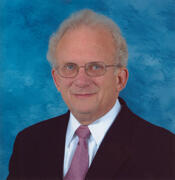
Here you will find contact information for Representative Howard L. Berman, including email address, phone number, and mailing address.
| Name | Howard L. Berman |
| Position | Representative |
| State | California |
| District | 28 |
| Party | Democratic |
| Status | Former Representative |
| Term Start | January 3, 1983 |
| Term End | January 3, 2013 |
| Terms Served | 15 |
| Born | April 15, 1941 |
| Gender | Male |
| Bioguide ID | B000410 |
About Representative Howard L. Berman
Howard Lawrence Berman (born April 15, 1941) is an American attorney and retired politician who served as a U.S. Representative from California from 1983 to 2013. A member of the Democratic Party, he represented California’s 26th congressional district from 1983 until redistricting and then the 28th congressional district, both of which encompassed parts of the San Fernando Valley, for a combined 15 terms. Over three decades in the House of Representatives, Howard L. Berman contributed to the legislative process during a significant period in American history, participating in the democratic process and representing the interests of his constituents.
Berman was born in Los Angeles, California, to Jewish parents, Eleanor (née Schapiro) and Joseph Berman. His maternal grandparents had immigrated from Russia, and his family background and community shaped his early interest in public affairs. He attended Alexander Hamilton High School in Los Angeles, graduating in 1959. A pivotal influence on his future career was his high school civics teacher, Blanche Bettington, who inspired him to enter politics and government. Berman went on to study at the University of California, Los Angeles (UCLA), where he earned a Bachelor of Arts degree in international relations in 1962 and a Bachelor of Laws (LL.B.) degree in 1965. While at UCLA he befriended Henry Waxman, a fellow student who would later become his longtime political ally and colleague in Congress.
After law school, Berman began his professional career in public service and labor law. From 1966 to 1967, he served as a volunteer with Volunteers in Service to America (VISTA) in Baltimore and San Francisco, working in anti-poverty programs during the Great Society era. He then returned to Los Angeles and joined the law firm of Levy, Van Bourg & Hackler, where he worked as an associate from 1967 to 1972, specializing in labor relations. His legal practice, focused on labor issues, helped establish his reputation as an advocate for workers and introduced him to the practical dimensions of public policy and political organizing.
Berman entered elective office in 1972, winning a seat in the California State Assembly from a district in the Hollywood Hills. In that race he unseated the incumbent Republican speaker pro tempore, an early indication of his effectiveness as a campaigner and strategist. His brother Michael Berman, who had managed Henry Waxman’s successful 1968 Assembly campaign, again played a central role by running a highly targeted mail operation. During his decade in the Assembly, Berman rose quickly through the leadership ranks. In 1974, he and Waxman opposed Willie Brown’s unsuccessful attempt to unseat Speaker Leo McCarthy; McCarthy rewarded Berman’s loyalty by appointing him majority leader, making him the youngest majority leader in the history of the California Assembly. Berman also served as Chairman of the Assembly Democratic Caucus and on the Policy Research Management Committee of the Assembly. His tenure in Sacramento was marked by hard-edged political maneuvering; when Berman later attempted to replace McCarthy as speaker in 1980, McCarthy fired him as majority leader. Although McCarthy failed to retain the speakership and Berman failed in his own bid, Willie Brown ultimately became speaker. Contemporaries remarked on Berman’s toughness as a politician, noting that he and his allies helped arrange the primary defeat of at least one colleague, Jack R. Fenton, who had opposed his speakership effort.
Berman moved to the national stage in 1982. After redistricting made California’s 26th congressional district significantly more Democratic, incumbent Republican Congressman John Harbin Rousselot chose to run instead in the 30th district. Berman won the Democratic primary for the open 26th District seat with 83 percent of the vote and then prevailed in the general election with 60 percent, entering the U.S. House of Representatives in January 1983. He was reelected 14 times, never dropping below 61 percent of the vote from 1984 through 2010. Within the California delegation, Berman became known as the “dad of the delegation” on redistricting. Following the 2000 census, when California gained a 53rd House seat, he helped craft a bipartisan redistricting arrangement with Republican Representatives Tom Davis and David Dreier that preserved 34 safe Democratic seats, created one new Republican district, and protected 19 incumbent Republicans. Many California Democrats in Congress and the State Senate hired his brother Michael Berman as a redistricting consultant for fees of about $20,000 each. When the plan was unveiled in August 2001, Democratic Congressman Brad Sherman complained that the new lines undermined the safety of his seat by including too many Hispanic voters, declaring that “Howard Berman stabbed me in the back.” Berman agreed to adjust the boundary between their districts, resulting in a 56 percent Latino population in his own district and 37 percent in Sherman’s. The plan survived a court challenge by the Mexican American Legal Defense and Educational Fund (MALDEF), which argued that it diluted Hispanic representation; Republicans, however, saw their delegation reduced to 19 members in the 110th Congress.
During his three decades in Congress, Berman developed a reputation as one of the House’s most creative legislators and most clear-sighted political operators, though he often worked behind the scenes rather than seeking publicity. He was the House sponsor of the 1986 amendments to the False Claims Act that strengthened whistleblower provisions and authorized civil litigation by private relators, leading to recoveries for the United States government exceeding $1 billion. He became closely associated with the interests of the entertainment industry in his Los Angeles–area district and was sometimes referred to as the “representative from Hollywood.” The entertainment industry was the major source of contributions to his campaigns, and he championed measures to protect American film industry jobs from “runaway production” and outsourcing. In May 2012, he co-sponsored legislation with Republican Congressman David Dreier to reinstate federal tax credits for films produced primarily in the United States, credits that had been in effect from 2008 to 2011, arguing that the country “must make every effort to keep American productions here in the United States.”
Berman was also a leading figure in intellectual property and trade policy. He proposed legislation, including the Peer to Peer Piracy Prevention Act, that would have allowed copyright holders to use technological tools such as file blocking, redirection, spoofs, and decoys to combat online piracy. He was widely identified as one of the primary congressional architects of the Stop Online Piracy Act (SOPA) and a key supporter of the Anti-Counterfeiting Trade Agreement (ACTA). In a 2008 hearing of the House Intellectual Property Subcommittee, he criticized the National Institutes of Health’s public-access policy for NIH-funded research, quipping that “the N in NIH shouldn’t stand for Napster.” On broader legislative issues, Berman consistently voted against proposals to amend the Constitution to require a balanced federal budget, against constitutional amendments to ban desecration of the American flag, against the Defense of Marriage Act, and against restrictions on abortion. At the same time, he aligned with many conservatives on foreign policy and trade. He supported the use of force against Iraq in both 1991 and 2003 and voted for the FISA Amendments Act of 2008, positions that damaged his standing among some liberals in his district. Generally a supporter of free trade, he voted for the North American Free Trade Agreement (NAFTA) and several bilateral trade agreements, while opposing the Central America Free Trade Agreement (CAFTA). He also opposed efforts to withdraw U.S. support for the World Trade Organization and voted to phase out many agricultural subsidy programs dating from President Franklin D. Roosevelt’s New Deal.
Within the House, Berman held influential committee assignments and played key roles in high-profile matters. He served on the House Judiciary Committee and became a central figure in oversight of ethics issues, leading the investigation into the conduct of House members in the Mark Foley page scandal involving congressional pages. On foreign affairs, he emerged as a prominent voice on U.S. policy in the Middle East and beyond. According to contemporaneous accounts, including reporting by LA Weekly and National Journal, Berman played a key and underappreciated role in securing passage of the October 2002 resolution authorizing President George W. Bush to use force against Iraq. He organized a group of Democrats who supported military action and participated in discussions that led House Democratic Leader Dick Gephardt to reach an agreement with the administration on the terms of the resolution, undercutting the position of other senior Democrats, including House Democratic Whip Nancy Pelosi and Senate Foreign Relations Committee Chairman Joe Biden. In June 2006, he voted for a Republican-sponsored resolution rejecting a timetable for withdrawal from Iraq. A strong supporter of Israel, Berman told the Jewish newspaper The Forward, after becoming chairman of the House Committee on Foreign Affairs, that “even before I was a Democrat, I was a Zionist.” In 2011, he sponsored the proposed Anti-Boycott Act, which would have prohibited American individuals and organizations from actively boycotting Israeli goods, though the measure did not become law.
Berman’s long congressional career also drew scrutiny for his close political and financial ties to his brother’s consulting firm. From 2001 to 2006, his campaign committee paid Michael Berman’s firm, Berman & D’Agostino, a total of $195,000 in consulting fees. During the 2002 campaign cycle, the firm received $75,000 in political consulting fees; in 2005 it was paid $50,000, and in 2006 another $70,000. In addition, Michael Berman personally received $80,500 in 2005 for campaign management and consulting. These arrangements, while legal, were noted by observers as emblematic of the close-knit political operation that supported Howard Berman’s influence in California and Washington.
Following the 2010 census, redistricting once again reshaped Berman’s political landscape. He chose to run in the newly drawn 30th congressional district, which placed him in direct competition with fellow Democratic incumbent Brad Sherman. The new district favored Sherman, as about 60 percent of its voters resided in his former district, compared with roughly 20 percent from Berman’s. The contest, made possible by California’s “top-two” primary system adopted in 2010, was widely described as a “slugfest” between two ideologically similar Democrats. In the June 5, 2012, open primary, Sherman finished first with 42 percent of the vote, while Berman placed second with 26 percent, sending both to the November general election. Berman, who ran as the more conservative Democrat in an effort to consolidate independent and Republican support, secured endorsements from about two-thirds of California’s Democratic congressional delegation. Sherman’s backers included then–Lieutenant Governor Gavin Newsom, then–State Controller John Chiang, former President Bill Clinton, and Congressman John Conyers. In the November 2012 general election, Sherman defeated Berman by a margin of 60.3 percent to 39.7 percent, ending Berman’s 30-year tenure in the House of Representatives.
After leaving Congress in January 2013, Berman retired from elective office but remained engaged in public policy and legal work, drawing on his experience as an attorney, legislator, and foreign policy leader. His three decades in Congress, spanning service from the early Reagan years through the first term of President Barack Obama, placed him at the center of major debates over foreign policy, trade, intellectual property, and the structure of California’s political landscape, while his long record of legislative activity and party leadership left a durable imprint on both state and national politics.