Representative Howard Homan Buffett
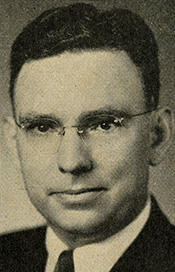
Here you will find contact information for Representative Howard Homan Buffett, including email address, phone number, and mailing address.
| Name | Howard Homan Buffett |
| Position | Representative |
| State | Nebraska |
| District | 2 |
| Party | Republican |
| Status | Former Representative |
| Term Start | January 6, 1943 |
| Term End | January 3, 1953 |
| Terms Served | 4 |
| Born | August 13, 1903 |
| Gender | Male |
| Bioguide ID | B001039 |
About Representative Howard Homan Buffett
Howard Homan Buffett (August 13, 1903 – April 30, 1964) was an American businessman, investor, and politician who served as a Republican member of the United States House of Representatives from Nebraska from 1943 to 1953. Over the course of four terms in Congress, he contributed to the legislative process during a significant period in American history, representing the interests of his constituents and participating actively in the democratic process. He was also the father of Warren Buffett, the billionaire businessman, investor, and philanthropist who became chairman and chief executive officer of Berkshire Hathaway.
Buffett was born on August 13, 1903, and came of age in the early twentieth century, a period marked by rapid economic and social change in the United States. Before entering national politics, he established himself as a businessman and investor, gaining practical experience in commerce and finance that would later inform his views on economic policy, monetary standards, and the proper limits of government. His early professional life helped shape the strong fiscal conservatism and skepticism of expansive federal power that became hallmarks of his public career.
Buffett married and became the father of three children who would each, in different ways, achieve prominence. His daughter Doris Buffett (1928–2020) became a noted philanthropist and was married four times. His son Warren Buffett, born in 1930, became one of the most influential investors in modern history and a leading American philanthropist. His younger daughter, Roberta “Bertie” Buffett, born in 1933, also pursued philanthropic work and married three times: first to Charlie Snorf in 1955, then to Dr. Hilton Bialek, and, after Bialek’s death in 2002, to David Elliott in 2007; Elliott died in 2017. The close-knit family environment and Buffett’s own views on ethics, responsibility, and liberty had a lasting influence on his children, particularly Warren.
Elected as a Republican to the United States House of Representatives, Howard Homan Buffett represented Nebraska in Congress from 1943 to 1953, serving four consecutive terms. His tenure coincided with World War II, the immediate postwar period, and the early years of the Cold War, when questions of foreign intervention, domestic liberty, and economic policy were intensely contested. As a member of the House of Representatives, he consistently approached legislation through a principled lens. His wife later recalled that he considered only one issue when deciding whether to vote for a bill: “Will this add to, or subtract from, human liberty?” This guiding question reflected his deep commitment to individual freedom and limited government.
Buffett’s conduct in office was marked by a reputation for personal integrity and frugality. According to Warren Buffett biographer Roger Lowenstein, he was “unshakably ethical,” refusing offers of junkets and even turning down a portion of his congressional pay. During his first term, when the congressional salary was raised from $10,000 to $12,500, he left the extra money in the Capitol disbursement office, insisting that he had been elected at the lower salary and would not accept more than what had been in effect at the time of his election. This act became emblematic of his broader insistence that public office was a trust, not an avenue for personal enrichment.
In matters of foreign policy, Buffett was a staunch non-interventionist. He argued that the United States was neither morally nor practically suited to “police the world by military force,” warning that attempts to do so would erode liberty at home. He maintained that “our Christian ideals cannot be exported to other lands by dollars and guns,” and that persuasion and example, rather than coercion, were the methods consistent with the teachings of “the Carpenter of Nazareth.” In his view, a nation could not “practice might and force abroad and retain freedom at home,” nor credibly “talk world cooperation and practice power politics.” These convictions placed him among the more outspoken critics of expansive American military and political commitments overseas during his era.
Buffett’s skepticism of concentrated governmental power extended to economic and monetary policy. He was a strong supporter of the gold standard, believing that a currency anchored to gold would limit the ability of government to inflate the money supply and spend beyond its means. In his judgment, such fiscal and monetary discipline was essential to preserving individual liberty and preventing the erosion of private property rights through inflationary finance. His son Warren Buffett, despite inheriting his father’s interest in business and investment, did not share his advocacy of the gold standard, illustrating a divergence in economic thought within the family even as they remained closely connected.
In the summer of 1962, nearly a decade after leaving Congress, Howard Buffett continued to articulate his views on liberty and government power in public forums. He wrote an impassioned plea for the abolition of the military draft in the New Individualist Review, arguing that conscription without a formal declaration of war by Congress, as required by the Constitution, posed a grave threat to freedom. “When the American government conscripts a boy to go 10,000 miles to the jungles of Asia without a declaration of war by Congress (as required by the Constitution) what freedom is safe at home?” he asked, insisting that neither corporate profits nor private property were “more sacred than a young man’s right to life.” This statement encapsulated his belief that individual rights, especially the right to life and liberty, stood above all other political and economic considerations.
Howard Homan Buffett died from cancer on May 30, 1964, at the age of 60. His death marked the end of a career defined by unwavering adherence to principle, a deep concern for human liberty, and a distinctive blend of economic conservatism and moral seriousness. Through his congressional service, his writings, and the enduring influence he exerted on his family—most notably his son Warren—Buffett left a legacy as a public figure who sought consistently to measure policy by its impact on freedom at home and restraint abroad.