Representative Howard Hollis Callaway
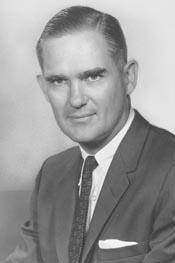
Here you will find contact information for Representative Howard Hollis Callaway, including email address, phone number, and mailing address.
| Name | Howard Hollis Callaway |
| Position | Representative |
| State | Georgia |
| District | 3 |
| Party | Republican |
| Status | Former Representative |
| Term Start | January 4, 1965 |
| Term End | January 3, 1967 |
| Terms Served | 1 |
| Born | April 2, 1927 |
| Gender | Male |
| Bioguide ID | C000055 |
About Representative Howard Hollis Callaway
Howard Hollis “Bo” Callaway (April 2, 1927 – March 15, 2014) was an American businessman and politician who served as a Representative from Georgia in the United States Congress from 1965 to 1967 and as United States Secretary of the Army from 1973 to 1975. Over the course of his career he was affiliated at different times with both the Democratic Party and the Republican Party, and he played a notable role in the political realignment of the South in the latter half of the twentieth century.
Callaway was born on April 2, 1927, in LaGrange, Troup County, Georgia, the son of Virginia Hollis and Cason Callaway and the grandson of industrialist Fuller Earle Callaway. He grew up in a prominent Georgia family whose business and philanthropic interests were closely tied to the region. He attended Episcopal High School in Alexandria, Virginia, graduating in 1944. Following his secondary education, he enrolled at the Georgia Institute of Technology and later entered the United States Military Academy at West Point, where he earned a degree in military engineering in 1949. His education combined technical training with military discipline, preparing him for both his subsequent service in uniform and his later leadership roles in business and government.
After graduating from West Point, Callaway served in the United States Army during the Korean War. His active-duty service extended through the early 1950s, and upon his discharge in 1953 he returned to Georgia. There he joined his parents in the development and management of Callaway Gardens, a large horticultural and recreational resort complex in Pine Mountain, Georgia, that became a significant regional attraction. On June 10, 1953, he was named executive director of Callaway Gardens, assuming responsibility for its operations and growth. His work in this capacity established his reputation as a businessman and civic leader and provided a platform from which he would later enter electoral politics.
In 1964, Callaway was elected as a Republican to represent Georgia’s 3rd congressional district in the United States House of Representatives, succeeding Democratic incumbent Tic Forrester. His victory was historically significant: he was the first Republican to represent Georgia in Congress since Reconstruction, reflecting the broader Republican surge in the Deep South associated with the appeal of Senator Barry Goldwater to conservative Southern voters. A member of the Republican Party during his congressional tenure, Callaway served one term in the House, from January 3, 1965, to January 3, 1967. During this period, a significant era in American history marked by the civil rights movement and the escalation of U.S. involvement in Vietnam, he participated in the legislative process and represented the interests of his constituents in Georgia’s 3rd district. He contributed to debates and votes on national policy as part of the House Republican contingent. Callaway was succeeded in Congress by Democrat Jack Brinkley.
Rather than seek re-election to the House in 1966, Callaway ran as the Republican candidate for governor of Georgia. The 1966 gubernatorial election was one of the most contentious in the state’s modern history, marked by a deep split within the Democratic Party between segregationist candidate Lester Maddox and liberal former governor Ellis Arnall. After Maddox secured the Democratic nomination, Arnall continued his campaign as a write-in candidate, dividing the Democratic vote. In the general election, Callaway won a plurality but not a majority of the popular vote, which under Georgia law at the time required that the election be decided by the Georgia General Assembly. A series of legal challenges ensued, reaching the United States Supreme Court, which ultimately upheld the legislature’s authority to choose the governor. The heavily Democratic General Assembly selected Maddox, denying Callaway the governorship despite his plurality at the polls.
In the 1970s, Callaway relocated to Colorado, where he remained active in Republican politics and business. On May 15, 1973, President Richard Nixon appointed him United States Secretary of the Army, a position he held under Presidents Nixon and Gerald R. Ford until July 3, 1975, when he was succeeded by Norman R. Augustine. As Secretary of the Army, Callaway oversaw the service during a period of transition following the Vietnam War and the early years of the all-volunteer force. His tenure drew national attention when he intervened in the case of Lieutenant William Calley, convicted for his role in the My Lai massacre in Vietnam; Callaway first reduced Calley’s sentence and later approved his parole, a decision that provoked widespread public debate. In addition to his cabinet-level responsibilities, Callaway served as President Ford’s campaign manager during the mid-1970s. He resigned from that role after accusations that he had used undue political influence to promote the expansion of a Colorado ski resort, and he was replaced as campaign manager by Rogers Morton.
Callaway continued his political involvement in Colorado into the 1980s. In 1980, he sought the Republican nomination for the United States Senate from Colorado. He received the backing of Senator William L. Armstrong but ultimately lost the nomination to Colorado Secretary of State Mary Estill Buchanan. Following this defeat, he remained influential in state politics, serving as chairperson of the Colorado Republican Party until 1987. His leadership in Colorado reflected his broader role as a party strategist and organizer, extending his political career beyond elective office.
Howard Hollis “Bo” Callaway died on March 15, 2014, in Columbus, Georgia, from complications of an intracerebral hemorrhage at the age of 86. His life encompassed military service, business leadership, and a varied political career that included service in the United States House of Representatives, a high-profile gubernatorial campaign, and a cabinet-level appointment as United States Secretary of the Army.