Representative Howard Aldridge Coffin
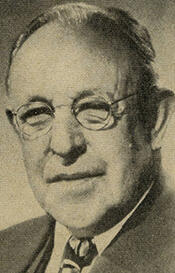
Here you will find contact information for Representative Howard Aldridge Coffin, including email address, phone number, and mailing address.
| Name | Howard Aldridge Coffin |
| Position | Representative |
| State | Michigan |
| District | 13 |
| Party | Republican |
| Status | Former Representative |
| Term Start | January 3, 1947 |
| Term End | January 3, 1949 |
| Terms Served | 1 |
| Born | June 11, 1877 |
| Gender | Male |
| Bioguide ID | C000590 |
About Representative Howard Aldridge Coffin
Howard Aldridge Coffin (June 11, 1877 – February 28, 1956) was a Republican politician from the U.S. state of Michigan who served one term as a United States Representative from 1947 to 1949. A member of the Republican Party, he contributed to the legislative process during a single term in office and represented the interests of his constituents during a pivotal period in American political history. Alongside Harold F. Youngblood, he remains, as of 2024, the last Republican to represent any part of Detroit in Congress. Both men were elected in the Republican wave year of 1946 and were defeated for re-election in 1948.
Coffin was born on June 11, 1877, in Michigan, where he spent his formative years. Details of his early life prior to his public career are sparsely documented in the congressional record, but his later prominence in state and national politics indicates that he emerged from this background with a strong interest in public affairs and civic engagement. Growing up in the late nineteenth century, he came of age during a period of rapid industrialization and urban growth in Michigan, developments that would shape the political and economic context of his later career.
Information about Coffin’s formal education is limited in the surviving public record, and no detailed institutional history is consistently cited in standard biographical references. Nonetheless, his subsequent professional and political responsibilities suggest that he attained the level of education and practical experience necessary to participate effectively in public life and to navigate the increasingly complex issues facing Michigan and the nation in the first half of the twentieth century.
Before his election to Congress, Coffin established himself sufficiently in Michigan public and civic life to become a viable candidate for federal office. His rise coincided with the growing political importance of Detroit and its surrounding communities, driven by the automobile industry and related manufacturing. By the mid-1940s, Coffin was positioned to seek national office as part of a broader Republican resurgence that capitalized on public concerns about postwar reconversion, labor relations, and federal economic policy.
Coffin was elected to the United States House of Representatives in the 1946 elections, a year often described as a Republican wave, reflecting widespread gains by his party in both chambers of Congress. He took his seat in January 1947 and served until January 1949, completing one full term. During this period, the Eightieth Congress addressed major issues arising from the end of World War II, including demobilization, veterans’ affairs, labor disputes, and the early stages of the Cold War. As a member of the House of Representatives, Coffin participated in the democratic process, contributed to the legislative work of the chamber, and represented the interests of his Michigan constituents at the federal level.
Coffin’s tenure in Congress was closely tied to the political dynamics of Detroit and its environs. His election, along with that of Harold F. Youngblood, reflected Republican strength in the immediate postwar period. However, both men lost their bids for re-election in 1948, when the political tide shifted and Democrats regained ground nationally and in urban industrial districts. Their defeats marked the end of Republican representation of any portion of Detroit in Congress, a situation that has persisted through 2024 and underscores the long-term realignment of urban voters in Michigan.
After leaving Congress in January 1949, Coffin returned to private life in Michigan. While the public record of his later activities is limited, he remained part of the generation of mid-twentieth-century lawmakers who had helped guide the country through the complex transition from wartime to peacetime and into the early Cold War era. Howard Aldridge Coffin died on February 28, 1956. His career is remembered in part for its timing at a crucial juncture in American political history and for his status, alongside Harold F. Youngblood, as one of the last Republicans to represent any segment of Detroit in the United States Congress.