Senator Howard M. Metzenbaum
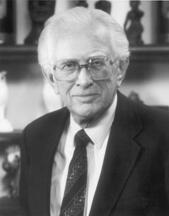
Here you will find contact information for Senator Howard M. Metzenbaum, including email address, phone number, and mailing address.
| Name | Howard M. Metzenbaum |
| Position | Senator |
| State | Ohio |
| Party | Democratic |
| Status | Former Representative |
| Term Start | January 3, 1973 |
| Term End | January 3, 1995 |
| Terms Served | 10 |
| Born | June 4, 1917 |
| Gender | Male |
| Bioguide ID | M000678 |
About Senator Howard M. Metzenbaum
Howard Morton Metzenbaum (June 4, 1917 – March 12, 2008) was an American politician, attorney, and businessman who served as a Democratic United States Senator from Ohio for almost two decades (1974, 1976–1995). Over the course of five terms in the Senate, he became one of the chamber’s most prominent liberal voices, noted for his vigorous use of parliamentary tactics, his focus on antitrust and consumer protection, and his advocacy on labor and social policy. Before his congressional service, he served in the Ohio House of Representatives and the Ohio Senate from 1943 to 1951 and built a substantial business career that helped shape his political profile.
Metzenbaum was born on June 4, 1917, in Cleveland, Ohio, to a poor family, the son of Anna (née Klafter) and Charles I. Metzenbaum. His paternal grandparents were Jewish immigrants from Poland and France, and his maternal grandparents were Hungarian Jews, and he remained closely identified with his Jewish heritage throughout his life. He attended Glenville High School in Cleveland, where he ran track while working a variety of odd jobs after school to help support himself and his family. Demonstrating early ambition and academic ability, he enrolled at Ohio State University, from which he received a bachelor’s degree in 1939 and a law degree in 1941. After graduating from law school, he returned to Cleveland and began practicing law during the 1940s. Initially encountering discrimination in the legal profession because he was Jewish, he found professional acceptance and success representing large labor unions, including the Communications Workers of America and later the International Association of Machinists.
Alongside his legal work, Metzenbaum developed a keen interest in business and investment. He became independently wealthy through real estate investments near what became Cleveland Hopkins International Airport, correctly foreseeing, with his partner Alva “Ted” Bonda, that the area would be ideal for 24-hour, well-lit parking facilities. Their venture grew into the Airport Parking Company of America (APCOA), which became the world’s largest parking lot company. By 1970, Metzenbaum had sold his interest in APCOA Parking for approximately $20 million. In January 1968, he and Bonda also purchased the Cleveland Stokers soccer club from Cleveland Indians executives Vernon Stouffer and Gabe Paul; under their ownership, the team played one season in the North American Soccer League, winning its division before leaving the league over business disagreements with other owners. In the early 1970s, after an initial defeat in a U.S. Senate race, he further diversified his business interests by co-owning the Sun Newspapers, a chain of weekly papers covering the Cleveland suburbs.
Metzenbaum’s political career began at the state level. He was elected to the Ohio House of Representatives in 1943 and served there until 1947. He then moved to the Ohio Senate, where he served from 1947 to 1951. In 1958, he managed the successful U.S. Senate campaign of Democrat Stephen M. Young, who in a major upset narrowly defeated incumbent Republican Senator John Bricker, the GOP’s 1944 vice-presidential nominee. Metzenbaum again played a key role in Young’s successful reelection campaign in 1964, further solidifying his reputation as a skilled political strategist. Denying urban legends to the contrary, he later stated that he had never been affiliated with the Communist Party; when the National Republican Senatorial Committee suggested in 1987 that he had “Communist sympathies,” its chairman, Senator Rudy Boschwitz, apologized for the smear.
In 1970, Metzenbaum sought federal office in his own right, running for the U.S. Senate seat being vacated by Senator Young, who chose not to seek a third term. Metzenbaum narrowly defeated astronaut John Glenn in the Democratic primary by a 46–45 percent margin but lost the general election to Republican Robert Taft Jr. In 1974, when Senator William B. Saxbe of Ohio resigned to become U.S. Attorney General, Democratic Governor John J. Gilligan appointed Metzenbaum to fill the vacancy. He served in the Senate for the remainder of Saxbe’s term in 1974 and then ran for election to the seat. In a bitter Democratic primary that year, he again faced John Glenn and lost; Glenn went on to win the general election by a landslide. During the primary, Metzenbaum emphasized his business background and contrasted it with Glenn’s military and astronaut service, remarking that Glenn had “never worked for a living.” Glenn, who had served 23 years in the Marine Corps, responded with what became known as the “Gold Star Mothers” speech, challenging Metzenbaum’s characterization by invoking the sacrifices of veterans and families of the fallen. Many observers credited that speech with helping Glenn win the primary by a 54–46 percent margin.
Metzenbaum returned to the Senate in 1976, when he sought a rematch against Senator Robert Taft Jr. in the general election. Riding the national Democratic tide that accompanied Jimmy Carter’s presidential victory, he narrowly defeated Taft. Taft resigned a few days before his term officially ended, allowing Metzenbaum to be sworn in early and thereby gain a slight seniority advantage over other senators elected that year. He was reelected comfortably in 1982, defeating Republican state senator Paul Pfeifer. That same year, his cousin Harriett Woods ran unsuccessfully for the U.S. Senate from Missouri against Republican Senator John Danforth, losing by less than two percentage points. In 1981, Metzenbaum was the target of a controversial remark on the Senate floor when Senator Ernest Hollings of South Carolina referred to him as the “senator from B’nai B’rith,” a comment widely interpreted as an anti-Jewish slur; Hollings later apologized, and the remark was stricken from the record. On December 2, 1981, Metzenbaum was one of only four senators to vote against an amendment to President Ronald Reagan’s MX missile proposal that would divert $334 million from the silo system and fund research into alternative basing methods, a vote seen as a rebuff to the administration’s strategic weapons policy. Relations between Metzenbaum and Glenn, strained in the late 1970s and early 1980s, began to thaw in 1983 when Metzenbaum endorsed Glenn’s presidential bid.
Throughout his Senate career, which extended until his retirement in January 1995, Metzenbaum was known as a powerful liberal voice and an aggressive legislator. He earned the nickname “Senator No”—a moniker he shared with conservative Republican Senator Jesse Helms of North Carolina—as well as “Headline Howard” and “headline hog,” reflecting both his frequent use of filibusters and amendments to block or reshape legislation and his skill at drawing public attention to issues. He was especially active on antitrust and consumer protection matters, often threatening to repeal Major League Baseball’s long-standing exemption from federal antitrust laws. He became particularly prominent on the Senate Judiciary Committee, where he worked to preserve stringent antitrust enforcement and consistently supported abortion rights. Metzenbaum was also skeptical of corporate and regulatory assurances regarding the artificial sweetener aspartame. He criticized G. D. Searle & Company for what he alleged were flawed or fabricated safety tests and faulted the American Medical Association for relying on data he believed were inadequate. In 1985, he sponsored an amendment that would have required product labels to disclose the quantity of aspartame contained, and the Senate held hearings on the issue.
Metzenbaum’s legislative record included authorship or sponsorship of several significant laws. He played a key role in the enactment of the Worker Adjustment and Retraining Notification (WARN) Act, which required large employers to provide advance notice of major plant closings and mass layoffs. He was instrumental in the passage of the Brady Handgun Violence Prevention Act (the Brady Law), which established a waiting period and background checks for handgun purchases. In 1994, he sponsored the Howard M. Metzenbaum Multiethnic Placement Act (MEPA), U.S. Public Law 103-82, which prohibited federally subsidized adoption agencies from delaying or denying the placement of children on the basis of race or ethnicity. In his 1988 reelection campaign, he faced Republican challenger George Voinovich, then mayor of Cleveland, who accused him of being soft on child pornography. The charges were widely criticized, including by John Glenn, who recorded a televised statement refuting Voinovich’s claims. Metzenbaum defeated Voinovich by a 57–43 percent margin, even as Republican presidential nominee George H. W. Bush carried Ohio by roughly 11 percentage points. A decade later, Voinovich would be elected to the U.S. Senate, succeeding Glenn after his retirement. Metzenbaum chose not to seek reelection in 1994; his son-in-law Joel Hyatt secured the Democratic nomination for the seat but lost the general election to Republican Lieutenant Governor Mike DeWine, who had been elected on Voinovich’s gubernatorial ticket in 1990.
After leaving the Senate in 1995, Metzenbaum remained active in public affairs, notably serving as chairman of the Consumer Federation of America, where he continued to advocate for consumer rights and protections. His public stature was recognized in his home state when, on May 27, 1998, the Old Federal Building and Post Office in downtown Cleveland was renamed the Howard M. Metzenbaum United States Courthouse in his honor. Beyond politics and policy, he occasionally appeared in popular culture; he was referenced in the animated television program “Space Ghost Coast to Coast,” in the episode “Switcheroo,” where Space Ghost jokingly mentioned him as a guest the staff had failed to book, and he made a cameo appearance in the 1993 film “Dave.” He was also referenced in numerous Cleveland-area advertisements, reflecting his high profile in Ohio public life.
Metzenbaum married Shirley Louise Turoff (1923–2019) on August 8, 1946. The couple had four daughters: Barbara, Susan, Shelley, and Amy; their daughter Susan married attorney and businessman Joel Hyatt. His extended family included his cousin James Metzenbaum, an Ohio attorney known for his work on zoning law and for an unsuccessful campaign for a seat on the Ohio Supreme Court. Howard Metzenbaum died at his home in Aventura, Florida, on March 12, 2008, at the age of 90. He was buried at Mayfield Cemetery in Cleveland Heights, Ohio, and is remembered as a forceful advocate for labor, consumers, and civil liberties during a consequential period in late twentieth-century American legislative history.