Senator Howard Alexander Smith
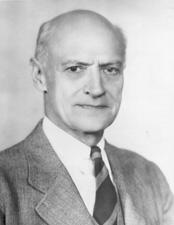
Here you will find contact information for Senator Howard Alexander Smith, including email address, phone number, and mailing address.
| Name | Howard Alexander Smith |
| Position | Senator |
| State | New Jersey |
| Party | Republican |
| Status | Former Representative |
| Term Start | January 1, 1944 |
| Term End | January 3, 1959 |
| Terms Served | 3 |
| Born | January 30, 1880 |
| Gender | Male |
| Bioguide ID | S000553 |
About Senator Howard Alexander Smith
Howard Alexander Smith (January 30, 1880 – October 27, 1966) was an American lawyer, educator, and Republican politician who represented New Jersey in the United States Senate from 1943 to 1959, with his formal Senate service recorded from December 7, 1944, to January 3, 1959. Over the course of three terms in office, he contributed to the legislative process during a significant period in American history, participating in the democratic process and representing the interests of his New Jersey constituents. During his Senate tenure he rose to positions of influence, including chairmanship of a major committee and authorship of notable legislation.
Smith was born in New York City to Abram Alexander Smith, a physician and teacher, and Sue Lehn (née Bender) Smith. He attended the Cutler School in New York before enrolling at Princeton University in New Jersey. At Princeton he studied jurisprudence, political science, and English common law under Woodrow Wilson, then a member of the faculty and later president of the university. Smith received his Bachelor of Arts degree in 1901. He continued his legal education at Columbia Law School, earning a Bachelor of Laws degree in 1904. In 1902, during his time associated with Columbia, he married Helen Dominick; the couple would have two daughters and a son.
Admitted to the New York bar in 1904, Smith commenced the practice of law in New York City, working with the Legal Aid Society and gaining experience in providing legal services to those of limited means. His career was interrupted by poor health, which prompted him to move to Colorado Springs, Colorado. There he continued to practice law from 1904 until 1917. During World War I he entered public service, working for the United States Food Administration first in Colorado and later in Washington, D.C., contributing to the national effort to manage food supplies during the war. In 1919 he relocated to New Jersey, a move that would shape the remainder of his professional and political life.
Smith’s association with Princeton University resumed when he was appointed executive secretary (assistant to the president) of the university, a position he held from 1920 to 1927. In that role he was closely involved in the administration of the institution during a period of growth and change in higher education. From 1927 to 1930 he served as a lecturer in Princeton’s department of politics, teaching courses in international relations and foreign policy. While residing in New Jersey, he also resumed the practice of law in New York City, maintaining a professional foothold in both states. His dual engagement in academia and law provided him with a broad perspective on public affairs that would inform his later political career.
By the early 1930s Smith had become increasingly active in Republican politics in New Jersey. In 1933 he helped establish the New Jersey Republican Policy Council, an organization intended to shape party direction and policy. The following year, in 1934, he was appointed treasurer of the New Jersey Republican State Committee, reflecting his growing influence within the party. He was later elected chairman of the Republican State Committee, a position that placed him at the center of statewide political strategy and organization. From 1942 to 1943 he served as a member of the Republican National Committee, extending his political reach to the national level and positioning him for higher office.
On November 7, 1944, Smith was elected as a Republican to the United States Senate from New Jersey to fill the vacancy caused by the death of Senator W. Warren Barbour. He formally took his seat on December 7, 1944. He was reelected in 1946 and again in 1952, serving three terms that spanned the final months of World War II, the early Cold War, and the beginning of the civil rights era. During his Senate service he chaired the Senate Committee on Labor and Public Welfare from 1953 to 1955, a period in which the committee dealt with issues related to labor relations, social welfare, education, and health. He also co-authored the Smith–Mundt Act, which defined the terms under which the United States government could engage in public diplomacy and disseminate information abroad, an important component of U.S. foreign policy during the Cold War. Reflecting his stance on civil rights legislation of the period, Smith voted in favor of the Civil Rights Act of 1957. He was not a candidate for renomination in 1958, bringing his Senate career to a close at the end of his term on January 3, 1959.
Following his departure from the Senate, Smith continued to serve in a public capacity. From 1959 to 1960 he was a special consultant on foreign affairs to the U.S. Secretary of State, drawing on his legislative experience and his long-standing interest in international relations and foreign policy. His family connections to public service extended into the next generation; he was the uncle of Peter H. Dominick, who served as a United States Senator from Colorado from 1963 to 1975.
Howard Alexander Smith spent his later years in Princeton, New Jersey, where he had long-standing ties through both his education and his professional work at Princeton University. He died in Princeton on October 27, 1966, at the age of 86, and was interred in Princeton Cemetery. His career encompassed law, academia, party leadership, and three terms in the United States Senate, during which he played a role in shaping labor policy, public diplomacy, and mid-twentieth-century national legislation.