Representative Howard E. Wolpe
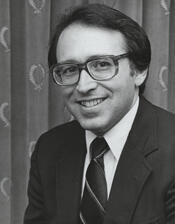
Here you will find contact information for Representative Howard E. Wolpe, including email address, phone number, and mailing address.
| Name | Howard E. Wolpe |
| Position | Representative |
| State | Michigan |
| District | 3 |
| Party | Democratic |
| Status | Former Representative |
| Term Start | January 15, 1979 |
| Term End | January 3, 1993 |
| Terms Served | 7 |
| Born | November 3, 1939 |
| Gender | Male |
| Bioguide ID | W000682 |
About Representative Howard E. Wolpe
Howard Eliot Wolpe (November 3, 1939 – October 25, 2011) was an American politician, academic, and specialist in African affairs who served seven terms as a U.S. Representative from Michigan and later held senior diplomatic roles in the Clinton Administration. A member of the Democratic Party, he represented a district based in Kalamazoo from 1979 to 1993 and became a leading congressional voice on U.S. policy toward Africa, particularly during the final decade of apartheid in South Africa.
Wolpe received his B.A. degree from Reed College and went on to earn a Ph.D. from the Massachusetts Institute of Technology, where he focused on political science and comparative politics. Before entering elective office, he pursued an academic career, teaching in the Political Science Department at Western Michigan University, at Michigan State University—where he co-published a volume on modernization in Nigeria—and at the University of Michigan’s Institute of Public Policy Studies. His early scholarly work on African politics and development laid the foundation for his later legislative and diplomatic focus on the continent.
Prior to his election to Congress, Wolpe was active in local and state government in Michigan. He served as a member of the Kalamazoo City Commission and subsequently in the Michigan House of Representatives. These roles introduced him to legislative work and constituent service and helped establish his political base in Kalamazoo and the surrounding region. His experience in state and municipal government, combined with his academic expertise, positioned him as a policy-oriented legislator with particular interest in international affairs and development issues.
Wolpe was elected to the U.S. House of Representatives in 1978 and served from January 3, 1979, to January 3, 1993. During his seven terms in Congress, he represented a district that stretched from his home in Kalamazoo to the more Democratic portions of Lansing. His service in Congress occurred during a significant period in American history, encompassing the late Cold War and its aftermath, and he participated actively in the legislative process on both domestic and foreign policy matters. For 10 of his 14 years in Congress, he was a specialist in African politics and chaired the Subcommittee on Africa of the House Foreign Affairs Committee. In that capacity, he co-authored, with Representative Ron Dellums and others, and managed the landmark Comprehensive Anti-Apartheid Act of 1986, which imposed sanctions against South Africa and was enacted over President Ronald Reagan’s veto. He also authored and managed passage of the African Famine Recovery and Development Act, a comprehensive rewrite in the 1980s of America’s approach to development assistance in Africa that included the creation of the African Development Fund. In 1992, following redistricting, his congressional district was eliminated and most of its territory, including his home, was merged with the district of three-term Republican Representative Fred Upton. Although Kalamazoo was the largest city in the reconfigured district, it was geographically more Upton’s district than Wolpe’s, a circumstance that prompted Wolpe to retire from the House rather than seek reelection in the new configuration.
After leaving Congress, Wolpe remained active in public life and Michigan politics. In 1994, he won the Democratic nomination for Governor of Michigan. He initially asked former First Lady of Michigan Helen Milliken to be his running mate, but she declined his offer. Wolpe then selected one of his former rivals in the Democratic primary, State Senator Debbie Stabenow—later a U.S. Senator—as his nominee for lieutenant governor. The Wolpe–Stabenow ticket was defeated in the general election in a landslide by the incumbent Republican ticket of Governor John Engler and Lieutenant Governor Connie Binsfeld. Despite the loss, the campaign underscored his continued prominence within the Michigan Democratic Party and his engagement with state-level policy issues.
Wolpe’s post-congressional career increasingly focused on international conflict resolution, governance, and capacity-building, particularly in Africa. He served as Director of the Africa Program at the Woodrow Wilson International Center for Scholars and of the Center’s Project on Leadership and Building State Capacity. In these roles, he directed post-conflict leadership training programs in Burundi, the Democratic Republic of the Congo, and Liberia, working with political, military, and civil society leaders to strengthen institutions and promote reconciliation. He also served as a visiting fellow in the Foreign Policy Studies Program of the Brookings Institution, as a Woodrow Wilson Center Public Policy Scholar, and as a consultant to the World Bank and to the Foreign Service Institute of the U.S. Department of State. He wrote extensively on Africa, American foreign policy, and the management of ethnic and racial conflict, contributing to both scholarly and policy debates.
In the Clinton Administration, Wolpe returned to government service in a diplomatic capacity. He was appointed Presidential Special Envoy to the African Great Lakes Region, where he led the United States delegation to the Arusha and Lusaka peace talks aimed at ending civil wars in Burundi and the Democratic Republic of the Congo. He later returned to the State Department as Special Advisor to the Secretary of State for Africa’s Great Lakes Region, continuing his efforts to support peace processes, democratic governance, and regional stability. His work in these roles drew directly on his long-standing expertise in African politics and his earlier legislative initiatives on African development and human rights.
Beyond his formal government and academic positions, Wolpe was active in a range of non-governmental and policy organizations. He served on the boards of directors of the National Endowment for Democracy (NED), Africare, and Pathfinders International, and on the Advisory Board of Coexistence International. In March 1997, he co-directed, with Ambassador David C. Miller, Jr., the Ninetieth American Assembly on “Africa and U.S. National Interests,” helping to shape broader public and policy discourse on the continent’s significance to the United States.
Howard Wolpe was married to Judy Wolpe until her death in 2006. He died on October 25, 2011, at his home in Saugatuck, Michigan. Memorial services honoring his life and public service were held in Kalamazoo, Michigan, in December 2011 and in Washington, D.C., in January 2012.