Senator Howell Heflin
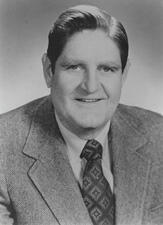
Here you will find contact information for Senator Howell Heflin, including email address, phone number, and mailing address.
| Name | Howell Heflin |
| Position | Senator |
| State | Alabama |
| Party | Democratic |
| Status | Former Representative |
| Term Start | January 15, 1979 |
| Term End | January 3, 1997 |
| Terms Served | 9 |
| Born | June 19, 1921 |
| Gender | Male |
| Bioguide ID | H000445 |
About Senator Howell Heflin
Howell Thomas Heflin (June 19, 1921 – March 29, 2005) was an American lawyer, jurist, and Democratic politician who represented Alabama in the United States Senate from 1979 to 1997. Over three terms in office, he contributed significantly to the legislative process during a period of major political and social change in the United States, participating actively in the democratic process and representing the interests of his Alabama constituents. Known for his independence and moral seriousness, he was described by The New York Times as the “conscience of the Senate.”
Heflin was born on June 19, 1921, in Poulan, Georgia, and raised in Alabama in a family with deep political and legal roots. He was the nephew of James Thomas Heflin, a prominent Alabama politician who had served in both the U.S. House of Representatives and the U.S. Senate in the early twentieth century. Howell Heflin grew up in the Tennessee Valley region and developed a strong identification with the culture and history of the American South, including a personal pride in his Confederate ancestors that would later inform, and be challenged by, his public reflections on race and reconciliation.
Heflin attended Birmingham-Southern College in Birmingham, Alabama, where he received his undergraduate education. During World War II, he served in the United States Marine Corps, seeing combat in the Pacific Theater. After the war, he pursued legal studies at the University of Alabama School of Law, where he earned his law degree and began a career in private practice. His work as a lawyer in Alabama, combined with his wartime service and family background, helped shape his reputation as a grounded, conservative-leaning Democrat with a strong interest in the integrity and functioning of the legal system.
Heflin’s rise to statewide prominence came through the judiciary. In 1970, he was elected Chief Justice of the Alabama Supreme Court, assuming office in 1971 and serving until 1977. As Chief Justice, he undertook efforts to modernize and reform Alabama’s court system, emphasizing efficiency, professionalism, and public confidence in the judiciary. His tenure on the state’s highest court enhanced his standing as a legal reformer and gave him a platform from which to advocate broader changes in the administration of justice, themes he would later carry into his work in the U.S. Senate.
In 1978, Heflin ran for the United States Senate to succeed retiring Democratic Senator John Sparkman, who had been Adlai E. Stevenson’s running mate in the 1952 presidential election. Heflin secured the Democratic nomination by defeating U.S. Representative Walter Flowers of Tuscaloosa, a longtime ally of Governor George C. Wallace. Initially, former U.S. Representative James D. Martin of Gadsden, the 1966 Republican gubernatorial nominee, announced he would challenge Heflin in the general election. Martin, however, switched to a separate Senate race for a two-year term created by the sudden death of Senator James B. Allen, leaving Heflin without a Republican opponent and effectively assuring his election. He entered the Senate in January 1979 and was subsequently re-elected in 1984, when he handily defeated Republican former U.S. Representative Albert L. Smith Jr. of Birmingham, and again in 1990, when he defeated State Senator William J. Cabaniss, who would later serve as U.S. Ambassador to the Czech Republic under President George W. Bush. Heflin chose not to run for a fourth term in 1996 and was succeeded by Republican Jeff Sessions. He was the last Democrat to serve as a senator from Alabama until Doug Jones, a former aide whom Heflin had mentored, was sworn in on January 3, 2018—exactly 21 years after Heflin left the seat.
During his Senate career, Heflin became particularly influential on judicial and ethical matters. As a member of the Senate Judiciary Committee, he played a prominent role in several high-profile Supreme Court confirmation battles. In 1987, he voted against the confirmation of Judge Robert Bork to the Supreme Court of the United States. He later voted against the confirmation of Clarence Thomas, citing Thomas’s lack of experience as a central concern. Heflin also served as chairman of the Senate Select Committee on Ethics, where he led the prosecution of fellow Democratic Senator Howard Cannon of Nevada for violations of Senate rules, underscoring his reputation for independence and adherence to ethical standards.
Heflin’s legislative interests extended deeply into criminal justice and judicial reform. In the wake of the March 1981 assassination attempt on President Ronald Reagan by John Hinckley Jr., and the lengthy delay before Hinckley’s trial, Heflin argued that the case illustrated the need for an overhaul of the criminal justice system “so that it can more efficiently and effectively deal with the rising epidemic of violent crime in this nation.” He contrasted the slow pace of the Hinckley proceedings with the swifter convictions of the assailants of Pope John Paul II and Egyptian President Anwar Sadat, warning that such delays fostered “contempt for the system.” He called for the formation of a Senate “Crime Caucus” to set aside partisan politics and wage a more effective “war on crime.” In July 1981, he announced plans to introduce legislation creating a national court of appeals to relieve the U.S. Supreme Court’s burgeoning docket and to resolve conflicts among the federal circuit courts. Citing the fact that only 289 of 4,242 petitions for hearings had been granted by the Supreme Court in the previous year, he argued that a new appellate court and a long-range study of the federal judiciary were needed to modernize and rationalize the federal court system.
Ideologically, Heflin was generally regarded as a conservative Democrat, particularly on social and defense issues, while aligning with his party’s populist wing on many economic questions. He strongly opposed abortion and gun control, supported school prayer in public schools, and opposed laws banning discrimination on the basis of sexual orientation. He supported the 1991 Gulf War and opposed cuts in defense spending, and with Senator Ernest “Fritz” Hollings of South Carolina, he was one of only two Democrats in the Senate to vote against the Family and Medical Leave Act. He occasionally sided with Republicans on tax matters. At the same time, Heflin voted against the North American Free Trade Agreement (NAFTA) and the General Agreement on Tariffs and Trade (GATT), and resisted efforts to weaken consumer protection enforcement. He strongly supported affirmative action laws, reflecting a complex blend of traditional Southern conservatism and economic populism.
Heflin’s most memorable public statements often reflected his effort to reconcile Southern heritage with a commitment to racial progress. In 1993, he delivered a widely noted speech on the Senate floor in support of Senator Carol Moseley Braun’s successful effort to block renewal of a Confederate flag design patent for the United Daughters of the Confederacy. Speaking of his pride and love for his Confederate ancestors and his respect for the United Daughters of the Confederacy, he acknowledged his personal conflict in breaking with them on this issue. He concluded that the nation was “trying to heal the scars that have occurred in the past” and that racism remained “one of the great scars and one of the most serious illnesses that we suffer from still today,” signaling his willingness to depart from some traditional Southern symbols in the interest of national reconciliation.
After leaving the Senate in January 1997, Heflin returned to private life in Alabama, remaining a respected elder statesman within the state’s legal and political communities. He lived at his longtime residence in Tuscumbia, Alabama, until his death on March 29, 2005, from a heart attack. He was survived by his wife, Elizabeth Ann, his son, H. Thomas “Tom” Heflin Jr., and two grandchildren. His legacy has been honored in multiple ways: the University of Alabama School of Law named the “Howell Heflin Conference Room” in the Bounds Law Library in his honor; Tuscumbia designated “Howell Heflin Lane”; the Howell Heflin Lock and Dam in Alabama bears his name; and Birmingham-Southern College named the Howell T. Heflin Seminar Room in its library for him. Through his judicial reforms, his Senate service, and his mentorship of younger public servants such as Doug Jones, Heflin left a lasting imprint on Alabama and on the national legislative and judicial landscape.