Senator Howell Edmunds Jackson
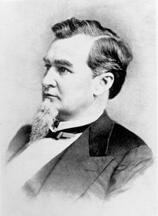
Here you will find contact information for Senator Howell Edmunds Jackson, including email address, phone number, and mailing address.
| Name | Howell Edmunds Jackson |
| Position | Senator |
| State | Tennessee |
| Party | Democratic |
| Status | Former Representative |
| Term Start | December 5, 1881 |
| Term End | March 3, 1887 |
| Terms Served | 1 |
| Born | April 8, 1832 |
| Gender | Male |
| Bioguide ID | J000014 |
About Senator Howell Edmunds Jackson
Howell Edmunds Jackson served as a Senator from Tennessee in the United States Congress from 1881 to 1887. A member of the Democratic Party, Howell Edmunds Jackson contributed to the legislative process during 1 term in office.
Howell Edmunds Jackson’s service in Congress occurred during a significant period in American history. As a member of the Senate, Howell Edmunds Jackson participated in the democratic process and represented the interests of constituents.
Howell Edmunds Jackson (April 8, 1832 – August 8, 1895) was an American attorney, politician, and jurist who served as an Associate Justice of the Supreme Court of the United States from 1893 until his death in 1895. His brief tenure on the Supreme Court is most remembered for his opinion in Pollock v. Farmers’ Loan & Trust Co., in which Jackson argued in dissent that a federal income tax was constitutional. Republican President Benjamin Harrison appointed Jackson, a Democrat, to the Court. His rulings demonstrated support for broad federal power, a skepticism of states’ rights and an inclination toward judicial restraint. Jackson’s unexpected death after only two years of service prevented him from having a substantial impact on American jurisprudence. Born in Paris, Tennessee, in 1832, Jackson earned a law degree from Cumberland Law School and was admitted to the bar in 1856. He briefly practiced law in Jackson before moving to Memphis, Tennessee, in 1857. Although he had initially opposed secession, he took a position as a receiver of sequestered property in the Confederate civil service after the Civil War broke out and later made several unsuccessful attempts to secure a judicial commission in the Confederate Army. He returned to the practice of law after the war, but he also took an interest in politics. After an unsuccessful run for the Tennessee Supreme Court, he was elected to a seat in the Tennessee House of Representatives in 1880. When the legislature deadlocked over the selection of a U.S. Senator, Jackson was selected as a consensus candidate, garnering bipartisan support. Despite being a loyal Democrat, he was held in high regard by fellow officeholders of both political parties, including Democrat Grover Cleveland and Republican Benjamin Harrison. When Cleveland became president, he appointed Jackson to a seat on the federal circuit court for the Sixth Circuit. While on the circuit court, he sided with businesses in a major antitrust dispute and supported an expansive view of constitutional freedoms in a civil rights case. Shortly after President Harrison – Jackson’s former Senate colleague – lost reelection, Supreme Court Justice Lucius Q. C. Lamar died. Harrison wanted to select a Republican replacement for Lamar, but he realized Democratic senators would likely stall the nomination until he left office. He chose Jackson, whom he viewed both as a close friend and a well-regarded jurist. The Senate unanimously confirmed Jackson just before Harrison left office in 1893. Not long after assuming office, Jackson developed tuberculosis, preventing him from playing a major role in Supreme Court affairs. He authored only forty-six opinions, many of which were in patent disputes or other insignificant cases. He left Washington hoping that a better climate would aid his health but returned to the capital after the remaining eight justices split 4–4 in Pollock. Yet Jackson ended up dissenting in the landmark income tax case, likely because of a change in another justice’s vote. While Jackson’s opinion in Pollock kept him from total obscurity in the annals of history, the journey to Washington also worsened his health considerably: he died on August 8, 1895, only eleven weeks after the ruling was handed down.