Representative Hubert Frederick Fisher
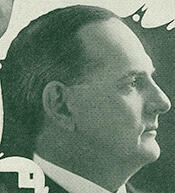
Here you will find contact information for Representative Hubert Frederick Fisher, including email address, phone number, and mailing address.
| Name | Hubert Frederick Fisher |
| Position | Representative |
| State | Tennessee |
| District | 10 |
| Party | Democratic |
| Status | Former Representative |
| Term Start | April 2, 1917 |
| Term End | March 3, 1931 |
| Terms Served | 7 |
| Born | October 6, 1877 |
| Gender | Male |
| Bioguide ID | F000149 |
About Representative Hubert Frederick Fisher
Hubert Frederick Fisher (October 6, 1877 – June 16, 1941) was an American politician, attorney, and educator who served as a Democratic member of the United States House of Representatives for Tennessee’s 10th congressional district from 1917 to 1931. Over the course of seven consecutive terms in Congress, he represented his constituents during a period of significant national change, including World War I and the early years of the Great Depression.
Fisher was born on October 6, 1877, in Milton, Santa Rosa County, Florida, the son of Frederick Fisher and Mary Anna (McCarter) Fisher. He attended the common schools in his youth and went on to higher education at the University of Mississippi in Oxford, from which he graduated in 1898. Seeking further academic and athletic opportunities, he attended Princeton University, where he distinguished himself as a star player on the 1901 football team. His time at Princeton helped establish the foundation for his early career in collegiate athletics as well as his later prominence in public life.
After his studies, Fisher moved into the field of athletics and education. He became the third head football coach at the University of Tennessee, serving from 1902 to 1903. Following J. A. Pierce and Gilbert Kelly in that position, Fisher compiled a career coaching record of 10–7 with the Tennessee Volunteers. Like Kelly, he had played football at Princeton University before assuming coaching duties in Knoxville. His coaching tenure at Tennessee placed him among the early figures in the development of Southern collegiate football and reflected his leadership abilities and public profile even before he entered the legal profession and politics.
Fisher studied law following his coaching career and was admitted to the bar in 1904. He commenced the practice of law in Memphis, Tennessee, where he established himself as a practicing attorney. On November 6, 1909, he married Louise Sanford. His growing involvement in public affairs led him into Democratic Party politics, and he served as a delegate to the Democratic National Convention in 1912. He was elected to the Tennessee Senate, serving as a state senator in 1913 and 1914. From 1914 to 1917, he held federal office as the United States district attorney for the Western District of Tennessee, further solidifying his reputation as a public servant and legal professional.
Elected as a Democrat to the Sixty-fifth Congress and to the six succeeding Congresses, Fisher served in the U.S. House of Representatives from March 4, 1917, to March 3, 1931, representing Tennessee’s 10th congressional district. As a member of the House of Representatives during seven terms in office, he participated actively in the legislative process and represented the interests of his constituents during a significant period in American history. His years in Congress spanned the nation’s involvement in World War I, the postwar era, and the onset of the Great Depression, and he contributed to the work of the Democratic Party in shaping national policy. He chose not to be a candidate for renomination in 1930, thereby concluding his congressional career at the end of his seventh term.
Following his departure from Congress, Fisher’s public life was curtailed by increasing deafness. Because of this disability, he retired from legal and political activities and moved to Germantown, Tennessee. There he engaged in nursery pursuits, turning his attention to agricultural and horticultural interests in his later years. His withdrawal from public office marked the end of more than two decades of continuous service in state and federal government.
Fisher died on June 16, 1941, at the age of 63, while on a visit to New York City. He was interred at Old Gray Cemetery in Knoxville, Tennessee. His career encompassed roles as educator, coach, attorney, state legislator, federal prosecutor, and seven-term United States Representative, reflecting a varied and sustained commitment to public service in Tennessee and the nation.