Senator Hubert Durrett Stephens
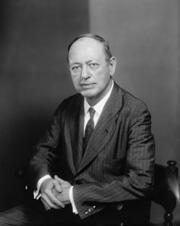
Here you will find contact information for Senator Hubert Durrett Stephens, including email address, phone number, and mailing address.
| Name | Hubert Durrett Stephens |
| Position | Senator |
| State | Mississippi |
| Party | Democratic |
| Status | Former Representative |
| Term Start | April 4, 1911 |
| Term End | January 3, 1935 |
| Terms Served | 7 |
| Born | July 2, 1875 |
| Gender | Male |
| Bioguide ID | S000857 |
About Senator Hubert Durrett Stephens
Hubert Durrett Stephens (July 2, 1875 – March 14, 1946) was an American lawyer and Democratic politician who represented Mississippi in the United States Congress during a significant period in American history. Born in New Albany, Union County, Mississippi, he grew up in the post-Reconstruction South and was educated in local schools before attending the University of Mississippi at Oxford. At the university he played football for one of the school’s early teams and went on to graduate from the law department. After his admission to the bar, Stephens returned to his hometown of New Albany, where he soon began to practice law and entered local public life.
Stephens’s early political career began at the municipal level, where he served one term as a town alderman in New Albany. His work in local government led to higher responsibilities in the state’s judicial system. In 1907 he received an appointment to fill a vacancy as district attorney in the Third Judicial Circuit of Mississippi, a position that covered several counties in the northern part of the state. He proved sufficiently popular and effective that in 1908 he was elected to a full term as district attorney. These early roles established his reputation as a capable lawyer and public official and provided a foundation for his subsequent congressional career.
In 1910 Stephens ran as a Democrat for a seat in the United States House of Representatives from Mississippi. He won election and four subsequent reelections, serving five consecutive terms from March 4, 1911, to March 3, 1921. During this decade in the House, he was a supporter of President Woodrow Wilson and aligned himself with Wilson’s program on major economic issues. Advocating a free trade approach, he opposed the protective tariff that was one of the most hotly debated questions of the era. On the House Banking and Currency Committee he rose to the position of vice chairman of the Banking and Currency Subcommittee and became an advocate of the Federal Reserve Act of 1913, which he called “the greatest piece of constructive legislation that has been enacted in the history of the nation.”
Representing an agrarian, rural district, Stephens consistently supported federal measures to improve conditions in the countryside. He pressed for federal support for rural road and transportation development, recognizing the importance of infrastructure to farmers and small communities. A strong supporter of states’ rights, he opposed many progressive social reforms of the period. He voted against giving women the right to vote and resisted reforms in child labor laws, arguing that such measures would negatively affect family farms. He also backed the prohibition amendment in 1917, reflecting his opposition to what he regarded as the immoral trafficking of liquor throughout the South. On labor and regulatory questions, his record was mixed and sometimes cautious: he voted “present” on a 1914 bill limiting state public service commissioners in their approval of new railroad stock and again on a 1916 workers’ compensation bill passed by the House. He opposed a bill limiting railroad employees to an eight-hour workday but supported federalization of the nation’s railways during World War I. Citing health concerns stemming from adult-onset diabetes, Stephens declined to run for reelection in 1920 and left the House at the end of his fifth term in 1921.
After a brief interval out of federal office, Stephens sought a seat in the United States Senate. In 1922 he ran for the Mississippi Senate seat that became open upon the retirement of Senator John Sharp Williams. In a closely watched Democratic primary, he defeated former Senator James K. Vardaman by a vote of 95,351 to 86,853, and in 1923 he began the first of two consecutive terms as a United States Senator from Mississippi. Although one source has incorrectly stated that he served in the Senate from 1911 to 1935, his Senate service in fact extended from March 4, 1923, to January 3, 1935, encompassing two full terms. As a member of the Senate, Hubert Durrett Stephens participated in the democratic process and represented the interests of his Mississippi constituents during a period marked by the aftermath of World War I, the prosperity of the 1920s, the catastrophic Mississippi River Flood of 1927, and the onset of the Great Depression.
In the Senate, Stephens served on the Commerce Committee and became involved in the national debate over the future of the Mississippi River Delta. After the devastating 1927 flood, the committee devoted extensive attention to flood control and river management. Stephens aligned himself with other senators from the lower Mississippi Valley in the contentious discussions over the establishment of a comprehensive flood control plan for the region. Despite his involvement, he gained a reputation in Washington for reticence and caution; a prominent national magazine of the day described him as “the only senator in recent times who has evinced a willingness to forego his right to talk,” underscoring his image as Mississippi’s “quiet man” in the Senate. He generally opposed liberal immigration policies, yet he supported legislation to permit the admission and naturalization of foreign women married to U.S. servicemen and backed the legal admission of Mexican beet sugar workers. He was a leader in the successful enactment of legislation to reorganize the federal prison system and create the Bureau of Prisons, reflecting his interest in institutional reform.
During the New Deal era, Stephens supported the candidacy of President Franklin D. Roosevelt and backed most of the central tenets of Roosevelt’s program, including major economic recovery and relief measures. Nonetheless, he remained more conservative than Mississippi’s other senator, Pat Harrison, particularly on social and labor issues. He opposed labor reforms such as the five-day workweek and was generally less willing to accept far-reaching social and economic changes. He did, however, play a leading role in securing federal support for the construction of the Natchez Trace Parkway, a major infrastructure and conservation project linking Natchez, Mississippi, with Nashville, Tennessee, that would become one of the region’s most notable parkways. In 1925, while still in the Senate, Stephens unsuccessfully attempted to intervene in the lynching of L. Q. Ivy, a Black man accused of rape in New Albany, an episode that highlighted both the limits of federal influence over local racial violence and the entrenched racial order of the Jim Crow South.
Stephens’s final Senate campaign in 1934 proved unsuccessful. Running for renomination in the Democratic primary, he campaigned on the platform “Stand by the president and his program,” emphasizing his support for Roosevelt and the New Deal. His opponent, former governor Theodore G. Bilbo, employed the jingoistic and inflammatory rhetoric that would later make him a national symbol of the anti–civil rights bloc in Congress. Bilbo attacked Stephens for his record on labor reforms, his perceived silence on key issues, and his support for an economy measure that reduced funding for veterans. In the resulting contest, Bilbo defeated Stephens in the primary, ending Stephens’s Senate career in January 1935 and concluding his fourteen years of service in the United States Congress—five terms in the House from 1911 to 1921 and two terms in the Senate from 1923 to 1935.
After leaving the Senate, Stephens continued to serve in federal public life for a brief period. From 1935 to 1936 he was a director of the Reconstruction Finance Corporation, the New Deal–era agency charged with providing financial support to banks, industries, and state and local governments during the Great Depression. Following his service with the RFC, he practiced law in Washington, D.C., drawing on his long experience in federal legislative and regulatory matters. In 1941 he retired from active legal practice and returned to Mississippi, where he lived on and managed his farm near New Albany. In his later years he experienced declining health, and, reflecting his private nature and perhaps his dissatisfaction with public scrutiny, he instructed before his death that his official papers from his time in office be burned, leaving relatively little documentary record of his congressional career beyond the formal proceedings and public acts.
Hubert Durrett Stephens died in New Albany, Mississippi, on March 14, 1946, at the age of 70, following a lengthy period of declining health. He was interred in Pythian Cemetery in his hometown. His long tenure in the House and Senate, his support for Wilsonian finance reforms and much of the New Deal, his advocacy for rural infrastructure and flood control, and his cautious, often conservative stance on social and labor issues made him a characteristic figure of Mississippi’s Democratic leadership in the early twentieth century.