Representative Joel Deckard
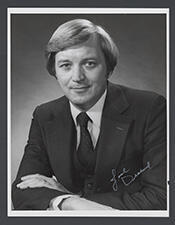
Here you will find contact information for Representative Joel Deckard, including email address, phone number, and mailing address.
| Name | Joel Deckard |
| Position | Representative |
| State | Indiana |
| District | 8 |
| Party | Republican |
| Status | Former Representative |
| Term Start | January 15, 1979 |
| Term End | January 3, 1983 |
| Terms Served | 2 |
| Born | March 7, 1942 |
| Gender | Male |
| Bioguide ID | D000183 |
About Representative Joel Deckard
Huey Joel Deckard (March 7, 1942 – September 6, 2016) was an American businessman and politician who served two terms as a U.S. Representative from Indiana from 1979 to 1983. A member of the Republican Party, he contributed to the legislative process during a significant period in American history, participating in the democratic process and representing the interests of his constituents in the United States House of Representatives.
Deckard was born in Vandalia, Illinois, on March 7, 1942. He moved to Indiana as a youth and attended public schools in Mount Vernon, Indiana. After completing his secondary education, he pursued higher education at the University of Evansville, which he attended from 1962 to 1967. In addition to his academic pursuits, Deckard began a parallel path of public service and military involvement, serving in the Indiana National Guard from 1966 to 1972.
Before entering full-time elective office, Deckard established himself in the broadcasting and communications industry. From 1959 to 1972, he was affiliated with broadcasting stations in southern Illinois and Indiana, gaining experience in media operations and regional communications. He later became a cable television executive and legislative liaison for the Illinois-Indiana TV Association from 1974 to 1977, a role that placed him at the intersection of business, technology, and public policy. During this period, he also formed a corporation involved in the design and construction of energy-efficient and solar-heated homes and offices, reflecting an early interest in innovative and environmentally conscious building practices.
Deckard’s formal political career began at the state level. He served as a member of the Indiana House of Representatives from 1966 to 1974, representing his district in the state legislature for four consecutive terms. In the Indiana House, he participated in shaping state policy during a time of social and economic change, building the legislative experience and political profile that would later support his bid for national office.
In 1978, Deckard was elected as a Republican to the Ninety-sixth Congress and was subsequently reelected to the Ninety-seventh Congress, serving in the U.S. House of Representatives from January 3, 1979, to January 3, 1983. During his two terms in Congress, he represented an Indiana district long known for its competitive politics, sometimes referred to as the “Bloody Eighth” because of its history of closely contested races and incumbent defeats. His tenure coincided with the end of the Carter administration and the beginning of the Reagan administration, a period marked by economic challenges, shifting national priorities, and significant legislative debates. As a member of the House, Deckard took part in the federal legislative process, working on behalf of his constituents and contributing to national policy discussions.
Deckard sought a third term in 1982 but was an unsuccessful candidate for reelection to the Ninety-eighth Congress, losing to then–Bloomington mayor Frank McCloskey. Initially favored for reelection, his campaign was complicated by an automobile accident three weeks before the election, after which he refused to take a blood test and was charged with driving under the influence. McCloskey also sought to associate Deckard with President Ronald Reagan at a time of high unemployment in the district. When McCloskey defeated him, Deckard became the sixth incumbent from 1966 to 1982 to lose reelection in the district known as the “Bloody Eighth.”
After leaving Congress, Deckard eventually moved to Florida, where he transitioned into the technology and financial services sector. He became a computer technical specialist for Citibank in Tallahassee, Florida, applying his skills in a corporate and technological setting. Remaining engaged in national politics, he aligned himself with conservative commentator and presidential candidate Pat Buchanan and, in 2000, ran as the Reform Party’s nominee for the United States Senate from Florida. In that race he received 17,338 votes, amounting to 0.30 percent of the total votes cast. His vote total later became a subject of statistical analysis by critics of the “butterfly ballot” used in Palm Beach County during the controversial 2000 election, as analysts examined how ballot design may have affected minor-party candidates’ vote counts.
In his later years, Deckard resided in Little Elm, Texas, in retirement. He died of an apparent heart attack on September 6, 2016, at a hospital in McKinney, Texas. His career encompassed broadcasting, business, state legislative service, two terms in the U.S. House of Representatives, and continued political involvement into the twenty-first century.