Senator Huey Pierce Long
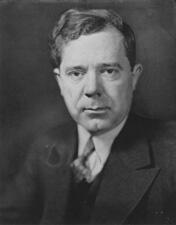
Here you will find contact information for Senator Huey Pierce Long, including email address, phone number, and mailing address.
| Name | Huey Pierce Long |
| Position | Senator |
| State | Louisiana |
| Party | Democratic |
| Status | Former Representative |
| Term Start | January 1, 1932 |
| Term End | December 31, 1935 |
| Terms Served | 1 |
| Born | August 30, 1893 |
| Gender | Male |
| Bioguide ID | L000418 |
About Senator Huey Pierce Long
Huey Pierce Long served as a Senator from Louisiana in the United States Congress from 1931 to 1935. A member of the Democratic Party, Huey Pierce Long contributed to the legislative process during 1 term in office.
Huey Pierce Long’s service in Congress occurred during a significant period in American history. As a member of the Senate, Huey Pierce Long participated in the democratic process and represented the interests of constituents.
Huey Pierce Long Jr. (August 30, 1893 – September 10, 1935), nicknamed “The Kingfish”, was an American politician who served as the 40th governor of Louisiana from 1928 to 1932 and as a United States senator from 1932 until his assassination in 1935. He was a left-wing populist member of the Democratic Party and rose to national prominence during the Great Depression for his vocal criticism of President Franklin D. Roosevelt and his New Deal, which Long deemed insufficiently radical. As the political leader of Louisiana, he commanded wide networks of supporters and often took forceful action. A controversial figure, Long is celebrated as a populist champion of the poor or, conversely, denounced as a fascistic demagogue. Long was born in the impoverished north of Louisiana in 1893. After working as a traveling salesman and briefly attending three colleges, he was admitted to the bar in Louisiana. Following a short career as an attorney, in which he often represented poor plaintiffs, Long was elected to the Louisiana Public Service Commission. As commissioner, he prosecuted large corporations such as Standard Oil, a lifelong target of his rhetorical attacks. After a hearing in which Long argued before the U.S. Supreme Court, Chief Justice and former president William Howard Taft praised him as “the most brilliant lawyer who ever practiced before the United States Supreme Court”. After a failed 1924 campaign, Long appealed to the sharp economic and class divisions in Louisiana to win the 1928 gubernatorial election. Once in office, he expanded social programs, organized massive public works projects, such as a modern highway system and the tallest capitol building in the nation, and proposed a cotton holiday. Through political maneuvering, Long became the political boss of Louisiana. He was impeached in 1929 for abuses of power, but the proceedings collapsed in the State Senate. His opponents argued his policies and methods were unconstitutional and authoritarian. At its climax, Long’s political opposition organized a minor insurrection in 1935. Long was elected to the U.S. Senate in 1930 but did not assume his seat until 1932. He established himself as an isolationist, arguing that Standard Oil and Wall Street orchestrated American foreign policy. He was instrumental in securing Franklin Roosevelt’s 1932 presidential nomination, but split with him in 1933, becoming a prominent critic of his New Deal. As an alternative, he proposed the Share Our Wealth plan in 1934. To stimulate the economy, he advocated massive federal spending, a wealth tax, and wealth redistribution. These proposals drew widespread support, with millions joining local Share Our Wealth clubs. Poised for a 1936 presidential bid, Long was assassinated by Carl Weiss inside the Louisiana State Capitol in 1935. His assassin was immediately shot and killed by Long’s bodyguards. Although Long’s movement faded, Roosevelt adopted many of his proposals in the Second New Deal, and Louisiana politics would be organized along anti- or pro-Long factions until the 1960s. He left behind a political dynasty that included his wife, Senator Rose McConnell Long; his son, Senator Russell B. Long; and his brother, Governor Earl Long, among others.