Representative Hugh Joseph Addonizio
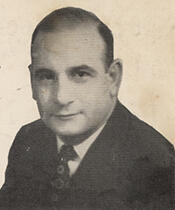
Here you will find contact information for Representative Hugh Joseph Addonizio, including email address, phone number, and mailing address.
| Name | Hugh Joseph Addonizio |
| Position | Representative |
| State | New Jersey |
| District | 11 |
| Party | Democratic |
| Status | Former Representative |
| Term Start | January 3, 1949 |
| Term End | January 3, 1963 |
| Terms Served | 7 |
| Born | January 31, 1914 |
| Gender | Male |
| Bioguide ID | A000054 |
About Representative Hugh Joseph Addonizio
Hugh Joseph Addonizio (January 31, 1914 – February 2, 1981) was an American Democratic Party politician who served seven terms as a U.S. Representative from New Jersey and later as the 33rd mayor of Newark, New Jersey, before being sentenced to prison for corruption. He represented New Jersey’s 11th congressional district in the United States House of Representatives from 1949 to 1962 and served as mayor of Newark from 1962 to 1970, playing a prominent and ultimately controversial role in mid‑twentieth‑century New Jersey politics.
Addonizio was born in Newark, New Jersey, to an Italian American family and was raised in the city he would later represent in Congress and lead as mayor. He attended West Side High School in Newark and also played quarterback at Saint Benedict’s Preparatory School, where he distinguished himself as an athlete. On the strength of his athletic ability he received a scholarship to Fordham University in New York City, from which he graduated in 1939. After completing his college education, he returned to Newark and went to work for the A&C Clothing Company, a family business where he worked under his father and rose through the ranks, becoming vice president of the company in 1946.
With the onset of World War II, Addonizio entered military service and was among the first Americans drafted in 1940, a year before the attack on Pearl Harbor. He served in the United States Army and saw combat in several major theaters of the war, including North Africa, Italy, and France. Rising from the rank of private to captain by the time of his discharge, he earned the Silver Star for gallantry in action. In recognition of his military leadership and service, he was later named to the Officer Candidate School Hall of Fame at Fort Benning, underscoring his standing among wartime officers.
Following his return from military service and his work in the clothing business, Addonizio entered electoral politics as a member of the Democratic Party. In 1948 he ran for and won a seat in the United States House of Representatives, representing New Jersey’s 11th congressional district. He took office in January 1949 and served continuously in Congress until his resignation on June 30, 1962. During this period, which encompassed the early Cold War, the Korean War, and the beginning of the civil rights era, he participated in the legislative process and represented the interests of his Newark‑area constituents over seven terms in office. His tenure in the House placed him among the New Jersey delegation during a significant period in American history, as Congress grappled with domestic economic issues, postwar reconstruction, and evolving federal social policies.
In 1962, Addonizio resigned his congressional seat to run for mayor of Newark. Campaigning on a reform platform, he positioned himself as an opponent of what he described as the entrenched and corrupt political machine of incumbent mayor Leo P. Carlin, who had held the office since 1953. Addonizio won the election and took office as the 33rd mayor of Newark, beginning a tenure that would last from 1962 until 1970. His administration coincided with a period of urban decline, racial tension, and economic dislocation in many American cities, and Newark was no exception. The 1967 Newark riots, a major episode of civil unrest, occurred during his time in office and drew national attention to conditions in the city and to the conduct of local government.
In the aftermath of the 1967 riots, a state investigation into the Newark municipal administration was initiated, focusing on allegations of corruption and misconduct. This inquiry led to the discovery that Addonizio and other city officials had been taking kickbacks from city contractors. In December 1969, he and nine current or former officials of the Newark municipal administration, along with five other individuals, were indicted by a federal grand jury. The charges centered on a scheme of extortion and corruption involving municipal contracts and payments from local businesses seeking to do work for the city.
In July 1970, Addonizio and four other defendants were found guilty by a federal jury on 64 counts each, including one count of conspiracy and 63 counts of extortion. The case revealed that the scheme had involved the extortion of approximately $1.5 million in kickbacks. In September 1970, U.S. District Court Judge George H. Barlow sentenced Addonizio to ten years in federal prison and imposed a fine of $25,000, characterizing the crime as one that “tore at the very heart of our civilized society and our form of representative government.” Addonizio ultimately served around half of his ten‑year sentence before being released on parole, marking a dramatic reversal from his earlier prominence as a congressman and mayor.
In his later years, following his release from prison, Addonizio lived out of the public spotlight. He died of cardiac arrest on February 2, 1981, at the age of 67. He was interred at Gate of Heaven Cemetery in East Hanover, New Jersey. His career, spanning military service, seven terms in Congress, and eight years as mayor of Newark, remains notable both for his rise from a Newark neighborhood to high public office and for the corruption scandal that brought his political life to an end.