Representative Hugh Anderson Dinsmore
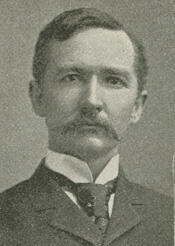
Here you will find contact information for Representative Hugh Anderson Dinsmore, including email address, phone number, and mailing address.
| Name | Hugh Anderson Dinsmore |
| Position | Representative |
| State | Arkansas |
| District | 3 |
| Party | Democratic |
| Status | Former Representative |
| Term Start | August 7, 1893 |
| Term End | March 3, 1905 |
| Terms Served | 6 |
| Born | December 24, 1850 |
| Gender | Male |
| Bioguide ID | D000358 |
About Representative Hugh Anderson Dinsmore
Hugh Anderson Dinsmore (December 24, 1850 – May 2, 1930) was an American lawyer, diplomat, and Democratic politician who served six terms as a U.S. Representative from Arkansas from 1893 to 1905. Born at Cave Springs, Benton County, Arkansas, he was the son of Alexander Winchester Dinsmore and Catherine Anderson Dinsmore. He attended private schools in Benton and Washington Counties, receiving a local education that prepared him for a career in business and law. On May 25, 1883, he married Elizabeth Le Grand Fisher of St. Louis, Missouri. The couple had one son, Hamilton. Elizabeth Dinsmore died on June 19, 1886, and Hugh Dinsmore never remarried.
Before entering the legal profession, Dinsmore worked as a store clerk and later as a traveling salesman for a St. Louis firm, gaining practical experience in commerce and regional trade. Determined to become a lawyer, he studied law under Samuel N. Elliott of Bentonville, Arkansas. His abilities were recognized early in his career, and in 1872 Governor Elisha Baxter appointed him the eleventh Benton County circuit court clerk. Dinsmore resigned this position in 1874 when he was admitted to the bar. In 1875 he moved to Fayetteville, Arkansas, where he entered into a law partnership with former Arkansas Supreme Court justice David Walker, establishing himself as a prominent attorney in the region.
Dinsmore’s early public career advanced through the state judicial system. In 1878 he was elected prosecuting attorney for the Fourth Judicial District of Arkansas, a position he held until 1884. In this role he gained experience in criminal law and public administration, building a reputation that would later support his diplomatic and congressional service. His legal and prosecutorial work during these years reflected the post-Reconstruction legal environment in Arkansas, as the state and region adjusted to new political and social realities.
In January 1887, President Grover Cleveland appointed Dinsmore as Minister Resident and consul general to the Kingdom of Korea, a post he held until May 25, 1890. Stationed in Seoul, he represented U.S. interests during a period of growing international competition in East Asia. His familiarity with Korea and Korean affairs later led a young Syngman Rhee—who would eventually become the first president of the Republic of Korea—to seek him out in January 1905 during Rhee’s mission to the United States to secure aid for Korea against Japanese encroachment and eventual annexation. Dinsmore used his connections to secure Rhee a brief meeting with Secretary of State John Hay, though Rhee’s broader mission ultimately ended in failure. After completing his diplomatic service, Dinsmore returned to Fayetteville and resumed the practice of law.
Dinsmore was elected as a Democrat to the Fifty-third Congress and to the five succeeding Congresses, serving as a U.S. Representative from Arkansas from March 4, 1893, to March 3, 1905. His six consecutive terms in the House of Representatives coincided with a significant period in American history marked by economic transformation, the Spanish–American War, and debates over expansion and imperial policy. As a member of the House of Representatives, he participated in the legislative process and represented the interests of his Arkansas constituents. During his tenure, he was a vocal opponent of the annexation of Hawaii, reflecting his skepticism of American imperial expansion and his concern for the implications of such policies for both the United States and the peoples affected. He was an unsuccessful candidate for renomination in 1904 to the Fifty-ninth Congress, which ended his congressional service in March 1905.
After leaving Congress, Dinsmore again resumed the practice of law in Fayetteville, Arkansas, and in later years devoted much of his time to the management of his farming interests. He remained engaged in public and civic affairs and served as a member of the board of trustees of the University of Arkansas, contributing to the governance and development of the state’s principal public university. His post-congressional career reflected a continued commitment to the legal profession, agriculture, and higher education in Arkansas.
Hugh Anderson Dinsmore died in St. Louis, Missouri, on May 2, 1930, at the age of 79. He was interred at Evergreen Cemetery in Fayetteville, Arkansas, returning in death to the community where he had built his legal career and from which he had launched his service in diplomacy and the United States Congress.