Senator Hugo Lafayette Black
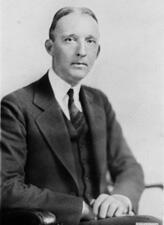
Here you will find contact information for Senator Hugo Lafayette Black, including email address, phone number, and mailing address.
| Name | Hugo Lafayette Black |
| Position | Senator |
| State | Alabama |
| Party | Democratic |
| Status | Former Representative |
| Term Start | December 5, 1927 |
| Term End | August 19, 1937 |
| Terms Served | 2 |
| Born | February 27, 1886 |
| Gender | Male |
| Bioguide ID | B000499 |
About Senator Hugo Lafayette Black
Hugo Lafayette Black served as a Senator from Alabama in the United States Congress from 1927 to 1937. A member of the Democratic Party, Hugo Lafayette Black contributed to the legislative process during 2 terms in office.
Hugo Lafayette Black’s service in Congress occurred during a significant period in American history. As a member of the Senate, Hugo Lafayette Black participated in the democratic process and represented the interests of constituents.
Hugo Lafayette Black (February 27, 1886 – September 25, 1971) was an American lawyer, politician, and jurist who served as a U.S. Senator from Alabama from 1927 to 1937 and as an associate justice of the U.S. Supreme Court from 1937 to 1971. A member of the Democratic Party and a devoted New Dealer, Black endorsed Franklin D. Roosevelt in both the 1932 and 1936 presidential elections. Early in his life, Black espoused anti-Catholic views and was a member of the Ku Klux Klan. An article from the Pittsburgh Post-Gazette reported that he temporarily resigned from the Klan in 1925 to bolster his senatorial campaign, before quietly rejoining in 1926. In 1937, upon being appointed to the Supreme Court, Black said: “Before becoming a Senator I dropped the Klan. I have had nothing to do with it since that time. I abandoned it. I completely discontinued any association with the organization.” Black served as the secretary of the Senate Democratic Conference and the chair of the Senate Education Committee during his decade in the Senate. Having gained a reputation in the Senate as a reformer, Black was nominated to the Supreme Court by President Roosevelt and confirmed by the Senate by a vote of 63 to 16 (six Democratic Senators and ten Republican Senators voted against him). He was the first of nine Roosevelt appointees to the court, and he outlasted all except for William O. Douglas. The sixth longest-serving justice in Supreme Court history, Black was one of the most influential Supreme Court justices in the 20th century. He is noted for using historical evidence to support textualist arguments, his position that the liberties guaranteed in the Bill of Rights were imposed on the states (“incorporated”) by the Fourteenth Amendment, and his absolutist stance on the First Amendment, often declaring “No law [abridging the freedom of speech] means no law.” Black expanded individual rights in his opinions in cases such as Gideon v. Wainwright, Engel v. Vitale, and Wesberry v. Sanders. Black’s views were not uniformly liberal. During World War II, he wrote the majority opinion in Korematsu v. United States (1944), which upheld the internment of Japanese Americans ordered by the president Franklin Roosevelt. During the mid-1960s, Black became slightly more conservative. Black opposed the doctrine of substantive due process (the pre-1937 Supreme Court’s interpretation of this concept made it impossible for the government to enact legislation that conservatives claimed interfered with the freedom of business owners), and believed that there was no basis in the words of the Constitution for a right to privacy, voting against finding one in Griswold v. Connecticut (1965). He also took conservative positions in cases such as Shapiro v. Thompson, Goldberg v. Kelly, Tinker v. Des Moines, and Cohen v. California where he distinguished between “pure speech” and “expressive conduct”.