Representative Humphrey Howe Leavitt
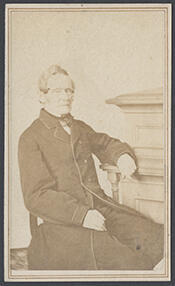
Here you will find contact information for Representative Humphrey Howe Leavitt, including email address, phone number, and mailing address.
| Name | Humphrey Howe Leavitt |
| Position | Representative |
| State | Ohio |
| District | 19 |
| Party | Jackson |
| Status | Former Representative |
| Term Start | December 7, 1829 |
| Term End | March 3, 1835 |
| Terms Served | 3 |
| Born | June 18, 1796 |
| Gender | Male |
| Bioguide ID | L000183 |
About Representative Humphrey Howe Leavitt
Humphrey Howe Leavitt (June 18, 1796 – March 15, 1873) was a United States Representative from Ohio and later a United States district judge of the United States District Court for the District of Ohio and the United States District Court for the Southern District of Ohio. He was born on June 18, 1796, in Suffield, Connecticut, to Captain John Wheeler Leavitt and Silence (Fitch) Leavitt, members of an old New England family involved in the purchase of the Western Reserve from the state of Connecticut. In 1800, his family moved to the Northwest Territory and settled in what would become Trumbull County, Ohio, where the town of Leavittsburg was later named for the family. He completed preparatory studies, attended an academy in western Pennsylvania, and in his youth taught school and clerked in a store. Leavitt served in the United States Army during the War of 1812, an experience that preceded his entry into the legal profession.
After the war, Leavitt read law and was admitted to the bar in 1816. He began his legal career in private practice in Cadiz, Ohio, where he practiced from 1816 to 1820. During this period he also entered local public service, serving as a justice of the peace in Harrison County, Ohio, from 1818 to 1820 and as prosecutor of Monroe County, Ohio, from 1818 to 1820. In 1820 he moved to Steubenville, Ohio, where he resumed private practice from 1820 to 1823. His growing reputation as a lawyer led to his appointment as prosecutor for Jefferson County, Ohio, a position he held from 1823 to 1829. He also served as clerk of the Jefferson County Court of Common Pleas and of the Ohio Supreme Court from 1829 to 1832. In addition to his legal and official duties, Leavitt contributed to the legal literature of his state; in 1843 he authored “The Ohio officer and justices’ guide,” a practical manual for justices of the peace, constables, township officers, and others, printed at Steubenville.
Leavitt’s early legal work was accompanied by increasing involvement in state politics. He was elected a member of the Ohio House of Representatives, serving from 1825 to 1826, and then served in the Ohio Senate from 1827 to 1828. These legislative roles introduced him to broader questions of state governance and party politics at a time when the Jacksonian movement was reshaping national political alignments. His experience in both houses of the Ohio legislature, combined with his prosecutorial and clerical responsibilities, positioned him as a prominent Jacksonian figure in eastern Ohio on the eve of his election to national office.
Humphrey Howe Leavitt served as a Representative from Ohio in the United States Congress from 1829 to 1835. A member of the Jackson Party, or Jacksonian Democrat, he was elected from Ohio’s 11th congressional district and later from Ohio’s 19th congressional district to the United States House of Representatives of the 21st United States Congress to fill the vacancy caused by the resignation of Representative John M. Goodenow. He was reelected to the 22nd and 23rd Congresses and served from December 6, 1830, until July 10, 1834, when he resigned to accept a judicial position. During his three terms in office, his service in Congress occurred during a significant period in American history, marked by intense party conflict and the consolidation of Jacksonian democracy. As a member of the House of Representatives, Leavitt participated in the democratic process and represented the interests of his constituents, though in a later memoir written for his children he described the work of a Congressman as “positively irksome and repulsive.” Reflecting on the pressures of party discipline, he wrote that “in times of party division, it is impossible for anyone in Congress to preserve a conscience void of offense toward God and at the same time to bear true allegiance to the party by which he has been elected. The member must vote with his party irrespective of the public good or expect to be visited with the fiercest denunciation.”
Leavitt left Congress in mid‑1834 to begin a long career on the federal bench. He was nominated by President Andrew Jackson on June 28, 1834, to a seat on the United States District Court for the District of Ohio vacated by Judge Benjamin Tappan. The United States Senate confirmed him the same day, June 28, 1834, and he received his commission on June 30, 1834. When Congress later reorganized the federal judiciary in Ohio, Leavitt was reassigned by operation of law on February 10, 1855, to the newly created United States District Court for the Southern District of Ohio, pursuant to 10 Stat. 604. Upon this reassignment he moved to Cincinnati, Ohio, which became the center of his judicial work. His service as a federal judge continued until April 1, 1871, when he retired; by that time he was the last remaining federal judge on the bench who had been appointed by President Jackson.
During his judicial tenure, Leavitt presided over a number of significant cases, the most notable involving Ohio politician Clement L. Vallandigham during the Civil War. In Vallandigham’s well-known habeas corpus case, arising from the politician’s arrest and military trial for antiwar speeches, Leavitt wrote an important opinion addressing the scope of federal judicial power and military authority in time of war, ultimately deciding against Vallandigham’s petition. His long service on the district court bench made him a prominent figure in the federal judiciary of the Sixth Circuit, and his portrait is displayed in the Potter Stewart United States Courthouse in Cincinnati.
In his personal life, Leavitt married Marie Antoinette McDowell, daughter of Dr. John McDowell, a physician who served as Provost of the University of Pennsylvania and Governor of Pennsylvania. Humphrey Howe and Marie Antoinette Leavitt had three sons, including John McDowell Leavitt, all born in Steubenville, Ohio; their descendants included figures such as John Brooks Leavitt. After his reassignment to the Southern District of Ohio in 1855, the family resided in Cincinnati. Following his retirement from the bench in 1871, Leavitt moved to Springfield, Ohio, where he engaged in literary pursuits and devoted time to writing, including an autobiographical memoir later published as “Autobiography of the Hon. Humphrey Howe Leavitt: Written for his family” (New York, 1893).
Leavitt’s interest in legal and social reform extended beyond the United States. In 1872 he was a member of the World’s Convention on Prison Reform in London, England, reflecting his engagement with contemporary debates on penology and the administration of justice. He died on March 15, 1873, in Springfield, Ohio. Humphrey Howe Leavitt was interred in Spring Grove Cemetery in Cincinnati, closing a life that spanned the early settlement of the Western Reserve, the rise of Jacksonian democracy, and the transformation of the federal judiciary in the nineteenth century.