Representative Hunter Holmes Moss
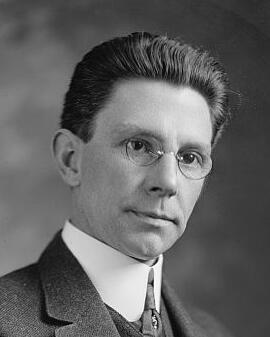
Here you will find contact information for Representative Hunter Holmes Moss, including email address, phone number, and mailing address.
| Name | Hunter Holmes Moss |
| Position | Representative |
| State | West Virginia |
| District | 4 |
| Party | Republican |
| Status | Former Representative |
| Term Start | April 7, 1913 |
| Term End | March 3, 1917 |
| Terms Served | 2 |
| Born | May 26, 1874 |
| Gender | Male |
| Bioguide ID | M001034 |
About Representative Hunter Holmes Moss
Hunter Holmes Moss Jr. (May 26, 1874 – July 15, 1916) was a lawyer, jurist, and Republican politician from West Virginia who served as a United States Representative from 1913 to 1916. Born in Parkersburg, Wood County, West Virginia, he came of age in a region experiencing rapid economic and political development at the turn of the twentieth century. His early years in Parkersburg, an important commercial center along the Ohio River, helped shape his familiarity with the concerns of local business and professional communities that he would later represent in public office.
Moss was educated in the public schools of Parkersburg and, in his early youth, worked in a bank, gaining practical experience in finance and administration. Pursuing a legal career, he enrolled in the law department of West Virginia University at Morgantown. He graduated in 1896 and was admitted to the bar the same year. Immediately upon admission, he opened a legal practice in Parkersburg in 1896, establishing himself as a young attorney in his home community and beginning a professional trajectory that would lead him into public service.
Moss’s early public career was rooted in local and county legal responsibilities. He was elected prosecuting attorney for Wood County, serving from 1900 to 1904. In this capacity he was responsible for the prosecution of criminal cases and the representation of the county’s interests in legal matters, which enhanced his reputation as a capable lawyer and public official. His performance as prosecuting attorney led to further advancement within the state judiciary.
In 1904, Moss became a judge on the Fourth Judicial Circuit Court of West Virginia, a position he held until 1912. As a circuit court judge, he presided over a broad range of civil and criminal cases during a period of significant industrial growth and social change in West Virginia. His eight-year tenure on the bench provided him with extensive judicial experience and heightened his public profile, laying the groundwork for his subsequent election to national office.
In 1912, Moss was elected to the United States House of Representatives as a Republican, representing West Virginia in the 63rd and 64th Congresses. He entered Congress at a significant period in American history, during the administration of President Woodrow Wilson and amid the broader Progressive Era reforms. Moss served from March 4, 1913, until his death on July 15, 1916, participating in the legislative process and representing the interests of his West Virginia constituents. As a member of the House of Representatives, he contributed to debates and votes on domestic policy and early responses to international developments in the years leading up to American involvement in World War I. His service in Congress encompassed two full terms and part of a third, and he was recognized as part of the Republican delegation from a state that was politically competitive in this era.
Moss’s congressional service was cut short when he died in office in Atlantic City, New Jersey, on July 15, 1916. His death placed him among the members of the United States Congress who died in office between 1900 and 1949. Following his death, he was interred at Odd Fellows Cemetery in Parkersburg, West Virginia, returning to the community where he had been born, educated, and first established his legal and political career. His passing prompted memorial addresses in the House of Representatives and the Senate, later published in 1917 under the title “Hunter H. Moss, Jr., late a representative from West Virginia,” reflecting the esteem in which he was held by his colleagues.
In his personal and family connections, Moss was part of a lineage that extended into later American public life. He was an uncle of the American journalist and historian Holmes Alexander, who himself went on to serve as a member of the Maryland House of Delegates. Through his legal practice, judicial service, and tenure in Congress, Hunter Holmes Moss Jr. left a record of public service that linked local, state, and national institutions during a formative period in West Virginia and United States political history.