Representative Ike Andrews
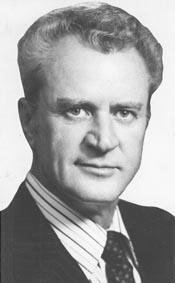
Here you will find contact information for Representative Ike Andrews, including email address, phone number, and mailing address.
| Name | Ike Andrews |
| Position | Representative |
| State | North Carolina |
| District | 4 |
| Party | Democratic |
| Status | Former Representative |
| Term Start | January 3, 1973 |
| Term End | January 3, 1985 |
| Terms Served | 6 |
| Born | September 2, 1925 |
| Gender | Male |
| Bioguide ID | A000207 |
About Representative Ike Andrews
Ike Franklin Andrews (September 2, 1925 – May 10, 2010) was an American politician who represented North Carolina in the United States House of Representatives from 1973 to 1985. A member of the Democratic Party, he served six consecutive terms as the U.S. Representative from North Carolina’s Fourth Congressional District, contributing to the legislative process during a significant period in American history. His tenure in Congress ended when he was defeated for reelection in 1984 by Republican Bill Cobey.
Andrews was born in Bonlee, Chatham County, North Carolina, on September 2, 1925. He grew up in rural North Carolina and attended local public schools before enrolling at Fork Union Military Academy in Virginia. He graduated from Fork Union in 1942, at the height of World War II. His early life in a small North Carolina community and his military academy training helped shape his sense of discipline, public service, and commitment to his home state, which would later define his political career.
Following his graduation from Fork Union Military Academy, Andrews entered the United States Army and served during World War II from 1943 to 1945. He was assigned as a field artillery forward observer, a hazardous combat role that required directing artillery fire from positions often close to enemy lines. During his military service he attained the rank of Master Sergeant and was awarded the Bronze Star for heroic or meritorious achievement and the Purple Heart for wounds received in action. His wartime experience, including both leadership responsibilities and personal sacrifice, informed his later work on veterans’ and defense-related issues.
After the war, Andrews returned to North Carolina and pursued higher education under the opportunities made available to many returning veterans. He enrolled at the University of North Carolina at Chapel Hill, where he earned a bachelor’s degree in 1950. He continued at the same institution’s law school and received his law degree in 1952. Upon admission to the bar, Andrews established a law practice in Pittsboro, North Carolina. His legal work in this small but growing community brought him into close contact with local citizens, businesses, and public officials, laying the groundwork for his entry into elective office.
Andrews began his political career in the North Carolina General Assembly. He was elected to the North Carolina State Senate in 1959, marking his first term in statewide office. He subsequently served multiple terms in the North Carolina House of Representatives, winning election in 1961, 1967, 1969, and 1971. In these roles he gained experience in state-level policymaking and developed a reputation as a diligent legislator attentive to the needs of his constituents. During this period he also built a network of political allies and supporters that would prove instrumental in his later campaigns for Congress.
In 1972, Andrews was elected to the U.S. House of Representatives from North Carolina’s Fourth Congressional District, beginning his first of six terms in Congress. He took office on January 3, 1973, and served continuously until January 3, 1985. As a member of the House of Representatives during a transformative era that included the end of the Vietnam War, the Watergate scandal, economic challenges of the 1970s, and the early years of the Reagan administration, Andrews participated in the democratic process and represented the interests of his North Carolina constituents on a wide range of national issues. A Democrat, he worked within his party’s caucus while also focusing on matters of particular concern to his district, including education, agriculture, and the needs of veterans and rural communities. His 1974 reelection campaign was managed by his then–son-in-law, Joe Hackney, who would later become Speaker of the North Carolina House of Representatives.
Andrews’s congressional service came to an end following the 1984 election, when he was defeated for reelection by Republican Bill Cobey. His departure from Congress concluded twelve years of federal legislative service, during which he had been part of major national debates and had helped shape policy affecting both North Carolina and the country as a whole. After leaving office, he returned to private life in North Carolina, drawing on his long experience as an attorney and public servant.
Ike Franklin Andrews died on May 10, 2010. His passing was noted in North Carolina and beyond as the loss of a World War II veteran, longtime public servant, and former congressman who had devoted much of his life to representing the people of his state at both the state and national levels.