Representative Ike Skelton
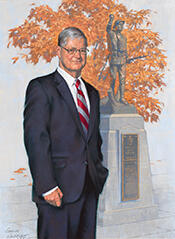
Here you will find contact information for Representative Ike Skelton, including email address, phone number, and mailing address.
| Name | Ike Skelton |
| Position | Representative |
| State | Missouri |
| District | 4 |
| Party | Democratic |
| Status | Former Representative |
| Term Start | January 4, 1977 |
| Term End | January 3, 2011 |
| Terms Served | 17 |
| Born | December 20, 1931 |
| Gender | Male |
| Bioguide ID | S000465 |
About Representative Ike Skelton
Isaac Newton Skelton IV (December 20, 1931 – October 28, 2013) was an American politician and lawyer who represented Missouri’s 4th congressional district in the U.S. House of Representatives from January 3, 1977, to January 3, 2011. A member of the Democratic Party, he served 17 consecutive terms in Congress and rose to become chairman of the House Armed Services Committee. His long tenure in the House coincided with a significant period in American political and military history, during which he became known for his focus on national defense, congressional oversight, and support for the armed forces.
Skelton was born in Lexington, Missouri, a rural town with a notable Civil War heritage, to Carolyn Marie (Boone) Skelton and Isaac Newton Skelton III. His family’s political connections dated back to the late 1920s, when his father met Harry S. Truman, then a Jackson County judge; the two men developed a close friendship that would later shape Skelton’s own political outlook and opportunities. In 1949, at age 17, Skelton attended Truman’s presidential inauguration, an experience he later cited as formative in his decision to pursue public service. As a youth, he was active in the Boy Scouts of America and attained the rank of Eagle Scout, reflecting an early commitment to leadership and civic responsibility.
Skelton pursued higher education in Missouri and abroad. He earned an associate of arts degree from Wentworth Military Academy and College in 1951, an institution that reinforced his lifelong interest in military affairs. He then attended the University of Missouri, where he received an A.B. degree in 1953 and an LL.B. in 1956. While at the University of Missouri, he was a member of the Sigma Chi fraternity and the Alpha Phi Omega service fraternity. In 1953, he also studied at the University of Edinburgh in Scotland, broadening his academic and cultural experience. After completing his legal education, he was admitted to the bar and began practicing law.
Skelton entered private legal practice in Lafayette County, Missouri, and quickly moved into public legal service. From 1957 to 1960, he served as prosecuting attorney for Lafayette County, gaining experience in criminal law and local government. He later served as a special assistant attorney general in the office of the Missouri Attorney General, further deepening his engagement with state legal and policy issues. Building on this foundation, Skelton won election to the Missouri Senate, representing Lafayette County from 1971 until 1977. His tenure in the state legislature helped establish his reputation as a diligent and knowledgeable lawmaker and positioned him for a bid for federal office.
When U.S. Representative William J. Randall retired after 17 years in the House, Skelton sought the open seat in Missouri’s 4th congressional district. In a crowded Democratic primary field of nine candidates, he secured the nomination with 40 percent of the vote. He ran with the endorsement of Bess Truman, widow of President Harry S. Truman, an endorsement he attributed to his father’s early support for Truman in the 1940 U.S. Senate primary. Skelton won the general election and took office in 1977. He was reelected 16 times, usually with well over 60 percent of the vote, and for many years appeared to have a secure hold on a district that, while increasingly Republican at the presidential level, maintained a tradition of supporting conservative Democrats.
During his 34 years in the House of Representatives, Skelton became one of Congress’s most influential voices on defense policy. He served on the House Armed Services Committee throughout his career and became its ranking member in 1998. Following the Democratic Party’s victory in the 2006 midterm elections, he was elevated to chairman of the committee, a post in which he served as an ex officio member of all its subcommittees. Before the 2006 election, he told columnist George Will that if Democrats won control of Congress, his top priority would be “oversight, oversight, oversight!” Although he voted in favor of the 2002 authorization for the War in Iraq, he expressed serious concerns about troop readiness and the conduct of the war. By 2006, he favored reducing the number of U.S. troops in Iraq and supported redeploying a brigade from Iraq to Kuwait. Commentators noted that under Skelton’s leadership, the Armed Services Committee resembled the World War II–era Senate committee chaired by his political hero, Harry S. Truman, which had investigated defense spending and wartime procurement.
Skelton’s voting record reflected a blend of economic liberalism and social conservatism. In the 111th Congress, he voted with Democratic leadership 94.6 percent of the time, though this meant he broke with his party more frequently than 82 percent of the Democratic Caucus. He opposed major Republican tax-cut packages, voting against President Ronald Reagan’s tax cuts in 1981 and President George W. Bush’s tax cuts in 2001. He was generally supportive of organized labor and backed federal TRiO programs that expanded educational opportunity. The League of Conservation Voters rated him at 53 percent on environmental issues, indicating a mixed record. On trade, he was one of the relatively few congressional Democrats to vote in favor of the Central America Free Trade Agreement (CAFTA) and generally supported free trade agreements. On social issues, however, he was fairly conservative: he opposed abortion and gun control, helped craft the “Don’t Ask, Don’t Tell” policy governing military service by gay and lesbian personnel in the 1990s, and voted against its repeal in 2010.
Throughout his congressional service, Skelton was a strong advocate for the Missouri National Guard and for military installations and education more broadly. In recognition of his longstanding support, the National Guard Training Center in Jefferson City, Missouri, was named in his honor. At times, however, he differed with other members of the Missouri delegation over base and unit realignments. In 2005, for example, he supported the Base Realignment and Closure (BRAC) recommendation to close the 131st Air National Guard Fighter Wing in St. Louis County, an “alert site” responsible for maintaining air sovereignty over parts of the United States. Senator Kit Bond opposed the closure, testifying that the wing had played a critical role in protecting key assets on September 11, 2001, and warning that its loss would weaken regional security. As ranking Democrat on the Armed Services Committee, Skelton nonetheless voted in favor of the BRAC recommendations, which passed the House, and the base was subsequently closed with its components redeployed elsewhere.
Skelton’s long incumbency masked the increasingly Republican tilt of his district. Historically, the 4th District had characteristics similar to “Yellow Dog Democrat” districts in the South, but by the early 2000s its rural areas had swung sharply toward the Republican Party. Republicans captured most of the area’s state legislative seats in 2000 and retained them thereafter. Redistricting had also pushed the district further into heavily Republican southwest Missouri as population declines around Kansas City forced the loss of strongly Democratic precincts. As late as 1983, during Skelton’s third term, the district stretched as far west as Independence on Kansas City’s eastern border, but over time it shed many of these Democratic-leaning areas. In 1982, after Missouri lost a congressional district, Skelton’s 4th District was merged with the neighboring 8th District represented by freshman Republican Wendell Bailey. Although Skelton kept about 60 percent of his former territory, Bailey held him to 55 percent of the vote, the only truly serious challenge he faced before 2010. Even as Al Gore, John Kerry, and Barack Obama each received less than 40 percent of the presidential vote in the district, Skelton continued to win reelection comfortably, leading observers to predict that a Republican would likely succeed him once he retired.
In the 2010 midterm elections, amid a national Republican wave, Skelton faced former Republican state representative Vicky Hartzler of Harrisonville, who had been out of elective office for more than a decade. The race quickly emerged as the most competitive contest the district had seen in many years, and political analysts rated it a toss-up. Hartzler criticized Skelton for voting in line with House Speaker Nancy Pelosi approximately 95 percent of the time, a figure she used to argue that he had become too closely aligned with national Democratic leadership. On November 2, 2010, in an outcome that surprised many observers, Skelton lost to Hartzler by a margin of 50 percent to 45 percent. He ran roughly even with her in areas closer to Kansas City but suffered heavy losses in rural counties that had long supported him. His defeat made him one of only three Democratic committee chairmen to lose reelection that year, alongside House Budget Committee chairman John Spratt of South Carolina and House Transportation and Infrastructure Committee chairman Jim Oberstar of Minnesota. Since Skelton’s departure, no Democrat has received as much as 40 percent of the vote in the district.
Skelton’s long career was marked by both decorum and occasional flashes of temper. On October 8, 2009, after addressing fellow Missouri Congressman Todd Akin, a Republican, on the House floor, Skelton was heard on a live C-SPAN microphone telling Akin to “stick it up your ass.” His spokeswoman, Jennifer Kohl, later stated that the comment was made “out of frustration in the heat of debate” and was not intended for broadcast. Akin’s spokesman, Steve Taylor, described the remark as “shocking and not characteristic of Skelton’s behavior,” underscoring the extent to which it stood out from his usual public demeanor.
In recognition of his contributions to national defense and military education, Skelton received numerous honors in the later years of his career and after leaving office. In 2005, the U.S. Navy Memorial Foundation presented him with its Naval Heritage Award for his support of the U.S. Navy and the armed forces during his years in Congress. In 2010, Commandant of the Marine Corps General James F. Amos named Skelton an Honorary Marine, making him the first U.S. congressman to receive that title. In 2012, the United States Military Academy at West Point awarded him the Sylvanus Thayer Award, one of its highest honors for non-graduates who have contributed significantly to the nation, and in the same year the U.S. Air Force’s Air University conferred upon him an honorary Doctor of Law degree in recognition of his work in advancing military education. Skelton died on October 28, 2013, leaving a legacy as a deeply influential, defense-focused legislator who represented Missouri’s 4th District in Congress for more than three decades.