Representative Ira Clifton Copley
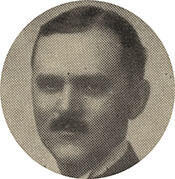
Here you will find contact information for Representative Ira Clifton Copley, including email address, phone number, and mailing address.
| Name | Ira Clifton Copley |
| Position | Representative |
| State | Illinois |
| District | 11 |
| Party | Republican |
| Status | Former Representative |
| Term Start | April 4, 1911 |
| Term End | March 3, 1923 |
| Terms Served | 6 |
| Born | October 25, 1864 |
| Gender | Male |
| Bioguide ID | C000770 |
About Representative Ira Clifton Copley
Ira Clifton Copley (October 25, 1864 – November 2, 1947) was an American publisher, politician, and utility tycoon who served as a Representative from Illinois in the United States Congress from 1911 to 1923. A member of the Republican Party for most of his political career, he also briefly aligned with Theodore Roosevelt’s Progressive (Bull Moose) Party, and over six consecutive terms in the U.S. House of Representatives he participated actively in the legislative process and represented the interests of his constituents during a significant period in American history. His public career was part of a broader family tradition of national service; his uncle, Richard H. Whiting, had also served in the House of Representatives from 1875 to 1877.
Copley was born on October 25, 1864, and came of age in the closing years of the Civil War and the Reconstruction era, a time of rapid industrial and political change in the United States. He later entered the fields of publishing and public utilities, building substantial business interests that would shape his public profile and later controversies. His early professional life established him as both an entrepreneur and a civic figure, and his growing prominence in Illinois business and political circles helped lay the groundwork for his eventual entry into elective office.
By the opening of the twentieth century, Copley had become a notable figure in Illinois, combining his interests in publishing and utilities with increasing involvement in Republican politics. His business activities, particularly in utilities, made him a significant economic actor in his region, while his work in publishing gave him a platform in public affairs. These combined roles positioned him to seek higher office as debates over progressivism, regulation, and political reform intensified at the state and national levels.
In 1910, Copley campaigned for the United States House of Representatives from Illinois’s 11th congressional district, seeking to succeed Howard M. Snapp. Running as a Republican, he successfully defeated his Democratic opponent and took his seat in the Sixty-second Congress in 1911. He was re-elected two years later, continuing to serve his district as the nation confronted issues of industrial regulation, tariff policy, and social reform. In 1914, amid the realignment of national politics around Theodore Roosevelt’s Progressive (Bull Moose) movement, Copley aligned himself with the Progressive Party and was elected as one of five Representatives from that party to the House. As the Progressive Party disintegrated by the end of his term, he returned to the Republican Party in 1916 and continued to represent his district through subsequent re-elections.
Copley’s congressional service, extending from 1911 to 1923, spanned the presidencies of William Howard Taft, Woodrow Wilson, and Warren G. Harding, and encompassed the First World War and its aftermath. During these six consecutive terms, he contributed to the legislative process as a member of the House of Representatives, participating in the democratic governance of the country and advocating for the interests of his Illinois constituents. He remained in office until 1922, when he was defeated in a Republican primary election by Frank R. Reid, bringing his twelve-year tenure in Congress to a close.
After leaving Congress, Copley devoted himself more fully to his publishing enterprises, expanding his influence in the newspaper industry. In 1927, he purchased Springfield’s Illinois State Journal, attracted in part by its pro-Republican editorial stance. At the same time, he attempted to acquire the Illinois State Register, the Journal’s Democratic-oriented competitor, but that effort initially failed. The two newspapers then engaged in nearly fifteen years of intense circulation battles, with the Register concentrating on city readers and the Journal seeking subscribers throughout the broader Springfield area. In 1942, Copley again sought to purchase the Register and this time succeeded, acquiring the paper while promising that it could maintain an independent editorial voice. The two papers were later merged in 1974 into The State Journal-Register, which continued as the major newspaper in Springfield.
Copley also expanded his publishing interests beyond Illinois. In 1928, he consolidated the San Diego Union and the San Diego Tribune into The San Diego Union-Tribune, creating a dominant daily newspaper in the San Diego, California, market. His growing media holdings, however, drew scrutiny because of his extensive investments in public utilities. Later in 1928, Senator George W. Norris publicly accused Copley’s newspaper organization, the Copley Press, of receiving money from public utility companies. Copley initially denied owning any power company stock, but in testimony before the Federal Trade Commission in June 1929 he disavowed his earlier statement and disclosed that he was in the process of selling the last of approximately $8.8 million in public utility stock he had held, an episode that underscored the intersection of his roles as publisher, businessman, and former public official.
In his later years, Copley remained a prominent figure in American publishing and business, overseeing his newspaper properties and managing the legacy of his long career in politics, utilities, and the press. He lived to see his newspapers firmly established as influential regional institutions and his name associated with both political service and media enterprise. Ira Clifton Copley died on November 2, 1947, closing a life that had spanned from the Civil War era through the Second World War and had encompassed significant roles in Congress, in American industry, and in the development of the modern newspaper press.