Senator Ira Harris
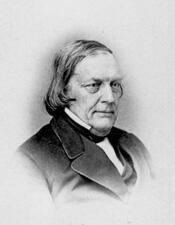
Here you will find contact information for Senator Ira Harris, including email address, phone number, and mailing address.
| Name | Ira Harris |
| Position | Senator |
| State | New York |
| Party | Republican |
| Status | Former Representative |
| Term Start | July 4, 1861 |
| Term End | March 3, 1867 |
| Terms Served | 1 |
| Born | May 31, 1802 |
| Gender | Male |
| Bioguide ID | H000242 |
About Senator Ira Harris
Ira Harris (May 31, 1802 – December 2, 1875) was an American jurist and Republican senator from New York who served in the United States Senate from 1861 to 1867, during a critical period in American history encompassing the Civil War and early Reconstruction. A friend of Abraham Lincoln and of his predecessor in the Senate, William H. Seward, he was noted for his independence of judgment and his contributions to major constitutional and legislative developments of his era.
Harris was born on May 31, 1802, in Charleston, Montgomery County, New York, and spent his early years working on his family’s farm. He pursued higher education at Union College in Schenectady, New York, from which he graduated in 1824. After college, he moved to Albany, where he studied law and, in 1827, was admitted to the bar. Establishing a legal practice in Albany, he quickly gained recognition in the profession, laying the groundwork for a long career in public life and the judiciary.
Before entering national office, Harris was active in New York state politics as a member of the Whig Party and associated with the Anti-Rent movement. He served as a Whig/Anti-Rent member of the New York State Assembly representing Albany County in 1845 and 1846. In 1846 he was a delegate to the New York State Constitutional Convention, which undertook a major revision of the state’s fundamental law. The following year, in 1847, he served as a member of the New York State Senate from the 3rd District. That same year he was elected a justice of the New York Supreme Court (3rd District), a position he held from 1847 to 1859. By virtue of that office, he served ex officio as a judge of the New York Court of Appeals in 1850 and again in 1858, reinforcing his reputation as a leading jurist in the state.
In February 1861, as the nation moved toward civil war, Harris was elected by the New York State Legislature as a United States Senator from New York to succeed William H. Seward, who did not seek re-election and was soon appointed U.S. Secretary of State by President-elect Abraham Lincoln. Harris, by then aligned with the Republican Party, took his seat in the Senate just as Southern states were seceding. He served one full term, from 1861 to 1867, representing New York and participating actively in the legislative process during the Civil War and the beginning of Reconstruction. In the Senate he served on the Committee on Foreign Relations, the Committee on the Judiciary, the Select Joint Committee on the Southern States, and the Joint Committee on Reconstruction, the latter of which drafted the Fourteenth Amendment to the United States Constitution. While he generally supported the Lincoln administration, he was known for his willingness to oppose measures—however popular—that he did not consider wise or just, reflecting a strong sense of legal and moral independence.
Harris’s relationship with Abraham Lincoln extended beyond formal politics. He visited the White House often and developed a personal friendship with the president. His family was closely linked to one of the most tragic events in American history: his daughter Clara Harris and his stepson and future son-in-law Henry Reed Rathbone were guests of President and Mrs. Lincoln at Ford’s Theatre in Washington, D.C., on April 14, 1865, when Lincoln was assassinated by John Wilkes Booth. During the attack, Booth stabbed Rathbone in the arm when Rathbone attempted to prevent the assassin’s escape. Clara and Henry, who were also step-siblings because Harris had remarried to Pauline Rathbone, Henry’s mother, were married in 1867. Harris’s son William Hamilton Harris (1838–1895) served as a brevet lieutenant colonel in the United States Army Ordnance Department, further extending the family’s involvement in national affairs. His grandson, Henry Riggs Rathbone, later served as a congressman from Illinois.
Alongside his judicial and legislative work, Harris had a long and distinguished career in legal education. For more than twenty years he was a professor of equity, jurisprudence, and practice at Albany Law School, helping to train generations of lawyers in New York. During his senatorial term, he also delivered a course of lectures at the law school of Columbian University in Washington, D.C. (now George Washington University), bringing his practical experience in both state and federal law to bear in the classroom. His dual roles as judge and educator made him an influential figure in the development of American legal thought in the mid-nineteenth century.
After leaving the Senate in 1867, Harris returned to Albany, where he continued to be regarded as an eminent jurist and public figure. He remained engaged in legal and civic affairs until his death. Ira Harris died in Albany, New York, on December 2, 1875. He was buried in Albany Rural Cemetery, where he lies with his first wife, Clarissa. His life and family connections have continued to attract historical interest, and he has appeared as a character in historical fiction, notably in Thomas Mallon’s 1994 novel “Henry and Clara,” which portrays his role as the father of Clara Harris and the stepfather and father-in-law of Henry Rathbone.