Representative Ira Wells Wood
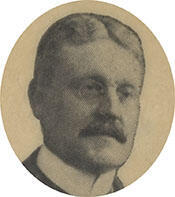
Here you will find contact information for Representative Ira Wells Wood, including email address, phone number, and mailing address.
| Name | Ira Wells Wood |
| Position | Representative |
| State | New Jersey |
| District | 4 |
| Party | Republican |
| Status | Former Representative |
| Term Start | November 9, 1903 |
| Term End | March 3, 1913 |
| Terms Served | 5 |
| Born | June 19, 1856 |
| Gender | Male |
| Bioguide ID | W000695 |
About Representative Ira Wells Wood
Ira Wells Wood (June 19, 1856 – October 5, 1931) was an American Republican Party politician who represented New Jersey’s 4th congressional district in the United States House of Representatives from 1903 to 1913, serving five terms in Congress during a significant period in American political and economic development. He was born in Wilkes-Barre, Luzerne County, Pennsylvania, on June 19, 1856, and spent his early years there before pursuing higher education and a professional career that would ultimately center in New Jersey.
Wood attended the public schools and went on to Princeton College (now Princeton University), from which he graduated in 1877. After completing his undergraduate studies, he read law and prepared for admission to the bar. In 1880 he was admitted to the bar and commenced the practice of law in Trenton, New Jersey. His legal career in Trenton provided the foundation for his later public service, as he became increasingly involved in civic and political affairs in the city and the state.
In Trenton, Wood quickly emerged as a prominent figure in local governance and business circles. He served as a member of the Trenton city board of education from 1894 to 1896, contributing to the oversight and development of the city’s public school system. From 1896 to 1900 he was a member of the Trenton city council, participating in municipal legislation and administration during a period of urban growth. At the same time, from 1896 to 1900, he served as president of the Board of Trade of Trenton, reflecting his engagement with the city’s commercial interests and its broader economic development. His growing stature in public life led to election to the New Jersey General Assembly, where he served as a member in 1899 and 1900.
Wood’s activities extended beyond state and local government into national and international arenas. In 1904 he was appointed commissioner for New Jersey to the Louisiana Purchase Exposition held in St. Louis, Missouri, representing the state at the major world’s fair commemorating the centennial of the Louisiana Purchase and showcasing industrial, cultural, and scientific achievements. The following year, in 1905, he was a delegate to the Interparliamentary Peace Union in Brussels, Belgium, an international gathering of legislators devoted to the promotion of arbitration and peaceful resolution of disputes, underscoring his participation in early twentieth-century peace and international cooperation efforts.
Wood entered national office as a Republican when he was elected to the Fifty-eighth Congress to fill the vacancy caused by the resignation of Representative William M. Lanning. He took his seat on November 8, 1904, and was subsequently reelected to the Fifty-ninth and to the three succeeding Congresses, serving continuously until March 3, 1913. Over the course of these five terms, he represented New Jersey’s 4th congressional district during the Progressive Era, participating in the legislative process and the broader democratic governance of the nation. As a member of the House of Representatives, he worked to represent the interests of his New Jersey constituents while contributing to debates on the major political, economic, and social issues confronting the country in the early twentieth century. Although eligible for further service, he declined to be a candidate for reelection to the Sixty-third Congress in 1912, thereby concluding his tenure in the national legislature on March 3, 1913.
After leaving Congress, Wood returned to private life in Trenton, where he continued to reside for the remainder of his life. He remained a respected figure in the community, his long record of service in education, municipal government, state legislation, and Congress marking him as a significant public servant in New Jersey’s history. Ira Wells Wood died in Trenton, New Jersey, on October 5, 1931. He was interred in Mercer Cemetery in Trenton, closing a career that had spanned local, state, national, and international public service.