Senator Irvine Luther Lenroot
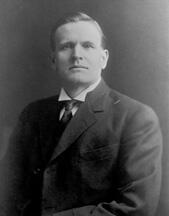
Here you will find contact information for Senator Irvine Luther Lenroot, including email address, phone number, and mailing address.
| Name | Irvine Luther Lenroot |
| Position | Senator |
| State | Wisconsin |
| Party | Republican |
| Status | Former Representative |
| Term Start | March 15, 1909 |
| Term End | March 4, 1927 |
| Terms Served | 7 |
| Born | January 31, 1869 |
| Gender | Male |
| Bioguide ID | L000241 |
About Senator Irvine Luther Lenroot
Irvine Luther Lenroot (January 31, 1869 – January 26, 1949) was an American attorney, jurist, and Republican Party politician from Wisconsin who served in the United States Congress from 1909 to 1927, first in the House of Representatives and then in the Senate. A prominent figure in early twentieth-century Republican politics, he was Speaker of the Wisconsin State Assembly from 1903 to 1907 and later served as an associate judge of the United States Court of Customs and Patent Appeals. His long public career spanned state legislative leadership, seven terms in Congress, and federal judicial service during a significant period in American history.
Lenroot was born on January 31, 1869, in Superior, Wisconsin. He was the son of Lars Lönnrot (Lenroot), a Swedish immigrant and farmer, for whom Lenroot’s Addition in the Smithville area of Duluth, Minnesota, is named. He attended the common schools of Superior and later studied at Parsons Business College in Duluth, Minnesota. Rather than attending a formal law school, he read law and completed his legal studies in 1897, following the traditional apprenticeship route into the legal profession.
Before entering full-time legal and political work, Lenroot was employed in the lumber industry as a logger and also served as a reporter for the Douglas County, Wisconsin, Superior Court from 1893 to 1906. He was admitted to the bar in 1898 and entered private practice in Superior that same year. His legal work in Superior, combined with his experience in the courts, helped establish his reputation in local public affairs and provided a foundation for his subsequent political career.
Lenroot’s formal political career began in the Wisconsin State Assembly, where he served as a member from 1901 to 1907. Within two years he rose to a position of leadership, serving as Speaker of the Wisconsin State Assembly from 1903 to 1907. As Speaker, he played a central role in shaping legislative priorities during a period of progressive reform in Wisconsin, aligning himself with the reform-minded wing of the Republican Party that was influential in the state at the time.
In national politics, Lenroot was elected as a Republican from Wisconsin’s 11th congressional district to the United States House of Representatives in the 61st Congress and was reelected to the four succeeding Congresses. He served in the House from March 4, 1909, until April 17, 1918, when he resigned after being elected to the United States Senate. His service in Congress thus extended over seven terms in office, during which he participated in the legislative process at a time marked by the Progressive Era, World War I, and significant domestic and international change. On April 2, 1918, he was elected as a Republican to the United States Senate to fill the vacancy caused by the death of Senator Paul O. Husting. He took his Senate seat on April 18, 1918, was reelected in 1920, and served until March 3, 1927. During his Senate tenure, he chaired the Committee on Railroads in the 66th Congress, the Committee on Public Lands and Surveys in the 68th Congress, and the Committee on Public Buildings and Grounds in the 69th Congress, reflecting his involvement in key issues of infrastructure, land policy, and federal construction. A progressive Republican, he represented the interests of his Wisconsin constituents through a period that included the close of World War I and the early 1920s. He was an unsuccessful candidate for renomination in 1926, losing the Republican primary and thus concluding his Senate career at the end of his term in 1927.
Lenroot’s prominence within the Republican Party was underscored by his role at the 1920 Republican National Convention in Chicago. After Warren G. Harding of Ohio secured the presidential nomination, party leaders, seeking to balance the ticket, informally settled on Lenroot, a recognized progressive, as their preferred choice for vice president to complement the more conservative Harding. His name was placed in nomination and seconded on the convention floor. However, before a vote could be taken, Wallace McCamant, a delegate from Oregon, nominated Calvin Coolidge of Massachusetts. With many party bosses already departed and the delegates relatively free from their influence, the convention turned decisively to Coolidge, who received 674 votes to Lenroot’s 146 and won the vice-presidential nomination on the first ballot. This episode later prompted the Associated Press, in reporting Lenroot’s death, to describe him as “the man who might have been the 30th President of the United States.”
After leaving the Senate, Lenroot resumed the practice of law in Washington, D.C., from 1927 to 1929. On April 22, 1929, President Herbert Hoover nominated him to an associate judge seat on the United States Court of Customs and Patent Appeals, to fill the vacancy created by the departure of Associate Judge Orion M. Barber. The United States Senate confirmed his nomination on May 17, 1929, and he received his commission the same day. Lenroot served on that court until April 30, 1944, when his service terminated upon his retirement, marking the close of more than four decades in public life as legislator and jurist.
In his personal life, Lenroot married Clara Clough of Superior, Wisconsin. Clara Lenroot authored a short memoir recounting her girlhood in Wisconsin during the 1860s and 1870s, providing a literary reflection on the region and era in which both she and her husband had grown up. Their daughter, Katherine Lenroot, became a nationally known advocate for children’s welfare, noted particularly for her successful lobbying efforts on behalf of the Fair Labor Standards Act and the enforcement of child labor laws, thereby extending the family’s influence into the field of social reform.
Irvine Luther Lenroot died on January 26, 1949, in Washington, D.C., just days before his eightieth birthday. He was interred in Greenwood Cemetery in Superior, Wisconsin, returning in death to the community where he had been born, educated, and first entered public service. His career, encompassing state legislative leadership, long congressional service, and a federal judgeship, reflected the trajectory of a Midwestern progressive Republican who helped shape American public policy in the first half of the twentieth century.