Representative Isaac Ambrose Barber
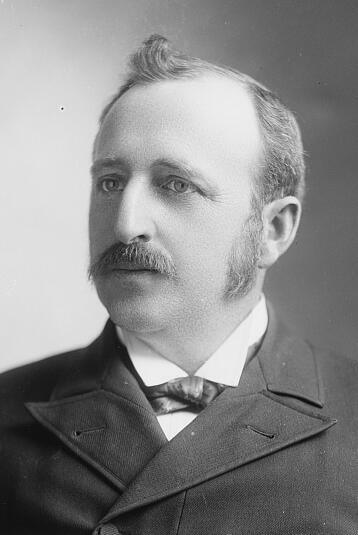
Here you will find contact information for Representative Isaac Ambrose Barber, including email address, phone number, and mailing address.
| Name | Isaac Ambrose Barber |
| Position | Representative |
| State | Maryland |
| District | 1 |
| Party | Republican |
| Status | Former Representative |
| Term Start | March 15, 1897 |
| Term End | March 3, 1899 |
| Terms Served | 1 |
| Born | January 26, 1852 |
| Gender | Male |
| Bioguide ID | B000121 |
About Representative Isaac Ambrose Barber
Isaac Ambrose Barber (January 26, 1852 – March 1, 1909) was a physician, businessman, and Republican politician who served as a U.S. Representative from Maryland from 1897 to 1899. His single term in the United States House of Representatives coincided with a significant period in American history marked by industrial expansion and evolving national politics, during which he participated in the legislative process and represented the interests of his constituents in Maryland’s 1st congressional district.
Barber was born near Salem, New Jersey, on January 26, 1852. He attended the common schools in his native state and pursued medical studies at Hahnemann Medical College of Philadelphia, an institution known for its homeopathic curriculum. He was graduated from Hahnemann in 1872, receiving formal medical training that prepared him for a professional career in medicine.
Following his graduation, Barber commenced the practice of medicine in Woodstown, New Jersey. In 1873 he moved to Easton, Maryland, where he continued to practice medicine for approximately fifteen years. While building his medical practice, he also entered the business sphere, engaging in the milling business in Easton. In 1878 he married Nellie V. Collison; the couple had four children, and Easton became the center of his family, professional, and later political life.
Barber’s public career began at the state level. A member of the Republican Party, he was elected to the Maryland House of Delegates, serving in 1895. His legislative experience in Annapolis helped establish his reputation in state politics and provided a platform for higher office. In addition to his political activities, he became involved in local finance and later served as president of the Farmers & Merchants’ National Bank of Easton, reflecting his growing prominence in the commercial and civic affairs of Talbot County.
In 1896 Barber was elected as a Republican to the Fifty-fifth Congress from Maryland’s 1st congressional district. He served one term in the U.S. House of Representatives from March 4, 1897, to March 3, 1899. During this period he took part in the work of the House at a time of important national debates over economic policy and America’s expanding role in world affairs. As a member of the House of Representatives, Isaac Ambrose Barber contributed to the legislative process and participated in the democratic governance of the nation while representing the interests of his Eastern Shore constituents. His service in Congress, though limited to a single term, formed the pinnacle of his federal public career.
After leaving Congress, Barber did not seek or did not secure immediate return to national office and instead resumed his private pursuits in Maryland. He returned to the milling business and also engaged in agricultural activities, reflecting the economic character of the Eastern Shore region. Remaining active in party affairs, he served as chairman of the Republican State central committee from 1900 to 1904, playing a key role in organizing and directing Republican political strategy in Maryland during those years.
In his later years Barber continued to reside in Easton, where his professional, business, and political careers had long been centered. He died at his home in Easton, Maryland, on March 1, 1909. Isaac Ambrose Barber was interred in Spring Hill Cemetery in Easton, leaving a record of service that spanned medicine, business, state legislation, and a term in the United States Congress.