Senator Isaac Dutton Barnard
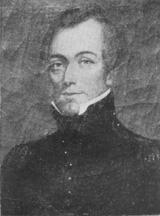
Here you will find contact information for Senator Isaac Dutton Barnard, including email address, phone number, and mailing address.
| Name | Isaac Dutton Barnard |
| Position | Senator |
| State | Pennsylvania |
| Party | Jackson |
| Status | Former Representative |
| Term Start | December 3, 1827 |
| Term End | December 31, 1831 |
| Terms Served | 1 |
| Born | July 18, 1791 |
| Gender | Male |
| Bioguide ID | B000154 |
About Senator Isaac Dutton Barnard
Isaac Dutton Barnard (July 18, 1791 – February 28, 1834) was an American militia leader, lawyer, and Jacksonian politician who served as a United States Senator from Pennsylvania from 1827 to 1831. He was born in Aston Township, Pennsylvania, to James and Susanna Dutton Barnard. The Barnard family name is derived from Roche-Bernard in Normandy, France, from which the family originated; his great-grandfather, Richard Barnard, emigrated to Chester County, Pennsylvania, prior to 1686. Barnard spent his youth in southeastern Pennsylvania and worked as a scholar at several public schools. He lived in Philadelphia until 1811, when he moved to Chester, Pennsylvania, continuing his education and early professional development in the region that would remain the center of his public life.
At the age of twenty, Barnard entered military service during the War of 1812. He received a commission as captain of the Fourteenth Regiment, United States Infantry, and opened a recruitment station in West Chester, Pennsylvania. During the war he saw extensive action, serving at Baltimore, Sackett’s Creek, the Canadian frontier, Fort George, La Cole’s Mill, the Battle of Crysler’s Farm, the Battle of Plattsburgh, and Lyon’s Creek. At Fort George he was promoted from captain to major in the same unit for meritorious service, reflecting his recognized leadership and conduct under fire. In addition to his federal service, he later held the rank of major general in the Pennsylvania state militia, a position that underscored his continuing prominence in military affairs within the Commonwealth.
Following the conclusion of the War of 1812, Barnard resumed his legal studies and prepared for a civilian career. He was admitted to the bar on May 1, 1816, and began practicing law in West Chester, Pennsylvania. His legal abilities quickly brought him into public office. From 1817 to 1821 he served as deputy attorney general for Chester County, representing the Commonwealth in local legal matters. He also participated in municipal government as an assistant burgess of the borough of West Chester in 1821, 1824, and 1825. During this period he was offered, but declined, a judgeship in Chester County, choosing instead to remain active in law, politics, and the militia. His growing reputation as a lawyer, militia officer, and civic leader laid the groundwork for his entry into state-level politics.
Barnard’s legislative career began in the Pennsylvania State Senate, where he represented the 4th district. He served in the state senate from 1820 or 1821 until 1826, with contemporary accounts generally placing his tenure from 1821 to 1826. As a state senator, he was instrumental in securing funds for a memorial to the Battle of Paoli, commemorating the Revolutionary War engagement in Chester County and reflecting his interest in honoring military service and local history. The year he left the state senate, he was appointed Secretary of the Commonwealth of Pennsylvania, a senior administrative post that further enhanced his standing within the state’s emerging Jacksonian political movement.
In 1827, Barnard advanced to national office. Elected as a member of the Jackson Party—later known as the Jacksonian Democrats—he took his seat in the United States Senate on March 4, 1827, representing Pennsylvania during the 20th, 21st, and part of the 22nd Congresses. His service in Congress occurred during a significant period in American history, coinciding with the rise of Andrew Jackson and the realignment of national politics. During his term he contributed to the legislative process and represented the interests of his Pennsylvania constituents. In the 21st and 22nd Congresses he served as chairman of the Committee on Militia, a role that drew on his extensive military background and placed him at the center of deliberations concerning the organization and regulation of the nation’s militia forces. He undertook part of a second Senate term but resigned on December 6, 1831, due to ill health. He was succeeded by George M. Dallas, who would later become Vice President of the United States. Contemporary reports indicated that New York newspapers were, shortly before his resignation, urging that Barnard be given a place in the United States Cabinet, a measure of his prominence in national affairs. In 1829 he was narrowly defeated in his effort to secure the Jacksonian nomination for Governor of Pennsylvania; U.S. Representative James Buchanan described him in a letter as “a high minded honest man” who would never “become the tool of any man,” a testimonial to his character from a future President.
Barnard’s personal life was marked by both connection to influential local families and personal loss. In 1820 he married Harriet Darlington, the daughter of Isaac Darlington, thereby linking himself to another prominent Chester County family. Their marriage was brief and ended tragically when Harriet died in childbirth in 1823. Barnard never remarried, and he continued his public career as a widower, maintaining close ties to friends and associates in West Chester and the surrounding region.
After leaving the Senate, Barnard’s declining health limited his public activity, and he spent his remaining years in West Chester. He died there on February 28, 1834. He was originally interred at the Friends Burying Ground on North High Street in West Chester. Approximately twenty years later, his remains were reinterred in Oaklands Cemetery, where in 1854 a monument was erected in his memory. His legacy in West Chester was also marked in the town’s geography: William Everhart, a wealthy merchant and friend of Barnard’s, named a street in West Chester after him sometime after the summer of 1830. Barnard’s career as a soldier, lawyer, state legislator, Secretary of the Commonwealth, and United States Senator, together with his efforts to commemorate events such as the Battle of Paoli, left a lasting imprint on both Pennsylvania’s political history and the civic life of Chester County.