Representative Isaac Hoffer Doutrich
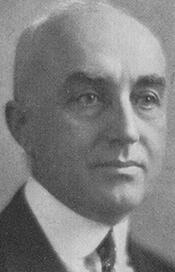
Here you will find contact information for Representative Isaac Hoffer Doutrich, including email address, phone number, and mailing address.
| Name | Isaac Hoffer Doutrich |
| Position | Representative |
| State | Pennsylvania |
| District | 19 |
| Party | Republican |
| Status | Former Representative |
| Term Start | December 5, 1927 |
| Term End | January 3, 1937 |
| Terms Served | 5 |
| Born | December 19, 1871 |
| Gender | Male |
| Bioguide ID | D000460 |
About Representative Isaac Hoffer Doutrich
Isaac Hoffer Doutrich (December 19, 1871 – May 28, 1941) was a Republican member of the U.S. House of Representatives from Pennsylvania who served five consecutive terms in Congress from 1927 to 1937. He was born on a farm near Middletown, Dauphin County, Pennsylvania, where he spent his early childhood in a rural setting typical of late nineteenth-century central Pennsylvania. In 1880 he moved with his parents to Elizabethtown, Pennsylvania, a small but growing community that provided the backdrop for his formative years and early exposure to local commerce and civic life.
Doutrich pursued his education in the public schools and later attended Keystone State Normal School in Kutztown, Pennsylvania, an institution dedicated to training teachers and providing advanced instruction for young men and women in the Commonwealth. Although he did not ultimately follow a teaching career, his time at Keystone State Normal School reflected the rising importance of formal education in post–Civil War Pennsylvania and equipped him with the skills and discipline that would later support his business and political endeavors.
After completing his studies, Doutrich entered the retail clothing business, first in Middletown and subsequently in Harrisburg, the state capital. His work as a merchant placed him in daily contact with a broad cross-section of the community and helped establish his reputation as a practical businessman. In addition to his primary occupation in retail clothing, he developed interests in banking and other business enterprises, reflecting the diversification of local economic life in the early twentieth century. These commercial pursuits provided him with experience in finance and management that would later inform his approach to public service.
Doutrich’s formal political career began at the municipal level. He served as a member of the Harrisburg city council from 1924 to 1927, a period during which the city was experiencing growth and modernization. As a councilman, he participated in local governance and urban administration, gaining familiarity with public works, municipal finance, and the needs of an expanding urban population. His service on the council helped to build his political profile within the Republican Party and among voters in the region.
In 1926 Doutrich was elected as a Republican to the Seventieth Congress, beginning his service in the U.S. House of Representatives on March 4, 1927. He was subsequently reelected to the Seventy-first, Seventy-second, Seventy-third, and Seventy-fourth Congresses, serving continuously until January 3, 1937. His decade in Congress coincided with a significant period in American history, spanning the late 1920s economic expansion, the onset of the Great Depression, and the early years of the New Deal. As a member of the House of Representatives from Pennsylvania, he participated in the legislative process during these transformative years, representing the interests of his constituents and contributing to debates over national economic policy, relief measures, and federal governance. A loyal member of the Republican Party, he aligned with his party’s positions while navigating the shifting political landscape of the era.
Doutrich’s congressional service came to an end when he ran unsuccessfully for reelection in 1936 to the Seventy-fifth Congress. After leaving office on January 3, 1937, he returned to private life in Harrisburg. He reengaged in the retail clothing business, resuming the commercial activities that had first established his standing in the community, and continued his involvement in local business affairs. His post-congressional years were spent largely in the city whose municipal government had launched his political career.
Isaac Hoffer Doutrich died in Harrisburg, Pennsylvania, on May 28, 1941. He was interred in East Harrisburg Cemetery, a burial place for many of the region’s civic and political figures. His name, which occasionally prompted questions about pronunciation, was clarified in a note he provided to The Literary Digest; he explained that “Doutrich” “rimes with thou Greek: dou-treek’,” as later recorded by Charles Earle Funk in What’s the Name, Please? (Funk & Wagnalls, 1936).