Representative Isaac Newton Evans
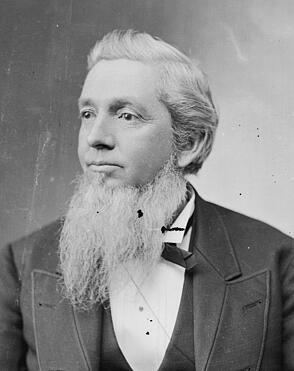
Here you will find contact information for Representative Isaac Newton Evans, including email address, phone number, and mailing address.
| Name | Isaac Newton Evans |
| Position | Representative |
| State | Pennsylvania |
| District | 7 |
| Party | Republican |
| Status | Former Representative |
| Term Start | October 15, 1877 |
| Term End | March 3, 1887 |
| Terms Served | 3 |
| Born | July 29, 1827 |
| Gender | Male |
| Bioguide ID | E000244 |
About Representative Isaac Newton Evans
Isaac Newton Evans (July 29, 1827 – December 3, 1901) was a Republican member of the U.S. House of Representatives from Pennsylvania who served three consecutive terms in Congress from 1877 to 1887. As a Representative, he participated actively in the legislative process during a significant period in American history, representing the interests of his constituents and contributing to the broader work of the House of Representatives.
Born on July 29, 1827, Evans came of age in the decades leading up to the Civil War, a time of growing sectional tension and political realignment in the United States. Details of his early life, including his family background and formative influences, are not extensively documented in the surviving record, but his later public service suggests an early engagement with civic affairs and the political questions of his era. His youth and early adulthood unfolded against the backdrop of rapid industrialization and expansion in Pennsylvania, developments that would shape the concerns of many of the voters he later represented.
Evans’s education prepared him for a career that would eventually lead into public life, though the specific institutions he attended and the degrees he may have earned are not clearly recorded in available sources. Like many nineteenth-century public figures, he likely combined formal schooling with practical experience, gaining familiarity with the economic and social issues that were central to his region. This background helped equip him for the responsibilities he would assume as a legislator.
Before entering Congress, Evans established himself sufficiently in his community and party to be selected as a candidate for national office. His affiliation with the Republican Party placed him within the dominant political organization in Pennsylvania during the post–Civil War and Reconstruction eras. The Republican Party at that time was closely associated with the preservation of the Union, the aftermath of emancipation, and the promotion of industrial and economic development, all of which were central concerns in Pennsylvania’s political life.
Evans was elected as a Republican to the U.S. House of Representatives from Pennsylvania and served from 1877 to 1887, encompassing three terms in office. His tenure began in the closing phase of Reconstruction and extended into the Gilded Age, a period marked by rapid economic growth, contested federal policies, and significant debates over tariffs, currency, and civil service reform. As a member of the House of Representatives, he participated in the democratic process at the national level, working within the committee system and on the House floor to address legislation affecting both his state and the country as a whole. Throughout his service, he represented the interests of his constituents, reflecting the priorities of a state that was emerging as a major industrial and political center.
During his decade in Congress, Evans’s work contributed to the broader legislative agenda of the Republican Party and the federal government. While the detailed record of his individual votes and sponsored measures is limited in the surviving summary accounts, his repeated election indicates the confidence his district placed in his representation. His service coincided with important national issues, including the adjustment to postwar economic realities, the integration of new technologies and industries, and ongoing questions about the proper scope of federal authority.
After leaving Congress in 1887, Evans returned to private life, concluding his formal role in national politics. The later years of his life were spent away from the public spotlight, and the historical record provides only sparse information about his activities following his congressional service. He lived through the continued transformation of the United States at the turn of the twentieth century, witnessing the consolidation of many of the economic and political trends that had begun during his years in office.
Isaac Newton Evans died on December 3, 1901. His decade of service in the U.S. House of Representatives from Pennsylvania, his alignment with the Republican Party during a formative period in American political development, and his role in representing his constituents in the national legislature place him among the many nineteenth-century lawmakers who helped shape the trajectory of the post–Civil War United States.