Senator Isaac Samuels Pennybacker
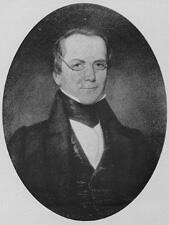
Here you will find contact information for Senator Isaac Samuels Pennybacker, including email address, phone number, and mailing address.
| Name | Isaac Samuels Pennybacker |
| Position | Senator |
| State | Virginia |
| Party | Democratic |
| Status | Former Representative |
| Term Start | September 4, 1837 |
| Term End | December 31, 1847 |
| Terms Served | 2 |
| Born | September 3, 1805 |
| Gender | Male |
| Bioguide ID | P000216 |
About Senator Isaac Samuels Pennybacker
Isaac Samuels Pennybacker (September 3, 1805 – January 12, 1847) was a United States representative and United States senator from Virginia and a United States district judge of the United States District Court for the Western District of Virginia. A member of the Democratic Party, he served in both houses of Congress and on the federal bench during a significant period in American history, contributing to the legislative and judicial processes and representing the interests of his Virginia constituents.
Pennybacker was born on September 3, 1805, at Pine Forge near New Market in Shenandoah County, Virginia. He attended a local “old field” school, a term commonly used in the early nineteenth century for small, often rudimentary rural schools. Demonstrating an early interest in the law, he pursued formal legal studies at the Winchester Law School in Winchester, Virginia. After completing his legal education, he was admitted to the bar and commenced private practice in Harrisonburg, Rockingham County, Virginia, where he built his professional reputation as an attorney.
Pennybacker entered national politics as a Democrat and was elected from Virginia’s 16th congressional district to the United States House of Representatives in the 25th Congress. He served one term in the House from March 4, 1837, to March 3, 1839. During this period, he participated in the democratic process at a time of intense national debate over economic policy and territorial expansion. While in public life he was offered several high offices: he declined the post of Attorney General of the United States tendered by President Martin Van Buren, as well as an appointment as a justice of the Supreme Court of Virginia, choosing instead to follow a different path in public service.
On April 23, 1839, President Martin Van Buren gave Pennybacker a recess appointment as a judge of the United States District Court for the Western District of Virginia, filling the vacancy created by the departure of Judge Alexander Caldwell. Van Buren formally nominated him to the same position on January 23, 1840, and the United States Senate confirmed the nomination on February 17, 1840, with Pennybacker receiving his commission that same day. He served as a federal district judge for more than five years, presiding over a wide range of civil and criminal matters in the western portion of Virginia, until his service on the bench terminated on December 6, 1845, when he resigned in order to return to elective office.
Pennybacker’s service in the United States Senate followed immediately upon his judicial career. He was elected as a Democrat to the Senate to fill the vacancy in the term beginning March 4, 1845, a vacancy that had arisen because the Virginia General Assembly had initially failed to elect a senator. He took his seat on December 3, 1845, and served in the Senate until his death on January 12, 1847. During his tenure, which coincided with the administration of President James K. Polk and the Mexican–American War, he was chairman of the Committee on Claims in the 29th Congress, overseeing the consideration of petitions and financial claims brought before the Senate. His decade-long span of federal service—from the House of Representatives, to the district court, and then to the Senate—placed him at the center of national affairs in the late 1830s and 1840s.
In addition to his legislative and judicial responsibilities, Pennybacker was selected for an important cultural and scientific role. President James K. Polk named him to the very first Board of Regents of the Smithsonian Institution, created to oversee the new national institution for the “increase and diffusion of knowledge.” On this inaugural board, which first met in September 1846, he served alongside Vice President George M. Dallas, Chief Justice Roger B. Taney, Washington, D.C., Mayor William Winston Seaton, Senator Sidney Breese, Representatives William Jervis Hough, Robert Dale Owen, and Henry Washington Hilliard, as well as Rufus Choate, Richard Rush, Dr. Benjamin Rush, William C. Preston, Alexander Dallas Bache, Joseph Gilbert Totten, and others. His appointment reflected the confidence placed in his judgment beyond the strictly political and judicial spheres.
Isaac Samuels Pennybacker died in office on January 12, 1847, in Washington, D.C., while still serving as a United States senator from Virginia. He was interred in Woodbine Cemetery in Harrisonburg, Virginia, returning in death to the region where he had practiced law and first entered public life. His career placed him among the members of the United States Congress who died in office during the nineteenth century. Pennybacker was part of a prominent Virginia political family and was a cousin of Green Berry Samuels, who also represented Virginia in the United States House of Representatives.