Senator Isaac Toucey
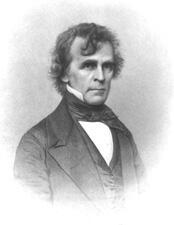
Here you will find contact information for Senator Isaac Toucey, including email address, phone number, and mailing address.
| Name | Isaac Toucey |
| Position | Senator |
| State | Connecticut |
| Party | Democratic |
| Status | Former Representative |
| Term Start | December 7, 1835 |
| Term End | March 3, 1857 |
| Terms Served | 3 |
| Born | November 15, 1792 |
| Gender | Male |
| Bioguide ID | T000319 |
About Senator Isaac Toucey
Isaac Toucey (November 15, 1792 – July 30, 1869) was an American politician and lawyer who served as a U.S. senator from Connecticut, U.S. Secretary of the Navy, U.S. Attorney General, and the 33rd Governor of Connecticut. A member of the Democratic Party, he held major state and federal offices during a significant period in American history, participating in the legislative and executive processes as the nation moved toward the sectional crisis of the Civil War.
Toucey was born in Newtown, Connecticut, on November 15, 1792. He pursued classical studies in his youth before turning to the study of law. He moved to Hartford, Connecticut, where he read law and was admitted to the bar in 1818. Establishing himself in the state capital, he began a legal career that would anchor his subsequent public life. From 1825 to 1835 he maintained his own law practice in Hartford, building a reputation as an able attorney. On October 28, 1827, he married Catherine Nichols in Hartford; the couple had no children.
Toucey’s public career began with his appointment in 1822 as prosecuting attorney of Hartford County, Connecticut, a position he would hold, with interruptions for federal service, for many years. He first served as prosecuting attorney from 1822 until 1835, when he entered national politics. In 1835 he was elected as a Democrat to the United States House of Representatives, serving in the 24th Congress as an at-large representative from Connecticut and in the 25th Congress representing Connecticut’s 1st District. He served in the House from 1835 to 1839. After losing his bid for reelection in 1838, he returned to Hartford and resumed his duties as prosecuting attorney in 1842, while continuing his private legal practice.
Toucey’s prominence in state politics increased in the 1840s. In 1845 he ran for Governor of Connecticut as a Democrat but was defeated in the popular election. However, under the procedures then in place, the Connecticut General Assembly selected the governor when no candidate received a majority of the vote, and in 1846 the legislature appointed Toucey as the 33rd Governor of Connecticut. His gubernatorial tenure, from 1846 to 1847, was marked by consideration of an antibribery measure aimed at curbing fraudulent electoral practices and strengthening the integrity of the state’s political system. He was unsuccessful in securing renomination in 1847 and left the governorship after a single term.
Toucey soon returned to national office. In 1848 President James K. Polk appointed him the 20th Attorney General of the United States. As Attorney General, he served in Polk’s Cabinet until the close of the administration in 1849, participating in legal and constitutional questions arising from the Mexican–American War and the acquisition of new territories. After leaving the Justice Department, Toucey went back to Connecticut and reengaged in state politics. He served in the Connecticut Senate in 1850 and in the Connecticut House of Representatives in 1852, reinforcing his position as a leading Democratic figure in the state.
Toucey’s service in the United States Congress included a term in the U.S. Senate during a critical era in American politics. He was elected to the Senate for the term commencing March 4, 1851, and, after resolving a contested election, took his seat on May 12, 1852. He served as a Senator from Connecticut until March 3, 1857, declining to be a candidate for reelection that year. As a Democratic senator, Toucey contributed to the legislative process during three terms in Congress—two in the House and one in the Senate—and represented the interests of his Connecticut constituents during debates over slavery, territorial expansion, and sectional compromise. During his Senate tenure he often acted as a legislative ally and point man for President Franklin Pierce and his administration, helping to advance Pierce’s policies in the upper chamber.
In 1857 President James Buchanan, with whom Toucey had served in the Polk administration, appointed him U.S. Secretary of the Navy. Buchanan selected Toucey in part to appease the Pierce faction within the Democratic Party and to ensure New England representation in his Cabinet. A moderate Northerner whose views on sectional issues closely aligned with Buchanan’s, Toucey served as Secretary of the Navy from 1857 until the end of the administration in 1861, when Abraham Lincoln assumed the presidency. His tenure encompassed the final years before the Civil War, a period in which the Navy faced questions of modernization, readiness, and loyalty as the Union began to fracture. Toucey came under sharp political attack for alleged corruption and mismanagement, particularly through the investigations of the Covode Committee in the House of Representatives. In June 1860 the House formally censured him, a rebuke that reflected the intense partisan and sectional tensions of the time. At the close of Buchanan’s term, he was succeeded as Secretary of the Navy by his Connecticut rival, Gideon Welles, in the Lincoln administration.
After leaving federal office in 1861, Toucey returned to Hartford and resumed the practice of law, withdrawing from the front rank of national politics as the Civil War unfolded. He continued to live in Hartford for the remainder of his life. Isaac Toucey died there on July 30, 1869, and was interred at Cedar Hill Cemetery in Hartford, Connecticut. In the 20th century, his service as Secretary of the Navy was commemorated by the naming of the destroyer USS Toucey (DD-282) in his honor.