Senator Isaac Pigeon Walker
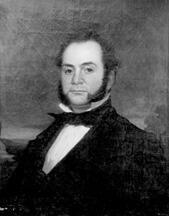
Here you will find contact information for Senator Isaac Pigeon Walker, including email address, phone number, and mailing address.
| Name | Isaac Pigeon Walker |
| Position | Senator |
| State | Wisconsin |
| Party | Democratic |
| Status | Former Representative |
| Term Start | June 8, 1848 |
| Term End | March 3, 1855 |
| Terms Served | 2 |
| Born | November 2, 1815 |
| Gender | Male |
| Bioguide ID | W000055 |
About Senator Isaac Pigeon Walker
Isaac Pigeon Walker (November 2, 1815 – March 29, 1872) was an American lawyer, Democratic politician, and Wisconsin pioneer who became one of Wisconsin’s first United States senators, serving from 1848 through 1855. Born in Butler County, Ohio, he was part of a family that would play a significant role in the early development of Milwaukee, Wisconsin; he was the younger brother of George H. Walker, one of the founders of Milwaukee and the city’s fifth mayor. Little is recorded about his early childhood, but his family’s westward movement and subsequent prominence in frontier communities shaped his later career in law and politics.
Walker received a basic education in Ohio and read law in the customary manner of the period, gaining admission to the bar and beginning the practice of law while still a young man. Seeking opportunity on the expanding American frontier, he moved first to Illinois, where he established himself professionally and entered public life. His legal training and growing reputation as an advocate and Democratic partisan provided the foundation for his subsequent political career in both Illinois and the Wisconsin Territory.
Before his involvement in Wisconsin politics, Walker served one term in the Illinois House of Representatives, aligning himself with the Democratic Party and participating in the legislative affairs of a rapidly developing state. His experience in Illinois legislative politics helped prepare him for the challenges of territorial governance and the complex issues associated with westward expansion, land policy, and the balance between free and slave states that increasingly dominated national debate in the 1840s.
Walker later moved to the Wisconsin Territory, where he quickly became a leading Democratic figure and an active participant in territorial government. He was elected to the House of Representatives of the Wisconsin Territory and rose to prominence as speaker for one session during the 5th Wisconsin Territorial Assembly. In this role, he helped guide legislative business in the years immediately preceding Wisconsin’s admission to the Union, contributing to the political and legal framework that would shape the new state.
Upon Wisconsin’s admission as a state in 1848, Walker was elected as a Democrat to the United States Senate, becoming one of Wisconsin’s first U.S. senators. He served in the Senate from 1848 to 1855, encompassing two terms in office, during a period of intense national conflict over slavery, territorial expansion, and economic development. As a member of the Senate, he participated in the democratic process at the federal level and represented the interests of his Wisconsin constituents during a significant period in American history, when questions of land distribution, western settlement, and sectional compromise were at the forefront of congressional debate.
In the Senate, Walker was best known for his support of radical land reform. He advocated policies to make western lands more accessible to small settlers rather than large speculators, anticipating many of the principles that would later be embodied in the Homestead Act of 1862. Although he left office several years before that landmark legislation was enacted, much of what he had proposed in terms of free or low-cost homesteads for actual settlers was ultimately realized in federal law. His legislative record thus placed him among the early congressional proponents of broad-based land reform in the American West.
Walker’s political career was ultimately constrained and prematurely ended by the complicated politics of pre–Civil War slavery compromises. Personally opposed to slavery, he nonetheless endorsed a compromise approach to organizing the territories acquired in the Mexican Cession, seeking to navigate between sectional extremes. This stance proved deeply unpopular with his strongly anti-slavery Wisconsin electorate, for whom any perceived accommodation of slavery’s expansion was unacceptable. The resulting political backlash undermined his standing within the state Democratic Party and contributed to the end of his Senate career in 1855.
After leaving the Senate, Walker withdrew from national political life. He continued his legal and business pursuits away from the center of public attention, while the issues that had defined his Senate tenure—land policy, slavery, and the fate of the western territories—moved the nation toward civil war. Isaac Pigeon Walker died on March 29, 1872. His career reflected both the opportunities and the constraints of antebellum politics in the Old Northwest, and his advocacy of land reform linked him to later developments in federal homestead policy that reshaped the American West.