Representative Isauro Gabaldon
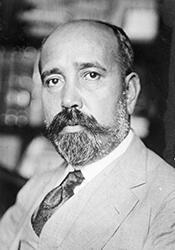
Here you will find contact information for Representative Isauro Gabaldon, including email address, phone number, and mailing address.
| Name | Isauro Gabaldon |
| Position | Representative |
| State | Philippine Islands |
| District | At-Large |
| Party | Unknown |
| Status | Former Representative |
| Term Start | May 19, 1919 |
| Term End | March 3, 1931 |
| Terms Served | 6 |
| Born | December 8, 1875 |
| Gender | Male |
| Bioguide ID | G000001 |
About Representative Isauro Gabaldon
Isauro Gabaldón y González (born Isauro González; December 8, 1875 – December 21, 1942) was a Filipino politician and lawyer who served as a resident commissioner of the Philippines to the United States House of Representatives and as a leading public official in the Philippine Islands during the American colonial period. He served as a Representative from the Philippine Islands in the United States Congress from 1919 to 1931, completing six terms in office, and was identified in contemporary records as a member of the Nationalist Party. As a member of the House of Representatives, Isauro Gabaldon participated in the democratic process, contributed to the legislative work of Congress, and represented the interests of his Filipino constituents during a significant period in American and Philippine history.
Gabaldón was born in San Isidro, Nueva Ecija, in the Captaincy General of the Philippines (present-day Philippines) on December 8, 1875. He was of Spanish Filipino heritage, the son of José Gabaldón Pérez, a Spaniard from Tébar, Cuenca, Spain, and María González Mendoza, a mestiza. Through his father he was the grandson of Lorenzo Gabaldón and Luisa Pérez, and through his mother the grandson of Cosmé González and Bárbara Mendoza. His mixed Spanish and Filipino background placed him within the emerging educated elite of the late Spanish and early American colonial eras, a milieu that would shape his later role in law and politics.
In his youth, Gabaldón pursued his early education in Spain. He attended the public schools in Tébar, Cuenca, his father’s hometown, where he received a foundational education in the Spanish system. He went on to study law at the Universidad Central in Madrid, Spain, deepening his training in civil law and the legal traditions of the Spanish empire. After returning to the Philippines, he completed his legal education at the University of Santo Tomas in Manila, one of Asia’s oldest universities. Following his graduation, he was admitted to practice law and engaged in legal practice from 1903 to 1906, establishing himself professionally at a time when the Philippines was transitioning from Spanish to American rule.
Gabaldón quickly entered public service and became a prominent figure in the evolving Philippine political structure under American administration. He first served as governor of the province of Nueva Ecija in 1906, and, after a brief interval, again held the governorship from 1912 to 1916. Between these gubernatorial terms, he was elected as a member of the Philippine Assembly, serving from 1907 to 1912. During this period he sponsored Act No. 1801 of 1907, widely known as the “Gabaldon Law,” which authorized the construction of standardized public elementary school buildings throughout the archipelago. These “Gabaldon school buildings,” erected during the American era, became enduring landmarks of Philippine public education and linked his name permanently to the country’s early efforts to expand schooling.
With the establishment of the Philippine Senate under the Jones Act, Gabaldón advanced to national legislative office. He served as a member of the Philippine Senate from 1916 to 1919, participating in the upper chamber during a formative stage of the islands’ limited self-government. His work in the Assembly and the Senate, combined with his record as provincial governor, positioned him as a leading figure in the Nationalist movement, which sought greater autonomy for the Philippines within the framework of American sovereignty.
Gabaldón’s national prominence led to his selection as one of the resident commissioners of the Philippines to the United States Congress. He was elected as a Nationalist and took his seat as resident commissioner in the U.S. House of Representatives on March 4, 1920. He was reelected in 1923 and 1925, serving continuously until his resignation effective July 16, 1928. His tenure is also recorded more broadly as spanning from 1919 to 1931, encompassing six terms in which he served as a Representative from the Philippine Islands in the United States Congress. As resident commissioner, he did not possess a vote on the House floor but actively participated in debates, committee work, and advocacy on matters affecting the Philippines, representing Filipino interests before the U.S. legislature during a critical era of policy formation on colonial administration and eventual independence.
During his years in Washington, Gabaldon contributed to the legislative process and worked to advance the political and economic concerns of the Philippine Islands. He was part of a small group of non-voting delegates and resident commissioners who served as the formal link between U.S. lawmakers and the territories and possessions of the United States. His presence in Congress placed him among the early Asian and Hispanic representatives in the federal legislature, and he is included in later compilations such as the lists of Asian Americans and Pacific Islander Americans and of Hispanic and Latino Americans who have served in the United States Congress. In 1925 he was also elected as a member of the Philippine House of Representatives, but he chose not to qualify for that seat at the time, preferring to continue his work as resident commissioner until his resignation in 1928, when he was again nominated for election to the Philippine House.
After leaving his post as resident commissioner in 1928, Gabaldón returned to political life in the Philippines, continuing his long involvement in public affairs. His legislative legacy in the islands remained closely associated with the Gabaldon Law and the network of public school buildings that bore his name, which played a significant role in the expansion of primary education during the American colonial period and beyond. He remained a respected elder statesman of Philippine politics during the late Commonwealth and early World War II years.
Isauro Gabaldón died on December 21, 1942. His career, spanning provincial governance, national legislative service in both the Philippine Assembly and Senate, and representation of the Philippine Islands in the United States Congress, left a lasting imprint on the political and educational development of the Philippines during the first half of the twentieth century.