Representative Isidore Dollinger
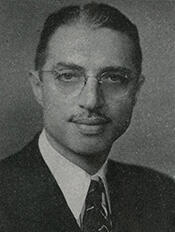
Here you will find contact information for Representative Isidore Dollinger, including email address, phone number, and mailing address.
| Name | Isidore Dollinger |
| Position | Representative |
| State | New York |
| District | 23 |
| Party | Democratic |
| Status | Former Representative |
| Term Start | January 3, 1949 |
| Term End | January 3, 1961 |
| Terms Served | 6 |
| Born | November 13, 1903 |
| Gender | Male |
| Bioguide ID | D000402 |
About Representative Isidore Dollinger
Isidore Dollinger (November 13, 1903 – January 30, 2000) was an American lawyer, jurist, and Democratic politician who served six terms in the United States House of Representatives representing New York between 1949 and 1959. His congressional service, which spanned the early Cold War and post–World War II era, took place during a significant period in American history and reflected his long-standing commitment to public service at the city, state, and federal levels.
Dollinger was born on November 13, 1903, in New York City. Raised in the city he would later represent in public office, he pursued higher education locally, attending New York University, from which he graduated in 1925. He then studied law at New York Law School, earning his degree in 1928. The following year, in 1929, he was admitted to the bar and commenced the practice of law in New York, beginning a legal career that would underpin his later work as a legislator, prosecutor, and judge.
Before his election to Congress, Dollinger built a substantial record in state government. He served as a member of the New York State Assembly from Bronx County’s 4th District in 1937, 1938, 1939–1940, 1941–1942, and 1943–1944. In the Assembly he represented a rapidly growing urban constituency in the Bronx during the late Depression and World War II years. He then advanced to the New York State Senate, representing the 26th District from 1945 to 1948 and sitting in the 165th and 166th New York State Legislatures. His tenure in the state legislature helped establish his reputation as an effective Democratic lawmaker and positioned him for national office.
Dollinger was elected as a Democrat to the 81st, 82nd, 83rd, 84th, 85th, and 86th United States Congresses, holding office from January 3, 1949, to December 31, 1959. During these six terms in the House of Representatives, he participated actively in the legislative process and represented the interests of his New York constituents at a time marked by the onset of the Cold War, domestic anti-communism, and the early stirrings of the modern civil rights movement. His service in Congress occurred during a significant period in American history, and he contributed to debates and legislation affecting both his district and the nation. Although he was elected to a full term in the 86th Congress, he resigned before its completion on December 31, 1959, in order to assume a new role in local law enforcement.
Upon leaving Congress, Dollinger became District Attorney of Bronx County, New York, taking office at the start of 1960. In this capacity he shifted from lawmaking to law enforcement, overseeing criminal prosecutions in one of New York City’s largest boroughs during a period of growing public concern about crime and urban conditions. His experience as a legislator and lawyer informed his approach to the administration of justice at the county level.
Dollinger later returned to the judiciary, serving as a Justice of the New York Supreme Court for the 1st Judicial District from 1969 to 1973. In that role he sat on the state’s trial court of general jurisdiction, handling significant civil and criminal matters arising in New York County and the surrounding area. After completing his term as a Supreme Court Justice, he continued to serve the court as an Official Referee—essentially a senior judge on an additional seat—from 1974 to 1975, assisting with the disposition of cases and contributing his long experience in law and public service to the state judiciary.
Isidore Dollinger died on January 30, 2000, in White Plains, New York. Over the course of more than four decades in public life—as state legislator, member of Congress, district attorney, and judge—he played a sustained role in the civic and legal affairs of New York and participated in the broader national legislative process during a transformative era in American history.