Representative Israel Frederick Fischer
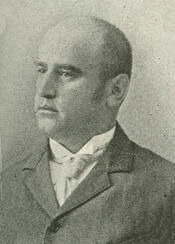
Here you will find contact information for Representative Israel Frederick Fischer, including email address, phone number, and mailing address.
| Name | Israel Frederick Fischer |
| Position | Representative |
| State | New York |
| District | 4 |
| Party | Republican |
| Status | Former Representative |
| Term Start | December 2, 1895 |
| Term End | March 3, 1899 |
| Terms Served | 2 |
| Born | August 17, 1858 |
| Gender | Male |
| Bioguide ID | F000138 |
About Representative Israel Frederick Fischer
Israel Frederick Fischer (August 17, 1858 – March 16, 1940) was a United States representative from New York, a judge and Presiding Judge of the United States Customs Court, and a member and President of the Board of General Appraisers. A Republican, he served two terms in the United States House of Representatives from 1895 to 1899 and later held long and influential service in the federal customs judiciary.
Fischer was born on August 17, 1858, in New York City, New York. He was educated in the public schools of New York City and pursued legal studies while working, a common path for aspiring attorneys in the late nineteenth century. After reading law, he was admitted to the bar and entered private practice in New York. His early legal career in the city exposed him to commercial and customs matters that would later shape his federal judicial service.
Before his election to Congress, Fischer became active in Republican Party politics in New York. He built a reputation as a capable lawyer and party worker, which helped propel him into elective office. His legal background and familiarity with trade and commercial issues made him a credible candidate in a state whose economy was closely tied to shipping, finance, and international commerce centered on the Port of New York.
Fischer was elected as a Republican to the United States House of Representatives and served from March 4, 1895, to March 3, 1899, representing a New York district during the Fifty-fourth and Fifty-fifth Congresses. His service in Congress occurred during a significant period in American history, marked by debates over tariffs, currency, and the nation’s expanding role in world affairs. As a member of the House of Representatives, Israel Frederick Fischer participated in the democratic process, contributed to the legislative work of the period, and represented the interests of his New York constituents. After two terms in office, he was not returned for a third term, and his congressional service concluded in 1899.
Following his departure from Congress, Fischer transitioned to federal judicial service in the specialized field of customs law. He was appointed a member of the Board of General Appraisers, a federal body responsible for adjudicating disputes over customs duties and classifications arising from the nation’s growing international trade. In this capacity he drew on his legal training and his experience with commercial issues. Over time, he rose to become President of the Board of General Appraisers, overseeing its work in interpreting and applying federal customs statutes.
When the United States Customs Court was created to succeed and formalize the work of the Board of General Appraisers, Fischer was appointed as a judge of that court. He later became Presiding Judge of the United States Customs Court, reflecting both his seniority and his recognized expertise in customs and tariff matters. In these roles he helped shape the development of federal customs jurisprudence during an era when tariff policy and international trade were central to the nation’s economic life. His judicial service extended over many years and formed the principal part of his public career after Congress.
Israel Frederick Fischer died on March 16, 1940. By the time of his death, he had served the United States in multiple capacities—as a practicing attorney, a two-term Republican representative from New York in the United States Congress from 1895 to 1899, a member and President of the Board of General Appraisers, and a judge and Presiding Judge of the United States Customs Court—leaving a record of long-standing involvement in legislative and judicial aspects of federal trade and customs policy.