Senator Israel Pickens
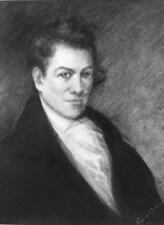
Here you will find contact information for Senator Israel Pickens, including email address, phone number, and mailing address.
| Name | Israel Pickens |
| Position | Senator |
| State | Alabama |
| Party | Jackson |
| Status | Former Representative |
| Term Start | November 4, 1811 |
| Term End | March 3, 1827 |
| Terms Served | 4 |
| Born | January 30, 1780 |
| Gender | Male |
| Bioguide ID | P000322 |
About Senator Israel Pickens
Israel Pickens (January 30, 1780 – April 24, 1827) was an American politician and lawyer who served as the third Governor of the State of Alabama from 1821 to 1825, a member of the North Carolina Senate from 1808 to 1810, and a United States Congressman from North Carolina in the United States House of Representatives from 1811 to 1817. He later served as a Senator from Alabama in the United States Congress in 1826. A member of the Jackson Party, Pickens contributed to the legislative process during four terms in office in the U.S. House and participated in the democratic process during a significant period in American history.
Pickens was born in Concord, North Carolina, on January 30, 1780. A native of that state, he pursued higher education at Jefferson College, now Washington & Jefferson College, from which he graduated in 1802. After completing his collegiate studies, he read law, was admitted to the bar, and began practicing as an attorney. His early legal and political activities in North Carolina laid the foundation for a public career that would later span both state and national office and extend into the emerging politics of the Alabama frontier.
Pickens entered public life in North Carolina as a member of the North Carolina Senate, in which he served from 1808 to 1810. In this role he gained experience in legislative procedure and state governance at a time when the young republic was grappling with issues of expansion, trade, and relations with European powers. His work in the state senate helped establish his reputation as a capable legislator and positioned him for election to national office.
In 1811 Pickens was elected to the United States House of Representatives from North Carolina, where he served as a United States Congressman from 1811 to 1817. During these years in the Twelfth through Fourteenth Congresses, he represented his constituents through the War of 1812 and its aftermath, contributing to the legislative process during four consecutive terms in office. In Congress he became associated with the emerging Jacksonian political tendency that would later coalesce around Andrew Jackson, and he developed relationships with other southern and western leaders who were shaping national policy in the early nineteenth century.
After his service in the U.S. House, Pickens moved into the politics of the newly formed state of Alabama, where many settlers from North Carolina and other southern states were establishing new communities. In early Alabama politics he was identified with the so‑called “North Carolina Faction,” a group of leaders, including future U.S. Senator William R. King, who had migrated from North Carolina and were viewed as more democratic and egalitarian in outlook. This faction stood in contrast to the “Georgia Faction,” which many newer settlers regarded as more aristocratic and elitist. Within this context, Pickens gained a reputation as a “spokesman for the have-nots,” appealing to smaller farmers and less affluent settlers. In 1814 he married Martha Lenoir, daughter of prominent North Carolina statesman William Lenoir, thereby strengthening his ties to established political families of his native state.
Pickens was elected the third Governor of Alabama in 1821 and served two consecutive terms from 1821 to 1825. In both the 1821 and 1823 gubernatorial elections he defeated Dr. Henry H. Chambers, winning by a vote of 9,114 to 7,129 in 1821 and 6,942 to 4,604 in 1823. His administration coincided with the formative years of Alabama’s statehood, during which the state was organizing its institutions, managing rapid population growth, and addressing land, economic, and political issues on the southwestern frontier. After serving as governor, he was succeeded by his chosen successor, John Murphy, reflecting his continued influence over state politics and leadership.
Following his gubernatorial service, Pickens entered the federal legislature from his adopted state. He was appointed to the United States Senate from Alabama to fill the vacancy created by the death of Henry H. Chambers, the same political rival he had twice defeated for the governorship. His senatorial service extended from February 17 to November 27, 1826, when the elected successor, John McKinley, took office. As a Senator from Alabama during this brief but significant period, Pickens participated in the democratic process and represented the interests of his constituents at a time when national debates over expansion, internal improvements, and sectional interests were intensifying.
In addition to his political career, Pickens was active in broader civic and intellectual pursuits. He participated in the American Colonization Society, an organization that promoted the resettlement of free African Americans to Africa, reflecting one strand of antebellum thought on race and slavery. He also maintained an interest in scientific research and is credited with inventing a lunar dial, an instrument designed to tell time by the moon, illustrating his engagement with practical science and innovation beyond the realm of politics.
Israel Pickens died in Matanzas, Cuba, on April 24, 1827. He was originally buried in a family graveyard, but his remains were later moved to City Cemetery in Greensboro, Alabama. His career, spanning state legislatures, the United States House of Representatives, the governorship of Alabama, and the United States Senate, placed him at the center of the political development of both North Carolina and Alabama during a transformative era in American history.