Senator Israel Smith
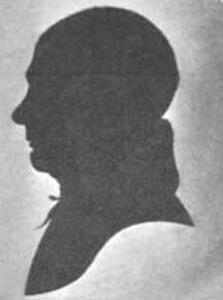
Here you will find contact information for Senator Israel Smith, including email address, phone number, and mailing address.
| Name | Israel Smith |
| Position | Senator |
| State | Vermont |
| Party | Republican |
| Status | Former Representative |
| Term Start | October 24, 1791 |
| Term End | December 31, 1807 |
| Terms Served | 5 |
| Born | April 4, 1759 |
| Gender | Male |
| Bioguide ID | S000557 |
About Senator Israel Smith
Israel Smith (April 4, 1759 – December 2, 1810) was an American lawyer and politician who held a wide variety of positions in the state of Vermont, including service as a member of the United States House of Representatives, a member of the United States Senate, and the fourth governor of Vermont. Over the course of five terms in Congress, he was a prominent member of the Republican, or Democratic-Republican, Party representing Vermont, and he participated actively in the legislative process during a formative period in the early history of the United States.
Smith was born on April 4, 1759, in Suffield in the Colony of Connecticut, where he spent his childhood. He pursued higher education at Yale University, from which he graduated in 1781. After completing his collegiate studies, he read law under the guidance of his brother, Noah Smith, and was subsequently admitted to the bar. He then moved to the independent Republic of Vermont and began his law practice in Rupert, Vermont, establishing himself as a young attorney at a time when Vermont’s political status and boundaries were still being defined.
In his personal life, Smith married Abiah Douglass (1767–1836). The couple had two children: William (1785–1822) and Horace (1787–1790). Their younger son died in childhood, while William lived into early adulthood. After Israel Smith’s death, Abiah Douglass Smith married Colonel William C. Harrington, who became an attorney in Burlington, Vermont, thus maintaining the family’s close association with the legal profession and public life in the state.
Smith’s political career began in the mid-1780s, when Vermont was still an independent republic. He first served as a member of the Vermont House of Representatives in 1785, and he returned to that body from 1788 to 1791. During these years he was active in addressing Vermont’s boundary disputes with neighboring states and played a role in the negotiations and deliberations that shaped Vermont’s relationship with the nascent federal union. He served as a delegate to the Vermont Constitutional Convention at which Vermont ratified the Constitution of the United States, clearing the way for its admission to the Union. By 1790, Smith had moved his residence and law practice to Rutland, Vermont, which would remain his principal home for the rest of his life.
When Vermont was admitted as the fourteenth state in 1791, Smith sought federal office in the newly created congressional seat. In a closely contested election for Vermont’s at-large seat in the United States House of Representatives, he ran against Matthew Lyon and Isaac Tichenor. In the first round of voting, Smith placed second with 35 percent of the vote, but he prevailed over Lyon in the required runoff election. Smith represented Vermont’s 1st District in the U.S. House of Representatives from 1791 to 1797. Lyon challenged him unsuccessfully in 1792 and 1794, but in 1796 Smith was defeated by Lyon. Over the course of this period, Smith aligned himself with the emerging Democratic-Republican Party, reflecting his support for a more agrarian, states’ rights–oriented vision of the republic in opposition to Federalist policies.
After his initial service in Congress, Smith returned to state office. In 1797 he again briefly served in the Vermont House of Representatives. That same year he was appointed Chief Justice of the Vermont Supreme Court, a position that underscored his legal stature in the state. His tenure as chief justice was short, however, as he resigned from the court in 1798. Smith returned to national politics in 1800, when he was reelected to the United States House of Representatives. He served in this second period in the House from 1801 until 1802, once again representing Vermont as a Democratic-Republican during the early years of Thomas Jefferson’s presidency.
In 1802, Smith advanced to the United States Senate after being elected by the Vermont legislature. He served as a U.S. senator from Vermont from 1803 to 1807, participating in national debates during the Jeffersonian era, including issues related to westward expansion and the evolving relationship between the federal government and the states. During these years, Smith also repeatedly sought Vermont’s highest state office. He challenged his long-standing political rival, Federalist governor Isaac Tichenor, on multiple occasions, running unsuccessfully for governor in 1799, 1800, 1801, 1802, and 1806. In 1807, Smith finally defeated Tichenor and resigned his Senate seat to assume the governorship. As the fourth governor of Vermont, he served from 1807 to 1808, leading the state during a period marked by national tensions over trade restrictions and foreign policy in the years preceding the War of 1812. In 1808, Tichenor defeated Smith and returned to the governorship for one final term, serving until 1809, when he was in turn defeated by Jonas Galusha.
Following his single term as governor, Smith withdrew from elective office and resumed the practice of law in Rutland. He continued his legal work there until his health declined. Israel Smith died in Rutland on December 2, 1810. He was interred at West Street Cemetery in Rutland, where his grave remains a tangible reminder of his role in Vermont and national politics. His home in Rutland has been preserved, reflecting the continued historical interest in his contributions as a lawyer, legislator, jurist, and governor during the early decades of the United States.