Representative J. Herbert Burke
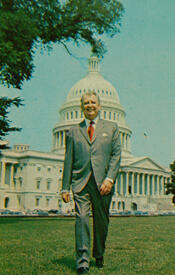
Here you will find contact information for Representative J. Herbert Burke, including email address, phone number, and mailing address.
| Name | J. Herbert Burke |
| Position | Representative |
| State | Florida |
| District | 12 |
| Party | Republican |
| Status | Former Representative |
| Term Start | January 10, 1967 |
| Term End | January 3, 1979 |
| Terms Served | 6 |
| Born | January 14, 1913 |
| Gender | Male |
| Bioguide ID | B001091 |
About Representative J. Herbert Burke
J. Herbert Burke (January 14, 1911 – June 16, 1993) was a Republican U.S. Representative from Florida who served in the United States Congress from 1967 to 1979. Over the course of six consecutive terms in the House of Representatives, he participated actively in the legislative process and represented the interests of his constituents during a significant period in American political history.
Born on January 14, 1911, Burke came of age in the early twentieth century, a time marked by rapid social and economic change in the United States. Details of his early family life and upbringing are not extensively documented in the public record, but his later public career reflects a background that prepared him for service in lawmaking and public affairs. His formative years coincided with World War I, the interwar period, and the Great Depression, experiences that shaped the outlook of many future public officials of his generation.
Burke pursued an education that equipped him for a career in public service and politics. Although specific institutions and degrees are not detailed in the available sources, his eventual election to Congress and his long tenure there indicate a grounding in civic affairs, public policy, or related professional experience. Like many of his contemporaries who entered mid‑century politics, he likely combined formal education with practical engagement in local or state issues before seeking federal office.
Before his election to Congress, Burke developed a career that led him into the political life of Florida. As Florida grew rapidly in population and economic importance after World War II, opportunities expanded for those interested in public service. Burke’s work during this period helped establish his reputation and provided the foundation for his successful campaign for a seat in the U.S. House of Representatives. His alignment with the Republican Party placed him within a political movement that was gaining strength in the South and Sun Belt states during the 1960s.
Burke entered Congress as a Republican Representative from Florida in 1967, at the outset of the 90th Congress, and served continuously through the 95th Congress, leaving office in 1979. His tenure spanned the presidencies of Lyndon B. Johnson, Richard Nixon, Gerald Ford, and Jimmy Carter, and coincided with the Vietnam War, the civil rights era, the Watergate scandal, and significant shifts in domestic and foreign policy. As a member of the House of Representatives, Burke participated in the democratic process by debating and voting on legislation, serving on committees, and advocating for the needs and priorities of his Florida district. He contributed to the legislative process over six terms in office, engaging with issues that affected both his constituents and the nation at large.
During these years, Burke’s work reflected the broader transformation of Florida from a largely regional state into a major national center of tourism, trade, and population growth. In Congress, he was positioned to address matters such as infrastructure, economic development, and federal support for state and local initiatives, while also responding to national concerns over defense, social programs, and regulatory policy. His role as a Republican legislator from a rapidly changing Southern state placed him at the intersection of evolving party coalitions and shifting regional political identities.
After leaving Congress in 1979, Burke concluded his federal legislative career but remained part of the generation of mid‑century lawmakers whose service bridged the New Deal era and the emerging conservative realignment of the late twentieth century. Although specific details of his post‑congressional activities are not extensively recorded, his twelve years in the House left a record of sustained engagement in national governance during a time of considerable change. J. Herbert Burke died on June 16, 1993, closing a life that had been closely tied to public service and to the political development of modern Florida within the broader context of American history.