Senator Jabez Williams Huntington
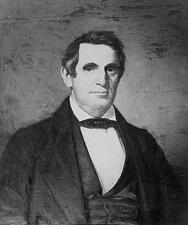
Here you will find contact information for Senator Jabez Williams Huntington, including email address, phone number, and mailing address.
| Name | Jabez Williams Huntington |
| Position | Senator |
| State | Connecticut |
| Party | Whig |
| Status | Former Representative |
| Term Start | December 7, 1829 |
| Term End | December 31, 1847 |
| Terms Served | 5 |
| Born | November 8, 1788 |
| Gender | Male |
| Bioguide ID | H000997 |
About Senator Jabez Williams Huntington
Jabez Williams Huntington (November 8, 1788 – November 1, 1847) was a United States representative and senator from Connecticut and a prominent jurist and legislator during a significant period in American history. Born in Norwich, Connecticut, he was the son of Zachariah Huntington and Hannah Mumford Huntington, members of a well-established New England family with deep roots in the region’s civic and religious life. Raised in an environment that valued education and public service, he pursued classical studies in preparation for college.
Huntington graduated from Yale College in 1806, reflecting the early attainment of a rigorous education that was typical of leading New England statesmen of his generation. After Yale, he taught for one year at the Litchfield South Farms Academy, a position that allowed him to refine his scholarly interests while preparing for a legal career. In 1808 he entered the Litchfield Law School, one of the most influential legal training institutions in the early United States. He was admitted to the bar in 1810 and commenced the practice of law in Litchfield, Connecticut, establishing himself as a capable attorney in a community that was then a center of legal and political activity.
Huntington’s public career began in state politics. He served as a member of the Connecticut House of Representatives from Litchfield in 1828, participating in the legislative affairs of the state at a time when Connecticut was adjusting to the broader democratic currents of the early nineteenth century. His performance in the state legislature helped to elevate his standing within the Connecticut bar and among political leaders, and it prepared him for national office.
In 1829 Huntington entered the United States Congress as a representative from Connecticut. Elected to the Twenty-first, Twenty-second, and Twenty-third Congresses, he served in the U.S. House of Representatives from March 4, 1829, to August 16, 1834. During these years he contributed to the legislative process in the lower chamber, representing the interests of his Connecticut constituents as the nation confronted issues such as economic policy, internal improvements, and the evolving balance of power between the federal government and the states. He resigned his House seat on August 16, 1834, when he moved from Litchfield back to his native Norwich to accept a judicial appointment.
Upon leaving the House, Huntington was appointed a judge of the Connecticut Supreme Court of Errors, the state’s highest court, where he served from 1834 to 1840. In this role he helped shape Connecticut jurisprudence during a period of significant legal development, bringing to the bench the analytical skills and legislative experience he had gained as a lawyer and congressman. His judicial service enhanced his reputation for integrity and legal acumen, and it further solidified his position as one of Connecticut’s leading public figures.
Huntington returned to national office in 1840, when he was elected as a member of the Whig Party to the United States Senate to fill the vacancy caused by the death of Senator Thaddeus Betts. He took his seat on May 4, 1840, and was subsequently reelected, serving in the Senate from 1840 until his death in 1847. As a senator from Connecticut during five terms in office spanning portions of several Congresses, he participated actively in the democratic process at a time marked by debates over banking, tariffs, westward expansion, and the emerging sectional tensions that would later culminate in the Civil War. During the Twenty-seventh and Twenty-eighth Congresses he served as chairman of the Senate Committee on Commerce, a key position that placed him at the center of legislative deliberations on trade, navigation, and the regulation of the nation’s growing commercial interests. As a Whig senator, he aligned with a party that advocated for a strong legislative role in economic development, including support for internal improvements and a national economic program.
In his personal life, Huntington married Sally Ann Huntington, the youngest daughter of his first cousin Joseph Huntington, on May 22, 1833. The marriage reflected the close-knit nature of many prominent New England families of the era. The couple had no children, and Huntington’s legacy was carried forward primarily through his public service and the legal and legislative record he left behind.
Jabez Williams Huntington died in Norwich, Connecticut, on November 1, 1847, one week shy of his fifty-ninth birthday, while still serving in the United States Senate, thus becoming one of the members of Congress who died in office during the nineteenth century. He was interred in the Old Norwich Town Cemetery, where his burial marked the close of a career that had encompassed service as a state legislator, U.S. representative, state supreme court judge, and U.S. senator. His life and work remain part of the historical record of Connecticut’s contribution to the governance and legal development of the United States.