Senator Jackson Morton
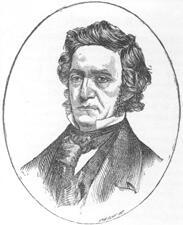
Here you will find contact information for Senator Jackson Morton, including email address, phone number, and mailing address.
| Name | Jackson Morton |
| Position | Senator |
| State | Florida |
| Party | Whig |
| Status | Former Representative |
| Term Start | December 3, 1849 |
| Term End | March 3, 1855 |
| Terms Served | 1 |
| Born | August 10, 1794 |
| Gender | Male |
| Bioguide ID | M001015 |
About Senator Jackson Morton
Jackson Morton (August 10, 1794 – November 20, 1874) was an American politician and businessman who played a notable role in both United States and Confederate politics. He was born in Spotsylvania County, Virginia, and was part of a politically active family; his brother, Jeremiah Morton, later served as a U.S. Representative from Virginia. In his early years, Jackson Morton pursued formal education that prepared him for public life and business, laying the groundwork for his subsequent legal, commercial, and political activities in the American South.
Morton attended Washington College, now Washington and Lee University, in Lexington, Virginia, and later studied at the College of William & Mary in Williamsburg, Virginia. This education placed him within the intellectual and political culture of the early nineteenth-century South. In 1820, he moved to what would become Santa Rosa County, Florida, where he engaged in the lumber business. His commercial pursuits in West Florida helped establish his prominence in the region and provided both the economic base and local standing that would support his entry into territorial and, later, national politics.
Morton’s political career in Florida began during the territorial period. In 1836, he became a member of the Florida Territorial Legislative Council, the governing body for the territory, and he rose quickly within its ranks. By 1837, he was serving as president of the Council, a position that reflected his growing influence in territorial affairs. In 1838, he was a delegate to the Florida constitutional convention that drafted the first Florida Constitution, contributing to the framework under which Florida would eventually enter the Union. From 1841 to 1845, he served as a United States Navy agent in Pensacola, Florida, managing naval supply and logistical matters at an important Gulf Coast port. In 1848, he further demonstrated his alignment with national Whig politics by serving as a presidential elector on the Whig Party ticket.
A member of the Whig Party, Morton was elected by the Florida legislature to the United States Senate in 1848 and took his seat in 1849. He represented Florida as a U.S. Senator from March 4, 1849, to March 3, 1855, serving one full term in office. During this period, he contributed to the legislative process at a time of mounting sectional tension in the United States, particularly over the expansion of slavery and the balance of power between free and slave states. As a member of the Senate, Jackson Morton participated in the democratic process and represented the interests of his Florida constituents in national debates. His service in Congress occurred during a significant period in American history, and he was part of the generation of Southern Whigs who navigated the increasingly fraught politics of the 1850s. At the conclusion of his term in 1855, he was not a candidate for reelection and returned to private life, resuming his lumber business in Santa Rosa County.
As the division over slavery deepened between the northern and southern states, Morton became active in the movement that led to Southern secession and the formation of the Confederacy. On November 30, 1860, he was chosen to represent Santa Rosa County as a delegate to the Florida Secession Convention in Tallahassee. On January 7, 1861, he was appointed to a twelve-person committee charged with preparing an Ordinance of Secession for Florida. Together with fellow delegate George Taliaferro Ward, Morton attempted to amend the ordinance so that Florida’s secession would be contingent on the prior secession of Georgia and Alabama and would require popular ratification by the voters. These efforts were overruled on January 8, 1861, and the ordinance proceeded to a vote without those conditions. Morton ultimately voted in favor of secession, and on January 10, 1861, by a vote of 62–7, Florida became the third state to leave the United States.
Morton’s role in the Confederacy extended beyond the state convention. On January 17, 1861, he was appointed a delegate to the Montgomery Convention in Alabama, which convened to construct a provisional Confederate government. When the delegates met on February 4, 1861, Morton participated in drafting the Provisional Constitution of the Confederate States, which he and the other delegates signed on February 8, 1861. The delegates at this convention became the Provisional Congress of the Confederate States, and Morton served as a Deputy from Florida in that body from 1861 to 1862. In the month following the adoption of the Provisional Constitution, he also signed its successor, the permanent Confederate States Constitution. His dual service in both the United States Congress and the Confederate Congress placed him among a small group of political figures; along with Augustus Maxwell, he was one of only two men to represent Florida in both national legislatures.
After the conclusion of his Confederate service and the end of the Civil War, Morton returned to his home in Santa Rosa County, Florida. He lived at his residence known as “Mortonia,” where he resumed a private life centered on his property and business interests. Jackson Morton died at “Mortonia” on November 20, 1874 (some sources record his death as November 22, 1874), and he was interred in a private cemetery on the estate. His long life spanned from the early republic through Reconstruction, and his career reflected the trajectory of many Southern political leaders who moved from service in the United States government to active participation in the Confederacy during the nation’s most divisive era.