Senator Jacob Collamer
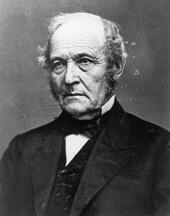
Here you will find contact information for Senator Jacob Collamer, including email address, phone number, and mailing address.
| Name | Jacob Collamer |
| Position | Senator |
| State | Vermont |
| Party | Republican |
| Status | Former Representative |
| Term Start | December 4, 1843 |
| Term End | December 31, 1865 |
| Terms Served | 5 |
| Born | January 8, 1791 |
| Gender | Male |
| Bioguide ID | C000628 |
About Senator Jacob Collamer
Jacob Collamer (January 8, 1791 – November 9, 1865) was an American lawyer, jurist, and statesman from Vermont who became one of the leading anti-slavery voices in Congress during the mid-nineteenth century. He was born in Troy, New York, the son of Samuel Collamer and Elizabeth (Van Arnum) Collamer, and moved with his family to Burlington, Vermont, in 1795. Raised in the Green Mountains, he came of age in a region that would shape his political identity and later earn him the sobriquet “Green-Mountain Socrates.” In 1810 he received a Bachelor of Arts degree from the University of Vermont, and after further study the university later upgraded his degree to a Master of Arts. He read law in St. Albans, Vermont, under Asa Aldis, Asahel Langworthy, and Benjamin Swift, then relocated to Randolph, Vermont, where he completed his legal studies with attorney William Nutting. Collamer was admitted to the bar in 1813, marking the beginning of a long and distinguished legal and public career.
During the War of 1812, Collamer combined legal work with federal and military service. He was appointed a deputy U.S. tax collector for the district that included Orange County, Vermont, responsible for collecting levies in support of the war effort. At the same time, he served as an officer in the Vermont Militia. Commissioned an ensign in the 4th Regiment commanded by William Williams, he first served with an artillery unit on Vermont’s border with Canada. Promoted to first lieutenant, he became aide-de-camp to Brigadier General John French, commander of the militia’s 2nd Brigade, 4th Division. In September 1814, when French’s brigade crossed Lake Champlain en route to Plattsburgh in response to fears of a British invasion, Collamer was sent ahead by boat to notify Vermont Militia commander Samuel Strong that reinforcements were coming. Fired upon by American sentinels but unharmed, he learned from Strong that the Battle of Plattsburgh had already been fought and the British had retreated, and the brigade returned home.
After the war, Collamer established himself as a leading attorney and public servant in Vermont. In 1816 he moved to Royalton, Vermont, where he practiced law for two decades, most of that time in partnership with James Barrett. Among the aspiring lawyers who read law under his supervision was Lyman Gibbons, later a justice of the Alabama Supreme Court. Collamer held several local and state offices, including Register of Probate and Windsor County State’s Attorney, and he served in the Vermont House of Representatives. While in the state legislature he was the principal advocate of the 1836 legislation that created the Vermont Senate, helping to shape the state’s bicameral system. From 1833 to 1842 he served as an associate justice of the Supreme Court of Vermont, succeeding Nicholas Baylies, and in 1836 he moved his residence to Woodstock. He was also a trustee of the University of Vermont from 1839 to 1845, and for many years a trustee and lecturer at the Vermont Medical College in Woodstock, eventually serving as president of its Board of Trustees.
Collamer entered national politics as a Whig and quickly emerged as a prominent congressional leader. Elected to the U.S. House of Representatives in 1842, he served three terms from 1843 to 1849. Jacob Collamer’s service in Congress during this period occurred at a time of intense national debate over expansion and slavery, and he became a notable opponent of the extension of slavery, the annexation of Texas, and the Mexican–American War. He supported high protective tariffs to aid American manufacturers and gained national recognition for his “Wool and Woolens” speech on tariff policy. During his House service he chaired the Committee on Manufactures in the Twenty-eighth Congress and the Committee on Public Lands in the Thirtieth Congress. In 1849 President Zachary Taylor appointed him Postmaster General, a cabinet post he held until July 1850. As Postmaster General, he was criticized by Whig advocates of the spoils system for his reluctance to remove Democratic postmasters wholesale, but he oversaw the introduction of a permanent system for using postage stamps; the first letter he sent under this system, addressed to his brother in Barre, Vermont, recommended saving the stamp as it might one day be valuable to collectors.
After resigning from the cabinet shortly after Taylor’s death to allow President Millard Fillmore to select his own Postmaster General, Collamer returned to Vermont and resumed judicial service. He was appointed a judge of the newly created state Circuit Court, where he served until 1854, when he was succeeded by Abel Underwood; the court itself was later abolished in an 1857 reorganization. In 1855, as the Whig Party collapsed and the Republican Party emerged, Collamer was elected to the United States Senate from Vermont as a conservative, anti-slavery Republican. A member of the Republican Party, Jacob Collamer contributed to the legislative process during his time in Congress and became widely regarded as the best lawyer in the Senate. In his first Senate term he chaired the Committee on Engrossed Bills in the Thirty-fourth Congress, and in 1856 he received several votes for Vice President at the Republican National Convention. Known for speaking infrequently and in a voice often too quiet to reach the galleries, he nonetheless commanded close attention from his colleagues; Senator Charles Sumner called him the “Green-Mountain Socrates” and praised him as one of the wisest and best-balanced statesmen of his era.
Jacob Collamer served as a Senator from Vermont in the United States Congress from 1855 until his death in 1865. His Senate service, which encompassed the secession crisis and the Civil War, occurred during a significant period in American history. As a member of the Senate, Jacob Collamer participated in the democratic process and represented the interests of his Vermont constituents while consistently opposing slavery and its expansion. He played a key role in several major controversies of the 1850s, including opposition to the pro-slavery Lecompton Constitution for Kansas. When the Committee on Territories, chaired by Stephen A. Douglas, recommended passage of the Crittenden Amendment to resubmit the Lecompton Constitution to a popular vote, Collamer and Senator James R. Doolittle of Wisconsin declined to support it and instead authored a forceful minority report explaining their objections. In June 1860 he again represented the minority view when a select committee chaired by James Murray Mason reported on John Brown’s raid on Harpers Ferry; while Mason argued that the raid reflected a broad abolitionist conspiracy requiring new federal restrictions, Collamer and Doolittle countered that Brown and his followers had already been apprehended and punished and that further federal action was unnecessary.
During the Civil War and its aftermath, Collamer was a steadfast supporter of the Union and an advocate of a strong congressional role in Reconstruction. At the 1860 Republican National Convention he received the favorite-son votes of Vermont’s delegation for the presidential nomination before withdrawing after the first ballot. Reelected to the Senate in 1861, he remained in office until 1865. That year he authored a bill to invest the President with new war powers and to give explicit congressional approval to the emergency measures President Abraham Lincoln had taken at the outset of his administration. In 1862 Collamer led a group of nine Republican senators who met with Lincoln to urge changes in the cabinet, particularly the removal of Secretary of State William Henry Seward; after Lincoln deftly exposed the role of Secretary of the Treasury Salmon P. Chase in fomenting the dispute, the senators withdrew their objections. Once Southern Democrats left Congress during the war, Collamer served in the Republican majority and chaired the Committee on the Post Office and Post Roads in the Thirty-seventh through Thirty-ninth Congresses, as well as the Committee on the Library in the Thirty-eighth and Thirty-ninth Congresses. After the war he opposed the comparatively lenient Reconstruction policies of Presidents Lincoln and Andrew Johnson, arguing instead for congressional control over the process of readmitting former Confederate states to the Union.
Collamer’s later years were marked by continued public service and growing recognition of his contributions. He received the honorary degree of Doctor of Laws (LL.D.) from the University of Vermont in 1850 and from Dartmouth College in 1855. On the personal side, he married Mary Stone in 1817; she survived him until 1870. The couple’s children included Elisabeth, Harriet, Mary, Edward, Ellen, Frances, and William. Jacob Collamer died at his home in Woodstock, Vermont, on November 9, 1865, while still serving in the Senate, and he was buried in River Street Cemetery in Woodstock. In 1881 the state of Vermont honored his memory by donating a marble statue of Collamer, sculpted by Preston Powers, to the National Statuary Hall Collection in the United States Capitol. There, alongside the statue of Ethan Allen, his likeness represents Vermont and commemorates his long career as a lawyer, judge, cabinet officer, and influential Republican senator during one of the most turbulent eras in American history.