Representative Jacob Crowninshield
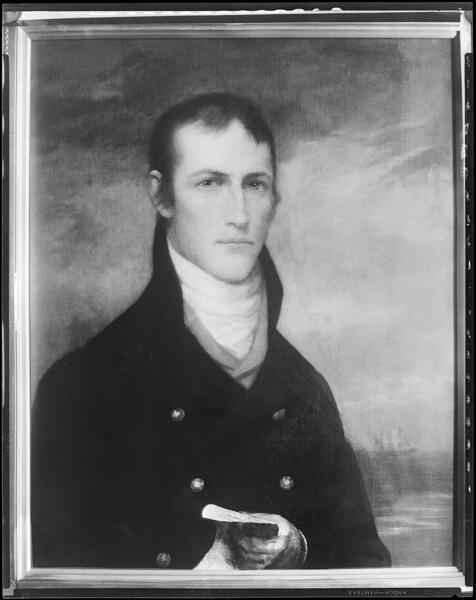
Here you will find contact information for Representative Jacob Crowninshield, including email address, phone number, and mailing address.
| Name | Jacob Crowninshield |
| Position | Representative |
| State | Massachusetts |
| District | 2 |
| Party | Republican |
| Status | Former Representative |
| Term Start | October 17, 1803 |
| Term End | March 3, 1809 |
| Terms Served | 3 |
| Born | March 31, 1770 |
| Gender | Male |
| Bioguide ID | C000947 |
About Representative Jacob Crowninshield
Jacob Crowninshield (March 31, 1770 – April 15, 1808) was an American politician and merchant who served as a U.S. Representative from Massachusetts and was an appointee to the position of United States Secretary of the Navy, a post he never assumed. A member of the Democratic-Republican (often called Republican) Party, he represented Massachusetts in the U.S. House of Representatives for three consecutive terms during a formative period in the early republic. He was part of the prominent Crowninshield family of Salem, long active in New England maritime trade and early American naval affairs. His brother Benjamin Williams Crowninshield later successfully held the office of Secretary of the Navy, and Jacob Crowninshield himself was the grandfather of naval officer Arent S. Crowninshield.
Crowninshield was born on March 31, 1770, in Salem, in the Province of Massachusetts Bay, then part of British America. He was raised in a family deeply engaged in maritime commerce, which shaped both his early career and his later political interests. As a young man, he entered into partnership with three of his brothers, commanding and managing trade ships that sailed between the United States and India. This involvement in the India trade placed him within the expanding commercial networks of the post-Revolutionary era and gave him firsthand experience with the issues of shipping, tariffs, and international commerce that would later figure prominently in his congressional work.
In 1796, Crowninshield married Sarah Gardner, the daughter of John Gardner, a direct descendant of one of the early “old planters” of Massachusetts, and Sarah (Derby) Gardner, herself the daughter of the prominent Salem merchant Richard Derby (1712–1783). This marriage further linked Crowninshield to influential mercantile and landed families of Massachusetts. The couple’s daughter Sarah later married the Salem merchant Richard Saltonstall Rogers, continuing the family’s connections to New England’s commercial elite. These familial and commercial ties reinforced Crowninshield’s standing in Salem society and provided a base of support for his entry into public life.
Crowninshield’s first attempt at national office came in 1798, when he was an unsuccessful candidate for election to the U.S. House of Representatives to fill the vacancy caused by the resignation of Dwight Foster. Undeterred by this initial defeat, he turned to state politics and was elected to the Massachusetts Senate in 1801. His service in the state legislature helped establish his reputation as a Republican leader in a region where Federalist sentiment was strong, and it prepared him for subsequent service in the national legislature.
In November 1802, Crowninshield was elected as a Democratic-Republican to the U.S. House of Representatives and took his seat in the 8th Congress, representing Massachusetts. He was reelected to the 9th and 10th Congresses, serving continuously until his death in 1808. During these three terms, he participated actively in the legislative process at a time when the young nation was grappling with issues of trade, maritime rights, and the balance between federal and state authority. In the 9th Congress he served as chairman of the United States House Committee on Commerce and Manufactures, a position that drew directly on his extensive maritime and commercial experience and placed him at the center of debates over American economic policy.
Crowninshield’s prominence in Congress and his alignment with President Thomas Jefferson’s administration led to his nomination in 1805 to the post of United States Secretary of the Navy. The Senate confirmed his appointment, reflecting confidence in his maritime background and political reliability. However, he declined to assume the office for health reasons and chose instead to continue his service in the House of Representatives. The position he declined was later held by his brother Benjamin Williams Crowninshield, underscoring the family’s enduring association with naval affairs and federal service.
Jacob Crowninshield’s congressional career was cut short by illness. He suffered from tuberculosis, and his health steadily declined during his final term in office. He died in Washington, D.C., on April 15, 1808, near the end of his third term in Congress, at the age of 38, becoming one of the early members of the United States Congress to die in office. His body was returned to his native Salem, where he was interred in Harmony Grove Cemetery. Through his legislative work, his brief but notable elevation to a cabinet appointment, and his role within a family central to early American maritime commerce and naval administration, Crowninshield left a distinct imprint on the political and commercial life of the early United States.