Representative Jacob Sloat Fassett
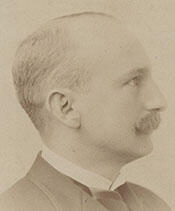
Here you will find contact information for Representative Jacob Sloat Fassett, including email address, phone number, and mailing address.
| Name | Jacob Sloat Fassett |
| Position | Representative |
| State | New York |
| District | 33 |
| Party | Republican |
| Status | Former Representative |
| Term Start | December 4, 1905 |
| Term End | March 3, 1911 |
| Terms Served | 3 |
| Born | November 13, 1853 |
| Gender | Male |
| Bioguide ID | F000042 |
About Representative Jacob Sloat Fassett
Jacob Sloat Fassett (November 13, 1853 – April 21, 1924) was an American businessman, lawyer, and Republican politician who represented New York in the United States House of Representatives from 1905 to 1911. He was born in Elmira, Chemung County, New York, the son of Newton Pomeroy Fassett and Martha Ellen (Sloat) Fassett. Raised in Elmira, he attended the city’s public schools before pursuing higher education. His early life in this growing upstate community would anchor a career that combined law, business, and public service at the local, state, and national levels.
Fassett graduated from the University of Rochester in 1875. He then studied law in Elmira at his father’s firm, Smith, Robertson & Fassett, and was admitted to the bar in 1878, commencing practice in his hometown. That same year he entered public office as District Attorney of Chemung County, serving in 1878 and 1879. On February 13, 1879, he married Jennie Louise Crocker (1860–1939), daughter of Judge Edwin B. Crocker, in Sacramento, California. Around this time he became proprietor of the Elmira Daily Advertiser, reflecting his growing engagement with public affairs and local business. Seeking further legal training, he later enrolled as a law student at Heidelberg University in Germany, returning to Elmira in 1882 to resume the practice of law.
Fassett’s political career advanced rapidly in New York State. He served as a member of the New York State Senate from the 27th District from 1884 to 1891, sitting in the 107th through 114th New York State Legislatures. From 1889 to 1891 he was President pro tempore of the Senate, a position that placed him among the leading Republican figures in the state. Nationally, he was active in party affairs as a delegate to the Republican National Conventions of 1880, 1892, and 1916, and he served as Secretary of the Republican National Committee from 1888 to 1892. In 1891 President Benjamin Harrison appointed him Collector of the Port of New York, a powerful federal post he held from August 1 to September 15, 1891, resigning to run for Governor of New York. In the 1891 state election he was defeated by Democrat Roswell P. Flower. He later took part in the New York State Constitutional Convention of 1894, continuing his influence on state governance.
Fassett entered national legislative service in the early twentieth century. A member of the Republican Party, he was elected to the Fifty-ninth, Sixtieth, and Sixty-first Congresses as a Representative from New York, serving from March 4, 1905, to March 3, 1911. During these three consecutive terms in the United States House of Representatives, he contributed to the legislative process at a time of significant economic and political change in the United States. His service in Congress occurred during a notable period in American history marked by progressive-era reforms and expanding federal responsibilities. As a member of the House, Jacob Sloat Fassett participated in the democratic process and represented the interests of his New York constituents, taking part in debates and votes that shaped national policy during his six years in office.
After leaving Congress in 1911, Fassett’s last formal political role was as Chairman of the Republican advisory convention in 1918, but his principal focus shifted back to private enterprise. He resumed his work in banking and the lumber business in Elmira and expanded his interests into mining ventures. He was an investor in various mines, including the Oriental Consolidated Mining Corporation in Korea, which was managed by his cousin, Spokane politician and metallurgist Charles M. Fassett; the Congressman and his son Newton Crocker Fassett were partners in these mining enterprises. He also maintained close ties to Elmira’s civic life. In 1916, he and his wife donated $30,000 to Elmira College for the construction of a dining hall connected to the north arm of Cowles Hall. Although he favored the name Crocker Hall over Fassett Commons, the building ultimately bore the family name; when construction costs exceeded estimates, the Fassetts contributed an additional $10,000. Fassett Commons later became listed on the National Register of Historic Places, and an elementary school in Elmira, New York, also commemorates the family name.
Fassett’s later years were marked by the development of a substantial summer estate and the continued prominence of his family. Between 1916 and 1918, he and his wife built a large summer estate known as “Greycourt” on a 40-acre tract on the north side of West Falmouth Harbor in Falmouth, Massachusetts, encompassing 12 acres called “Little Island” and 28 acres known as Greycourt at the end of Little Island Road. The Fassetts had previously spent summers in Gloucester at Cape Ann but sold their estate there in 1916 for $225,000 in what was described as one of the largest real estate transactions ever recorded on Cape Ann. After Jacob Sloat Fassett’s death in 1924 and Jennie Crocker Fassett’s death in 1939, the Greycourt estate was offered for sale at $35,000; by 1941, having failed to find a buyer, their children had the estate buildings destroyed and the land divided, though some descendants continued to live on portions of the original property.
Jacob Sloat Fassett died on April 21, 1924, in Vancouver, British Columbia, Canada, while returning from a business trip to Japan and the Philippines. He was buried in Woodlawn Cemetery in Elmira, New York. His legacy extended through both place names and family achievements. The United States Liberty ship SS Jacob Sloat Fassett, launched during World War II, was named in his honor, and the village of Fassett in Quebec, Canada, also bears his name. Although he and Jennie Crocker Fassett had several children, including one who became a physician, none entered politics as he had. Their most prominent child was Jacob Sloat Fassett Jr. (1889–1973), better known by his stage name Jay Fassett, who appeared in several Hollywood films. Jay Fassett’s son, Jacob Sloat Fassett III (1913–2002), followed a business path, graduating from Cornell University and entering the hotel industry, purchasing a 50-room hotel in upstate New York at age 26 and later residing on the remaining portion of the West Falmouth estate. Among the Congressman’s more distant descendants is Kaffe Fassett, a noted artist and designer based in London, who is his great-grandson.