Representative Jacob Johnson
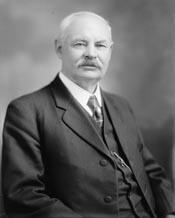
Here you will find contact information for Representative Jacob Johnson, including email address, phone number, and mailing address.
| Name | Jacob Johnson |
| Position | Representative |
| State | Utah |
| District | -1 |
| Party | Republican |
| Status | Former Representative |
| Term Start | April 7, 1913 |
| Term End | March 3, 1915 |
| Terms Served | 1 |
| Born | November 1, 1847 |
| Gender | Male |
| Bioguide ID | J000141 |
About Representative Jacob Johnson
Jacob Johnson was born on November 1, 1847, in Aalborg, Denmark. Little is recorded in standard references about his early family life in Denmark, but like many Scandinavians of his generation, he came of age in a period marked by economic change and significant emigration from the region. He was raised in a cultural environment shaped by Lutheran traditions and the social currents that encouraged many Danes to seek new opportunities abroad during the mid‑nineteenth century. These broader historical forces would ultimately influence his decision to leave Europe and establish a life in the United States.
Johnson’s formal education took place in Denmark, where he received the basic schooling typical of the era. His early education would have included instruction in reading, writing, arithmetic, and religious studies, providing him with the foundational skills necessary for later professional and civic engagement. Although detailed records of advanced or specialized study are not widely documented, his subsequent professional and political activities indicate that he continued to educate himself through practical experience, community involvement, and engagement with public affairs after his emigration.
As a young man, Johnson emigrated from Denmark to the United States, joining a broad wave of Scandinavian immigrants who settled in the American West. He eventually made his home in Utah, where he integrated into the social and economic life of the region. In Utah he pursued a legal career, becoming an attorney and establishing himself as a respected member of the bar. His work as a lawyer brought him into close contact with the concerns of local residents and helped build the reputation and connections that would later support his entry into public office. Over time, he became identified with the Republican Party, reflecting his alignment with its policies and priorities in the early twentieth century.
Johnson’s political career developed within the context of Utah’s evolving role in national affairs following its admission to the Union in 1896. As a Republican, he participated in party activities and became known as a representative of his community’s interests. His legal background and standing in Utah’s civic life positioned him as a credible candidate for higher office. By the early 1910s, he had gained sufficient support to seek election to the United States House of Representatives, at a time when Utah was still relatively new to federal legislative politics and was working to define its voice on national issues.
Jacob Johnson served as a Representative from Utah in the United States Congress from March 4, 1913, to March 3, 1915. Elected as a member of the Republican Party, he represented his Utah constituents during the Sixty‑third Congress. His service in Congress occurred during a significant period in American history, overlapping with the administration of President Woodrow Wilson and an era of progressive reforms and growing international tensions preceding World War I. As a member of the House of Representatives, Johnson contributed to the legislative process during his single term in office, participating in the democratic process and representing the interests of his constituents in debates and votes on national policy. Although he served only one term, his tenure placed him among the early generation of Utahns to hold federal legislative office.
After leaving Congress in 1915, Johnson returned to private life in Utah. He resumed his legal and civic activities, continuing to be regarded as an experienced public figure who had represented the state on the national stage. In his later years, he remained part of the community whose interests he had once advanced in Washington, D.C. Jacob Johnson died on August 15, 1925, in Salt Lake City, Utah. His life spanned from mid‑nineteenth‑century Denmark to early twentieth‑century America, and his career reflected both the immigrant experience and the political development of Utah as it took its place in the federal union.