Representative Jacob Le Fever
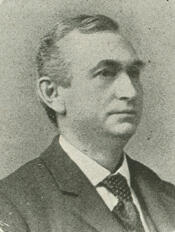
Here you will find contact information for Representative Jacob Le Fever, including email address, phone number, and mailing address.
| Name | Jacob Le Fever |
| Position | Representative |
| State | New York |
| District | 18 |
| Party | Republican |
| Status | Former Representative |
| Term Start | August 7, 1893 |
| Term End | March 3, 1897 |
| Terms Served | 2 |
| Born | April 20, 1830 |
| Gender | Male |
| Bioguide ID | L000158 |
About Representative Jacob Le Fever
Jacob LeFever (often appearing in records as Jacob Le Fever, Le Fevre, or LeFevre) was born in New Paltz, Ulster County, New York, on April 20, 1830. Raised in a community with deep Huguenot roots, he grew up in a rural environment that would shape his later pursuits as both a farmer and a public figure. His early life in New Paltz placed him within a longstanding local tradition of civic engagement and agricultural enterprise, influences that would later be reflected in his dual careers in business and politics.
LeFever received his education at New Paltz Academy in his hometown and later attended Amenia Seminary in Amenia, New York. This combination of local and seminary schooling provided him with a solid academic foundation and exposure to broader intellectual and social currents of mid-19th-century New York. His education prepared him for leadership roles in both public life and the private sector, equipping him with the skills necessary for legislative work, business management, and community affairs.
Following his education, LeFever established himself as a successful farmer and became a prominent businessman and banker in Ulster County. He was closely associated with the region’s financial and transportation development. He served as an officer of the Huguenot National Bank and later became its president in 1875, a position he held until his death. In addition, he sat on the board of directors of the New Paltz Savings Bank and served on the board of directors of the Wallkill Valley Railroad, reflecting his influence in both local finance and regional infrastructure. Through these roles he contributed to the economic growth and modernization of New Paltz and the surrounding area.
A member of the Republican Party, LeFever entered public service at the local level. He served as Town Supervisor of New Paltz in 1861 and 1862, a position that also made him a member of the Ulster County Board of Supervisors. His performance in local government led to higher office, and he was elected to the New York State Assembly as the representative for Ulster County’s 2nd District. He served in the Assembly in 1863, 1864, 1865, and 1867, participating in state-level legislative deliberations during the Civil War and Reconstruction eras. Over the course of his political career, he was a delegate to numerous Republican state conventions and served as a delegate to the 1888 Republican National Convention, underscoring his standing within the party and his involvement in shaping Republican politics at both state and national levels.
LeFever’s congressional career began with his election as a Republican Representative from New York to the United States House of Representatives. He was elected to the Fifty-third and Fifty-fourth Congresses and served from March 4, 1893, to March 3, 1897. During these two terms in office, he represented the interests of his New York constituents in the House of Representatives and contributed to the legislative process at a time of significant economic and political change in the United States. His service in Congress occurred during a notable period in American history, marked by debates over economic policy, industrial growth, and the evolving role of the federal government. As a member of the House, Jacob Le Fever participated in the democratic process and worked within the Republican Party framework to advance the concerns of his district. He chose not to be a candidate for renomination in 1896 to the Fifty-fifth Congress, thereby concluding his federal legislative service after four years.
After leaving Congress in 1897, LeFever continued his involvement in business and banking in New Paltz. He remained president of the Huguenot National Bank, a position he had held since 1875, and continued to be recognized as a leading figure in the financial life of his community. His family also maintained a presence in public service; his son, Frank Jacob Le Fevre, later served in the United States Congress, extending the family’s political legacy. Jacob LeFever died in New Paltz, New York, on February 4, 1905. He was interred in New Paltz Rural Cemetery, leaving behind a record of service that spanned local, state, and national government, as well as significant contributions to the economic development of his hometown and region.