Senator Jacob Read
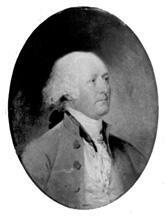
Here you will find contact information for Senator Jacob Read, including email address, phone number, and mailing address.
| Name | Jacob Read |
| Position | Senator |
| State | South Carolina |
| Party | Federalist |
| Status | Former Representative |
| Term Start | December 7, 1795 |
| Term End | March 3, 1801 |
| Terms Served | 1 |
| Gender | Male |
| Bioguide ID | R000092 |
About Senator Jacob Read
Jacob Read (1752 – July 17, 1816) was an American lawyer, legislator, and Federalist politician from Charleston, South Carolina, who represented his state in both the Continental Congress and the United States Senate. Born at the “Hobcaw” plantation in Christ Church Parish, near Charleston, South Carolina, in 1752, he was raised in the Lowcountry planter society that produced many of the early political leaders of the state. His family connections and upbringing at Hobcaw placed him within the social and economic networks that shaped South Carolina’s colonial and revolutionary-era leadership.
After completing his preparatory studies, Read pursued the study of law and was admitted to the bar. Seeking further education and exposure to metropolitan legal and political culture, he traveled to England, where he studied from 1773 to 1776. While in London, he associated with other American colonists and, in 1774, joined them in a petition against the Boston Port Bill, aligning himself with colonial resistance to British policies even while abroad. His time in England gave him direct experience with British political institutions and debates at the very moment imperial tensions with the American colonies were intensifying.
Upon his return to the United States, Read entered public service during the Revolutionary War, holding various military and civil positions on behalf of South Carolina. In the course of the conflict he was captured and, along with other Americans, was sent by the British as a prisoner to St. Augustine, Florida, where he was held from 1780 to 1781. After his release, he resumed public life in his home state. He became a member of the South Carolina State Assembly in 1782 and joined the state privy council in 1783, participating in the reconstruction of civil government in the aftermath of war and occupation.
Read’s legislative career advanced rapidly in the 1780s. He was chosen as a delegate from South Carolina to the Continental Congress, serving from 1783 to 1785, where he took part in the national deliberations of the Confederation period. Simultaneously, he served in the South Carolina House of Representatives from St. Philip’s and St. Michael’s Parish. His tenure in the state lower house extended from January 8, 1782, to December 17, 1794, and during the last five years of that service he held the influential post of Speaker. In that capacity he helped guide state legislation in the critical years when South Carolina was adapting to independence and the new federal Constitution. In 1793 he sought election to the United States House of Representatives, reflecting his ambition to move from state to national office, though this bid was unsuccessful.
Elected as a member of the Federalist Party to the United States Senate, Read represented South Carolina in the federal Congress from March 4, 1795, to March 3, 1801, serving a single term. His tenure in the Senate coincided with a formative period in the early republic, when the new federal government was consolidating its authority and partisan divisions between Federalists and Democratic-Republicans were becoming more pronounced. As a Senator, Jacob Read contributed to the legislative process and participated in the democratic governance of the new nation, representing the interests of his South Carolina constituents within the broader framework of Federalist policies. During the Fifth Congress he was chosen president pro tempore of the Senate, serving in that leadership role for about a month, an indication of the confidence his colleagues placed in his parliamentary experience and judgment. He was, however, an unsuccessful candidate for reelection at the end of his term and was succeeded in the Senate by Democratic-Republican John E. Colhoun.
After leaving the Senate in 1801, Read returned to private life in South Carolina, remaining part of the state’s legal and planter elite. Though no longer holding national office, his earlier service in the Continental Congress, the South Carolina legislature, and the United States Senate had already secured his place among the notable public figures of the Revolutionary and early national eras. He continued to reside in the Charleston area, maintaining his connection to Hobcaw and the surrounding Christ Church Parish community.
Jacob Read died in Charleston, South Carolina, on July 17, 1816, at about 64 years of age. He was interred in the Bond/Read family cemetery at “Hobcaw” in Christ Church Parish, near Charleston, returning in death to the plantation where he had been born. His career, spanning service in the Revolutionary War, the Continental Congress, the South Carolina General Assembly, and the United States Senate, reflects the trajectory of a South Carolina Federalist who helped shape both state and national institutions in the first decades of the United States.