Representative Jacob Thorkelson
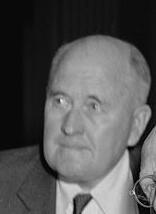
Here you will find contact information for Representative Jacob Thorkelson, including email address, phone number, and mailing address.
| Name | Jacob Thorkelson |
| Position | Representative |
| State | Montana |
| District | 1 |
| Party | Republican |
| Status | Former Representative |
| Term Start | January 3, 1939 |
| Term End | January 3, 1941 |
| Terms Served | 1 |
| Born | September 24, 1876 |
| Gender | Male |
| Bioguide ID | T000236 |
About Representative Jacob Thorkelson
Jacob Thorkelson (September 24, 1876 – November 20, 1945) was a Norwegian-born American physician, naval reservist, and politician who served as a Republican Representative from Montana in the United States Congress from 1939 to 1941. He represented Montana’s 1st congressional district during a significant period in American history, participating in the legislative process for one term and formally representing the interests of his constituents in the U.S. House of Representatives.
Thorkelson was born on September 24, 1876, in Egersund, a coastal town in Rogaland County, Norway. He immigrated to the United States in 1892, as a teenager, and initially pursued a maritime career. He studied nautical navigation and subsequently worked as a navigator and sailing master on ocean‑going ships, gaining extensive experience at sea before turning to the study of medicine.
After his seafaring years, Thorkelson undertook formal medical training. He graduated from the College of Physicians and Surgeons at the University of Maryland, Baltimore, in 1911. Immediately following his graduation, he joined the faculty of the same institution, serving as a member of the faculty from 1911 until 1913. This early academic appointment marked the beginning of his professional life as a physician in the United States.
In 1913, Thorkelson moved to Montana, where he established himself as a practicing physician. Over the ensuing years he resided successively in Dillon, Warm Springs, and Butte, Montana, while maintaining his medical practice. Alongside his civilian career, he also served in military reserve forces. He was a member of the Virginia Naval Reserve, a militia organization, from 1897 to 1899, and later served in the United States Navy Reserve from 1936 until 1939, attaining the rank of lieutenant commander.
Thorkelson entered national politics in the late 1930s. In the 1938 elections, he ran as a Republican for the United States House of Representatives from Montana’s 1st congressional district and defeated the incumbent Democratic Congressman Jerry J. O’Connell in the general election. He took office on January 3, 1939, and served until January 3, 1941. During this single term in Congress, Jacob Thorkelson contributed to the legislative process and participated in the democratic governance of the nation as a member of the House of Representatives, formally engaging in debates, votes, and committee work on behalf of his Montana constituents.
Thorkelson’s congressional career, however, became notorious for his extremist views and use of official channels to disseminate propaganda. Contemporary journalists described him as “rabidly pro-fascist and antisemitic” and “Jew-baiting, fascist-minded,” noting his frequent use of the Congressional Record to reprint anti-British and anti-Jewish materials. He opposed the admission of additional Jewish refugees to the United States and claimed that Jewish migrants were part of an “invisible government” tied to the “communistic Jew” and “Jewish international financiers.” Commentator Walter Winchell labeled him “the mouthpiece of the Nazi movement in congress,” prompting Thorkelson to file a $1.8 million lawsuit after Winchell listed him among “Americans We Can Do Without.” During his term, Thorkelson collaborated with Nazi agent George Sylvester Viereck to mail out 5,000 copies of a friendly, sympathetic interview with Adolf Hitler. He inserted into the Congressional Record quotations from the fabricated Protocols of the Elders of Zion, from World Hoax by Ernest Fredrick Elmhurst, from British fascist Sir Oswald Mosley’s Action, and from the Los Angeles–based Nazi-leaning publication Christian Free Press. Defending himself against criticism, he argued that terms such as “Nazi,” “fascist,” “anti-racial,” and “anti-Semitic” were created by “anti-Americans” to conceal their own subversive activities, and he asserted that the principles of those movements were not destructive to the government of the United States. Modern historians have consequently characterized him as “best known for his diatribes against Jews and the New Deal and for his calls to revise the United States Constitution” and as “a raging anti-Semite and pro-fascist.”
Thorkelson’s electoral fortunes declined rapidly after his first term. When he sought renomination in 1940, he was defeated in the Republican primary by former Representative Jeannette Rankin, who went on to regain the seat. He then attempted to advance his political career through statewide office. In 1942, he ran in the Republican primary for the United States Senate from Montana, but finished third behind Wellington D. Rankin and Charles R. Dawley. Two years later, in 1944, he sought the Republican nomination for Governor of Montana, challenging incumbent Governor Sam C. Ford in the primary; Ford defeated him by a landslide margin. After these defeats, Thorkelson did not return to national office.
Jacob Thorkelson died from heart ailments in Butte, Montana, on November 20, 1945. He was buried at Holy Cross Cemetery in Butte. His career, encompassing immigration, maritime service, medical practice, naval reserve duty, and a controversial term in Congress, remains part of the historical record of Montana and the United States, documented in sources such as the Biographical Directory of the United States Congress and contemporary and modern assessments of his political activities.