Senator James Barbour
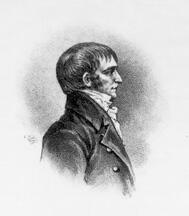
Here you will find contact information for Senator James Barbour, including email address, phone number, and mailing address.
| Name | James Barbour |
| Position | Senator |
| State | Virginia |
| Party | Republican |
| Status | Former Representative |
| Term Start | December 4, 1815 |
| Term End | December 31, 1825 |
| Terms Served | 2 |
| Born | June 10, 1775 |
| Gender | Male |
| Bioguide ID | B000127 |
About Senator James Barbour
James C. Barbour (June 10, 1775 – June 7, 1842) was an American politician, planter, lawyer, and United States Senator from Virginia whose public career spanned state and national office during a formative era in the early republic. Born in what later became Barboursville, Orange County, Virginia, he was the son of Thomas Barbour, who held a seat in the Virginia House of Burgesses in 1769, and Mary Pendleton Thomas. His grandfather, also James Barbour (1707–1775), had patented lands in Spotsylvania County in 1731 and 1733, and an uncle of the same name served in the Virginia House of Burgesses from 1761 to 1765. Both sides of the Barbour family were counted among the First Families of Virginia and early settlers in Orange County and farther west. By the time of his birth, the family controlled more than 2,000 acres and enslaved several people, though they suffered financial reverses during and after the American Revolutionary War.
Despite these reverses, Barbour received a solid education. He studied under private tutors and later attended an academy at Gordonsville, Virginia, run by the noted Presbyterian minister James Waddel. This education prepared him for both legal and political careers. His younger brother, Philip P. Barbour, would go on to become Speaker of the United States House of Representatives and an Associate Justice of the Supreme Court of the United States, underscoring the family’s continuing political prominence. On October 29, 1792, James Barbour married Lucy Johnson, daughter of Benjamin Johnson, who had represented Orange County in the Virginia General Assembly in 1790. The couple had three daughters—one, Frances, dying in infancy in 1802—and four sons, including James Barbour and Benjamin Johnson Barbour (1821–1894), who later served as rector of the University of Virginia.
Barbour’s early public service began at the local level. In 1792 he was appointed deputy sheriff of Orange County, and in 1794 he was admitted to the Virginia bar. With wedding gifts from his father, a growing legal practice, and the operation of his plantation, he rebuilt his personal fortune. His principal residence, the mansion at Barboursville in Orange County, was designed with the assistance of his friend and neighbor Thomas Jefferson of Monticello. By 1798 Barbour owned several enslaved people and expanded his plantation holdings over time, paralleling the growth of nearby estates such as President James Madison’s Montpelier. Orange County voters elected him to the Virginia House of Delegates in 1796, where he became the youngest member of that body. Reelected multiple times, he served from 1796 to 1804 and again from 1807 to 1812, gaining a reputation for eloquence and legislative skill. He chaired key committees, including the Committee of Privileges and Elections and the Finance Committee, and was repeatedly chosen as Speaker of the House of Delegates.
Politically, Barbour was a strong Jeffersonian Republican, closely aligned in principle with Jefferson and Madison. He vigorously opposed the Alien and Sedition Acts of 1798 and spoke forcefully in support of the Virginia Resolutions, warning that using an “expected attack from abroad” as a pretext to curtail liberty at home threatened the foundations of the republic. He consistently resisted measures that, in his view, unduly expanded executive power. Among his most enduring legislative achievements in Richmond was drafting the bill establishing the Literary Fund of Virginia, passed on February 2, 1810, to provide public education funding in each county. Barbour later requested that the only inscription on his tombstone refer to this act, reflecting his conviction that social progress depended on education, though he also held contemporary views linking intellectual capacity to gender, race, and land ownership.
In 1811 Barbour sought the governorship of Virginia but initially lost to incumbent George William Smith. Smith died in the Richmond Theatre fire on December 26, 1811, and on January 3, 1812, the General Assembly elected Barbour governor. As Governor of Virginia, he confronted the mounting crisis with Great Britain over maritime rights and impressment of American sailors, particularly in the Hampton Roads and Norfolk areas. Favoring war as the only effective means to defend U.S. sovereignty, he pressed for strengthening the state militia, requesting funds on February 11, 1812, and personally touring the vulnerable tidewater region. When Congress declared war on June 18, 1812, Barbour became known as Virginia’s “war governor.” He faced no opposition in the November 1812 gubernatorial election and was reelected amid British raids along the Virginia coast. In 1814 he secured legislative approval to raise 10,000 troops and place them under federal control. During his tenure he also authorized exploration of the upper James River and obtained funding for road improvements. He was the first governor to reside in the newly completed Virginia Governor’s Mansion in Richmond, designed by Alexander Parris, and he received formal resolutions from Virginians commending his leadership during the War of 1812.
On December 1, 1814, the Virginia legislature elected Barbour, then 40 years old, to the United States Senate to succeed Richard Brent. A member of the Republican Party, he served two terms as a Senator from Virginia from 1815 to 1825, participating in the legislative process during a significant period in American history and representing the interests of his constituents in the upper chamber of Congress. Although he had earlier opposed the creation of a national bank, Barbour adjusted his position in deference to President James Madison and became the Senate sponsor of a bill drafted by Secretary of the Treasury Alexander James Dallas to establish a new national bank with $50,000,000 in capital; this measure succeeded where previous efforts had failed. In the Senate, Barbour aligned with John C. Calhoun and Henry Clay on internal improvements and slavery. He proposed the creation of a standing committee on roads and canals, supported the Bonus Bill to devote bank revenues to internal improvements, and advocated a constitutional amendment explicitly authorizing Congress to appropriate funds for such projects. He opposed reducing the size of the national army, supported legislation to abolish imprisonment for debt, and introduced the Navigation Act of 1818, which closed U.S. ports to vessels coming from British ports that were closed to American ships. Although the act did not achieve its intended effect on British policy, it led to a later compromise embodied in the Elsewhere Act of 1823, which allowed reciprocal trade.
Barbour’s influence in the Senate reached its height when his colleagues elected him President pro tempore in 1819. During the 16th Congress, over which he presided in that capacity, the Senate debated and adopted the Missouri Compromise of 1820. Barbour supported the admission of Missouri as a slave state and proposed linking the Missouri bill with the bill admitting Maine, in part to prevent Northern Senators from gaining additional anti-slavery representation. His speeches during this controversy, including a warning that there was “a point where resistance becomes a virtue and submission a crime,” anticipated later Southern arguments in the decades leading to the Civil War. He also sponsored a resolution to present an honorary sword to Colonel Richard Mentor Johnson of Kentucky for his service at the Battle of the Thames in 1813, beginning a political friendship that later aided Barbour’s advancement. In December 1825, Virginia legislators chose John Randolph of Roanoke, a Jacksonian Democrat and fellow defender of slavery but opponent of the national bank and the Missouri Compromise, to succeed Barbour in the Senate.
Following the inauguration of President John Quincy Adams on March 4, 1825, the Senate confirmed Barbour as United States Secretary of War, while Henry Clay became Secretary of State. As Secretary of War from 1825 to 1828, Barbour oversaw the U.S. Army and federal Indian affairs. His tenure was marked by a major conflict with Georgia Governor George Troup over the removal of the Creek Indians from approximately five million acres of land. After the controversial Treaty of Indian Springs (1825), signed by Troup’s cousin William McIntosh and a few other Creek leaders in exchange for substantial payments, Creeks opposed to the cession executed McIntosh and denounced the agreement. President Adams, with Barbour’s department involved in implementation, renegotiated the Treaty of Washington (1826) on somewhat more favorable terms for the Creeks, though both treaties ultimately provided for removal west of the Mississippi River. Troup, angered that some Creeks would remain in Georgia, ordered land surveys and threatened to mobilize the state militia. The federal government eventually ceased protecting the Creeks, and by 1827 all Creek lands in Georgia had been seized and their people removed. Barbour’s association with Adams and Clay during this period, at a time when Andrew Jackson’s popularity was ascendant, would later damage his standing among many Virginia Republicans.
Seeking to continue his public service abroad, Barbour obtained appointment as United States Minister to Great Britain, a post he assumed while Adams was still in office. Some contemporaries suggested he was seeking a “harbor in the storm” from the increasingly hostile domestic political climate, but he was well received in European intellectual and diplomatic circles. During the 1820s he also belonged to the Columbian Institute for the Promotion of Arts and Sciences in Washington, D.C., an organization that included prominent military, scientific, and medical figures. On July 1, 1828, the University of Oxford conferred upon him an honorary Doctor of Laws (LL.D.) degree, reflecting his international recognition. After Adams’s defeat in the presidential election of 1828 and the advent of Jacksonian ascendancy, Barbour returned to Virginia and announced his candidacy for the General Assembly. His close identification with Adams and with nationalistic policies, however, made him unpopular with many Virginia Republicans. Although he narrowly won an election against an illiterate opponent, the result was contested, and before the dispute was resolved he retired from the Assembly on February 16, 1831, citing the evident hostility toward him.
In retirement from elective office, Barbour remained active in national politics as a party leader and orator. In December 1831 he presided over the first national convention of the National Republican Party in Baltimore, which nominated Henry Clay for President in 1832 and John Sergeant for Vice President. Later, as the political landscape shifted, he became chairman of the Whig Party’s 1839 national convention in Harrisburg, Pennsylvania, which nominated William Henry Harrison of Virginia birth for the presidency; Harrison’s subsequent victory in 1840 brought the Whigs briefly to national power. Barbour continued to appear at public gatherings to support political allies, and observers remarked on his imposing presence, describing his striking features, long shaggy eyebrows, flowing silver hair, and resonant voice as reminiscent of a Roman senator in the last days of the Republic. In his final years his health declined, and he spent increasing time at his Barboursville estate in Orange County. James C. Barbour died there on June 7, 1842, and was buried in the family cemetery at Barboursville. The ruins of his mansion, now within Barboursville Vineyards, are listed on the National Register of Historic Places and lie within the Madison-Barbour Rural Historic District; his tombstone is a modern replacement installed in 1940. His memory is preserved in the place names of Barboursville, Virginia; Barboursville, West Virginia; Barbour County, West Virginia; and Barbour County, Alabama, and his extended family continued to wield political influence in Virginia throughout the nineteenth century, with cousins and descendants serving in the Virginia General Assembly, in the Confederate government and army, and later in the U.S. House of Representatives and Senate.