Representative James Andrew Beall
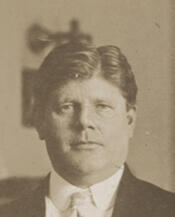
Here you will find contact information for Representative James Andrew Beall, including email address, phone number, and mailing address.
| Name | James Andrew Beall |
| Position | Representative |
| State | Texas |
| District | 5 |
| Party | Democratic |
| Status | Former Representative |
| Term Start | November 9, 1903 |
| Term End | March 3, 1915 |
| Terms Served | 6 |
| Born | October 25, 1866 |
| Gender | Male |
| Bioguide ID | B000270 |
About Representative James Andrew Beall
James Andrew “Jack” Beall (October 25, 1866 – February 11, 1929) was an American lawyer, legislator, and six-term United States Representative from Texas. A member of the Democratic Party, he represented his state in the U.S. House of Representatives from March 4, 1903, to March 3, 1915, contributing to the legislative process during a significant period in American history. Over the course of his six terms in Congress, he participated actively in the democratic process and represented the interests of his Texas constituents during the early twentieth century, a time of rapid economic, social, and political change.
Beall was born on October 25, 1866, on a farm near Midlothian, Ellis County, Texas, to Richard Beall and Adelaide Pierce Beall. Raised in a rural setting in post–Civil War Texas, he attended the local county schools, receiving the foundational education that would support his later legal and political career. In his youth he worked within the community and gained early exposure to the concerns of ordinary Texans, experiences that would later inform his public service.
Before pursuing higher education, Beall briefly entered the field of education himself. He taught school in 1884 and 1885, an occupation that reflected both his commitment to learning and his early sense of civic responsibility. Seeking a professional career in the law, he enrolled in the law department of the University of Texas at Austin. He was graduated from that institution in 1890, and in the same year was admitted to the bar. Beall then commenced the practice of law in Waxahachie, Texas, establishing himself as an attorney and gaining experience that would serve as a foundation for his subsequent legislative work.
Beall’s political career began at the state level. He was elected to the Texas House of Representatives, serving from 1892 to 1895. He then advanced to the Texas Senate, where he served from 1895 to 1899. In these roles he participated in shaping state legislation during a period when Texas was grappling with issues of economic development, regulation, and the legacy of Reconstruction. His legislative experience and growing prominence within the Democratic Party positioned him for national office at the turn of the century.
In 1903, Beall entered national politics as a member of the United States House of Representatives. Elected as a Democrat to the Fifty-eighth Congress and to the five succeeding Congresses, he served from March 4, 1903, to March 3, 1915. During his tenure, he represented Texas in the House at a time when the nation confronted questions of industrial regulation, agricultural policy, and social reform. He served as chairman of the Committee on Expenditures in the Department of Justice during the Sixty-second Congress, overseeing matters related to governmental efficiency and accountability in that department. In 1909, along with other members of the southern congressional delegation, Beall opposed William Jennings Bryan’s support for national Prohibition, arguing instead for the Texas preference of addressing alcohol regulation at the local level. On July 4, 1911, he delivered an Independence Day address before a crowd of approximately 1,500 people in Meriden, Connecticut, where contemporary accounts described him as “charming” and “eloquent” as he spoke about the nation’s history, his faith in God, and the heroes of the Old South. He was not a candidate for renomination in 1914, thus concluding his six consecutive terms in Congress.
Beall’s personal life was rooted in Texas as well. In 1898, he married Patricia Martin of Waxahachie, Texas. The couple had one child, a son, Jack Beall, born on December 6, 1898, who lived until January 11, 1963. Throughout his public career, Beall maintained close ties to his home state, balancing his responsibilities as a legislator with his roles as husband and father.
After leaving Congress, Beall moved to Dallas, Texas, in 1914 and resumed the practice of law. He became a law partner with M. D. Templeton and Tony B. Williams, and in 1923 he advanced to become senior partner of the firm Beall, Watson, Rollins, Burford and Ryburn. In addition to his legal work, he took on significant business responsibilities. From 1921 until his death, he served as president of the Texas Electric Railway, reflecting his involvement in the development of regional transportation infrastructure. In 1927, he became president of the Dallas Union Trust Company, further extending his influence into the financial sector. James Andrew “Jack” Beall died of a heart attack in Dallas, Texas, on February 11, 1929, and was buried in Oakland Cemetery in Dallas.