Representative James Henderson Blount
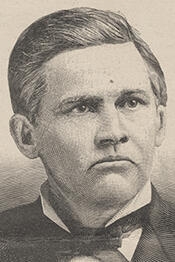
Here you will find contact information for Representative James Henderson Blount, including email address, phone number, and mailing address.
| Name | James Henderson Blount |
| Position | Representative |
| State | Georgia |
| District | 6 |
| Party | Democratic |
| Status | Former Representative |
| Term Start | December 1, 1873 |
| Term End | March 3, 1893 |
| Terms Served | 10 |
| Born | September 12, 1837 |
| Gender | Male |
| Bioguide ID | B000568 |
About Representative James Henderson Blount
James Henderson Blount (September 12, 1837 – March 8, 1903) was an American politician, Confederate army officer, and long-serving Democratic Representative from Georgia whose congressional career spanned two decades during a pivotal era in United States history. He was born near Clinton, in Jones County, Georgia, where he spent his early years and attended local private schools. He later continued his preparatory education in Tuscaloosa, Alabama, before returning to Georgia to pursue higher studies.
Blount enrolled at the University of Georgia in Athens and graduated in 1858. After completing his undergraduate education, he studied law and was admitted to the Georgia bar in 1859, beginning his legal career in his home state. His early professional life was soon interrupted by the outbreak of the American Civil War, in which he aligned with the Confederacy.
During the Civil War, Blount served in the Confederate States Army. He first enlisted as a private in the Second Georgia Battalion, known as the Floyd Rifles, and served in that capacity for two years. He subsequently rose to the rank of lieutenant colonel, a position he held for an additional two years. This combination of legal training and military experience helped shape his postwar public career in the turbulent Reconstruction and post-Reconstruction South.
Following the war, Blount entered politics as a member of the Democratic Party, becoming part of the Southern Democratic faction known as the Redeemers, who sought to restore and consolidate white Democratic control in the South after Reconstruction. He was elected to the United States House of Representatives as a Democrat from Georgia’s sixth congressional district and served ten consecutive terms, from March 4, 1873, to March 3, 1893. During these 20 years in Congress, he participated actively in the legislative process and represented the interests of his Georgia constituents at a time of significant political, social, and economic change in the United States. His long tenure reflected both his influence within the Democratic Party and the confidence placed in him by voters in his district.
Within the House of Representatives, Blount rose to positions of considerable responsibility. He served as Chairman of the House Committee on Foreign Relations from 1891 to 1893, a role that placed him at the center of debates over America’s expanding international presence. His service in Congress occurred during a significant period in American history, encompassing the end of Reconstruction, the rise of the Redeemers in the South, and the early stirrings of American overseas expansion. As a member of the House, James Henderson Blount participated in the democratic process and contributed to national policymaking over the course of his ten terms in office.
After leaving Congress in 1893, Blount remained prominent in national affairs, particularly in relation to United States policy toward the Kingdom of Hawaiʻi. In January 1893, a coup in Honolulu overthrew Queen Liliʻuokalani, and the new provisional government sought annexation by the United States. President Benjamin Harrison supported annexation and submitted a treaty to the Senate, but his successor, President Grover Cleveland, a fellow Democrat who opposed annexation, withdrew the treaty and appointed Blount—then a private citizen—as a special commissioner to investigate American involvement in the overthrow. Blount traveled to Hawaiʻi and conducted an extensive inquiry, culminating in the Blount Report, issued on July 17, 1893. In that report, he recommended rejection of annexation and asserted that Native Hawaiians should be allowed to continue their own political and social ways. He blamed the U.S. minister and other American officials for improper assistance to the revolutionaries. Acting on Blount’s findings, Cleveland initially proposed using American military force to overturn the new government and restore Queen Liliʻuokalani as an absolute monarch. When the deposed queen reportedly refused to grant amnesty to the leaders of the provisional government and was accused of threatening to “behead” them and confiscate their property, Cleveland referred the matter to Congress. The U.S. Senate, controlled by Democrats but angered at being excluded from this major foreign policy decision, produced its own investigation, the Morgan Report, authored by Senator John Morgan. The Morgan Report directly contradicted Blount’s conclusions, characterizing the Hawaiian revolution as an internal affair. With the passage of the Turpie Resolution in May 1894, which declared a policy of non-interference in Hawaiian affairs, Cleveland abandoned efforts to restore the monarchy and formally recognized the Republic of Hawaiʻi, as did other nations. The Republic later renewed its annexation efforts, and in 1898, under President William McKinley, Congress approved annexation of Hawaiʻi.
In his later years, Blount resided in Macon, Bibb County, Georgia. He continued to be remembered for both his long service in Congress and his controversial role in the Hawaiian annexation question. James Henderson Blount died in Macon on March 8, 1903, at the age of 65. He was buried in Rose Hill Cemetery in Macon, Georgia. His legacy is also reflected geographically: the community of Blount, Georgia, bears his name. His life and public career are documented in the Biographical Directory of the United States Congress and in collections of his writings and correspondence, including materials available through Project Gutenberg, the Internet Archive, and the James Henderson Blount Letters held at the Stuart A. Rose Manuscript, Archives, and Rare Book Library.